
Ideas
How to create a google map of places you want to visit
This post is primarily a screencast tutorial on how to create a custom google map of places you want to visit—or what I like to call an Adventure Map.
An Adventure Map is a handy repository for all of those places on your OMG-I-Want-to-Visit list. It's a place to store those random campsite tips you get from friends, that instagram post about a backcountry waterfall, or that killer hike your friend just posted on facebook. There are plenty of ways to save this information for later, but I find that a custom map is one of the most useful.
The screencast tutorial
In this tutorial, I show you my personal Adventure Map and explain how I use it. I then teach you how to create your own adventure map. The entire screencast lasts about 27 minutes. If you're in a rush, the tutorial itself starts at the 8:30 mark. I've also added some additional notes below that I didn't mention in the screencast, as well as another short tutorial on how to load your new Adventure Map onto your mobile phone.
Even if you've used Google's My Maps before, I hope there some nuggets that can you can put to good use. If you have additional tips, please leave them in the comments.
Thanks for watching. It's quite a bit longer than I would have liked, and I'm not particularly happy with my performance, but I hope you found it useful. Below are some items I didn't mention in the screencast that you might want to know about.
Additional notes not mentioned in the tutorial
Other ways to add pins
You can also add pins by clicking on the pin icon in the toolbar and clicking directly on the map. This is especially useful if you're setting pins to investigate on the ground later, like possible indian ruins or dispersed camping sites. In addition, you can also search for a location by gps coordinates, which makes it easy to add destinations that you might have found from blogs, guide books, or someone else's custom map.
More on driving, biking, and walking directions
Another method to add driving directions is to click the draw a line tool and select the add a driving (or biking or walking) route from the drop-down menu. Then click where you want the route to start and trace the path you want to the directions to follow. Double click to end the route. This will create a new layer containing the directions. Using this tool, Google will calculate a route based on the roads in its database. So if you start your route 1/4 mile from a road, the directions instead start at the nearest point on the nearest road, and only follow roadways. Awkwardly, this is also the case with walking and biking directions, too. Nonetheless, this is still a useful method when you're trying to force Google Maps directions to follow a particular route.
Drawing lines and shapes
You can also add lines and free-form shapes (using straight lines only) to your map. I find this to be useful when there's an entire area I want to save for future investigation, such as a long wall of petroglyphs, or what appears from satellite view to be a complex of pueblo ruins. Select the draw a line tool, click to add the starting anchor point for the line, then move to where you want the second anchor point to be and click again. You can continue to add anchor points, creating a multiple angled line. When you're done, double-click to lock it in.
Or, if you're adding a shape, follow this same procedure around the edge of the area you want, being sure to end back at the first anchor point. Once you've saved your shape, you can go back and adjust the location of the corners or create a new corner by dragging the dimmed circle that's midpoint on each line. Once you've saved your area, Google will calculate the perimeter distance and area for you.
If you're trying to undo a line or shape, you can easily abort by clicking ESC on your keyboard. If you click ESC again, you'll be returning to the default select mode where you can click to select items or drag to pan the map.
Measuring distances and areas
This tool functions similar to the one used to add line and shapes, except that it doesn't add any permanent items to your map. Instead, it simply shows you the distance of the line, or the perimeter and area of a shape. One useful feature of this tool is that when you're measuring distances, it keeps a running total using "mile markers" along the line path.
How to load your Adventure Map onto your phone
As mentioned in the screencast, one of the benefits of using a custom google map is that you can load it as the base map on Google Maps on your phone. Below is a brief tutorial on how that in iOS.
Here's how to do the same thing on Android. Even better, the My Maps app for Android allows you to create and modify your custom maps directly from your device [edit: the app is no longer available in the play store, perhaps the functionality has been included in the Google Maps app?].
Share some love and pin it

Why you should use a camping bin
You know what sucks? Getting stressed out by packing for what's supposed to be a relaxing camping trip. Yeah, that definitely sucks.
Eliminate packing stress
You can alleviate much of that stress simply by having a camping bin—a plastic storage container already set up with the stuff you need to pack for your average camping trip. Because it's already ready already, you can just grab it and go. Ok, well, you'll probably want some other stuff like a sleeping bag, tent, cooler, and food, too. But having all of the main camp items in one or two ready-to-go bins makes packing a snap.
Makes finding things a breeze
With everything all in one spot, a camping bin also makes it easy to carry your stuff to the picnic table, too. It all stays clean and organized, tucked inside a plastic bin until you need it. You'll be able to quickly find what you need instead of scrounging around the car for various items. That means you'll spend less time managing your stuff and more time enjoying your trip. And best of all, when you're ready to pack up the campsite, it's just as easy to return the whole kit to the vehicle.
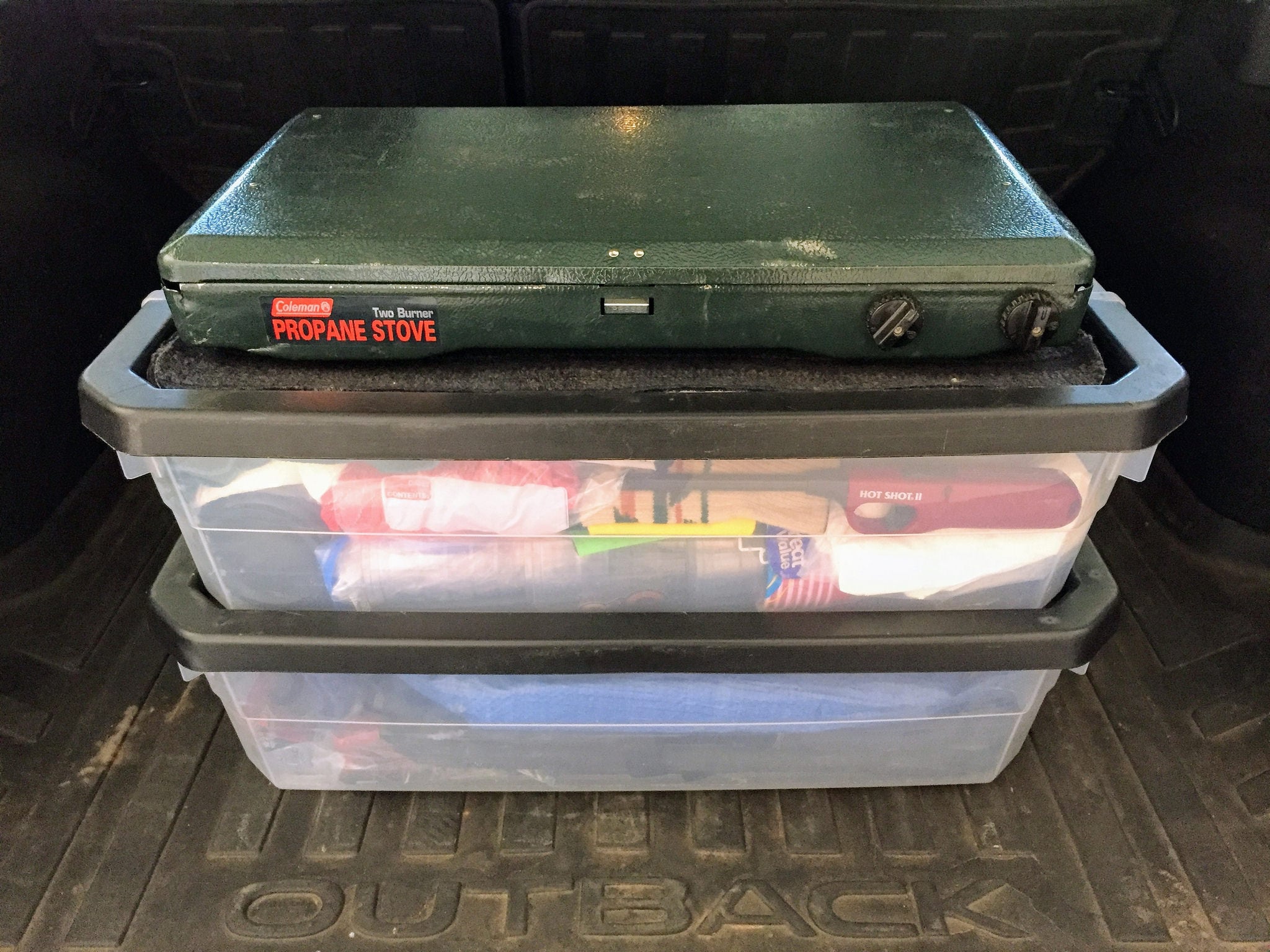
Here's exactly what I use
I've broken down the contents of my various adventure bins below so you can get a better sense of what these look like.
A few caveats
Before you start stalking—or critiquing—what items we bring, I should explain why this kit works well for our needs. First, we have no kids, so everything here is just for us. We're also not huge camp foodies. For some people, camp cooking is the main reason for going camping. That's not us. We nearly always prefer simple to extravagant, and we're usually just cooking for the two of us. We also prep much of the food before we go so we don't have to spend as much time making dinner at the campsite. That makes sense, as we're often just camping to save money on hotels. So your bin may look exceedingly different than ours, and that's totally fine. This is all about putting together a system that works for you.
I should also note that I'm not holding this up as the World's Best Camping Bin™ set-up. It just happens to be what I use—as of today, at least. It'll change over time as I refine further or upgrade. Some of this gear is 20 years old while other components were acquired in the last year. I usually only upgrade gear when there's a substantially better product that improves my experience and seems worth the money. Most of these items are cheap and unspecial in any substantial way. If you're just starting out, I recommend starting with cheaper stuff first and only upgrading later, if it's necessary. Most of the time, it isn't. Keep in mind how incredibly easy it is to overspend on camping gear and save some of that cash for trips instead.
Click to expand or retract each section
Click on the bin name to "open" the lid and peak inside. To head off some anticipated questions, I've linked to a few items that people might want to know more about.
[powerkit_collapsibles]
[powerkit_collapsible title="Main camping bin"]
Main camping bin
What I use this for
This is my primary camping kit—it goes on every single camping trip I take.
I prefer using a shallow bin so that there aren't too many layers of things, which makes it easier to both find and repack items. The 10 gallon "stacker" style bin I use measures roughly 25" x 18" x 7" and has locking handles to keep the lid tightly secured. Two 4 gallon bins stack perfectly on top of this one, as does the 19 gallon version, so there are a lot of options that work well together if I decide to expand in the future. The current bin is fully packed, so there's not a lot of extra room for additional items.
I also keep some cheap Ikea doormats on top of this bin. We use them outside our tent (or vehicle doors, if we're sleeping in the car) to make it easier to put on our shoes after we crawl outside. The doormats fit perfectly on top of the bins and our trusty two burner Coleman stove sits on top of them. This works especially well, as the doormats keep the stove from rattling against the plastic bin on washboarded roads.
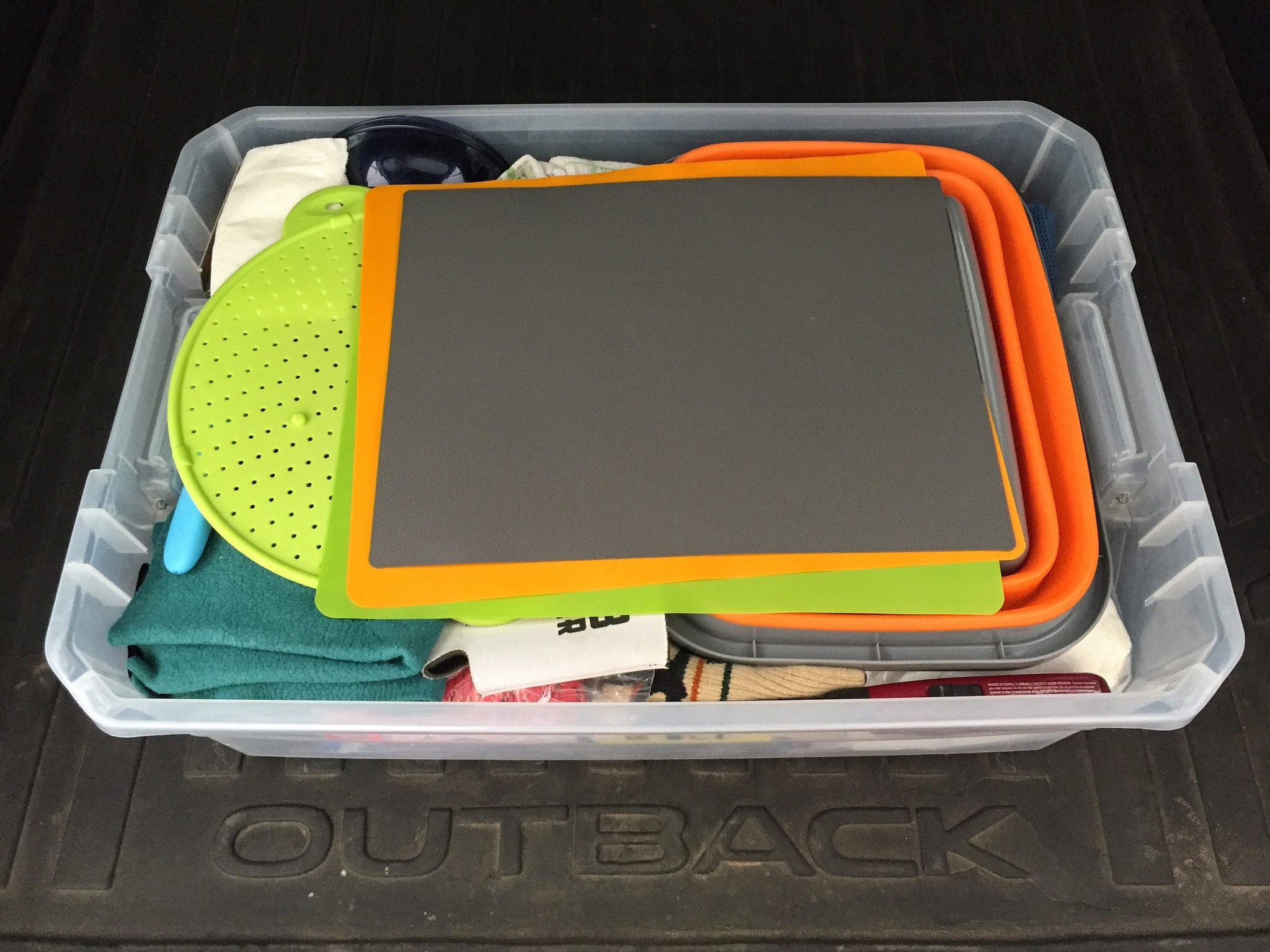
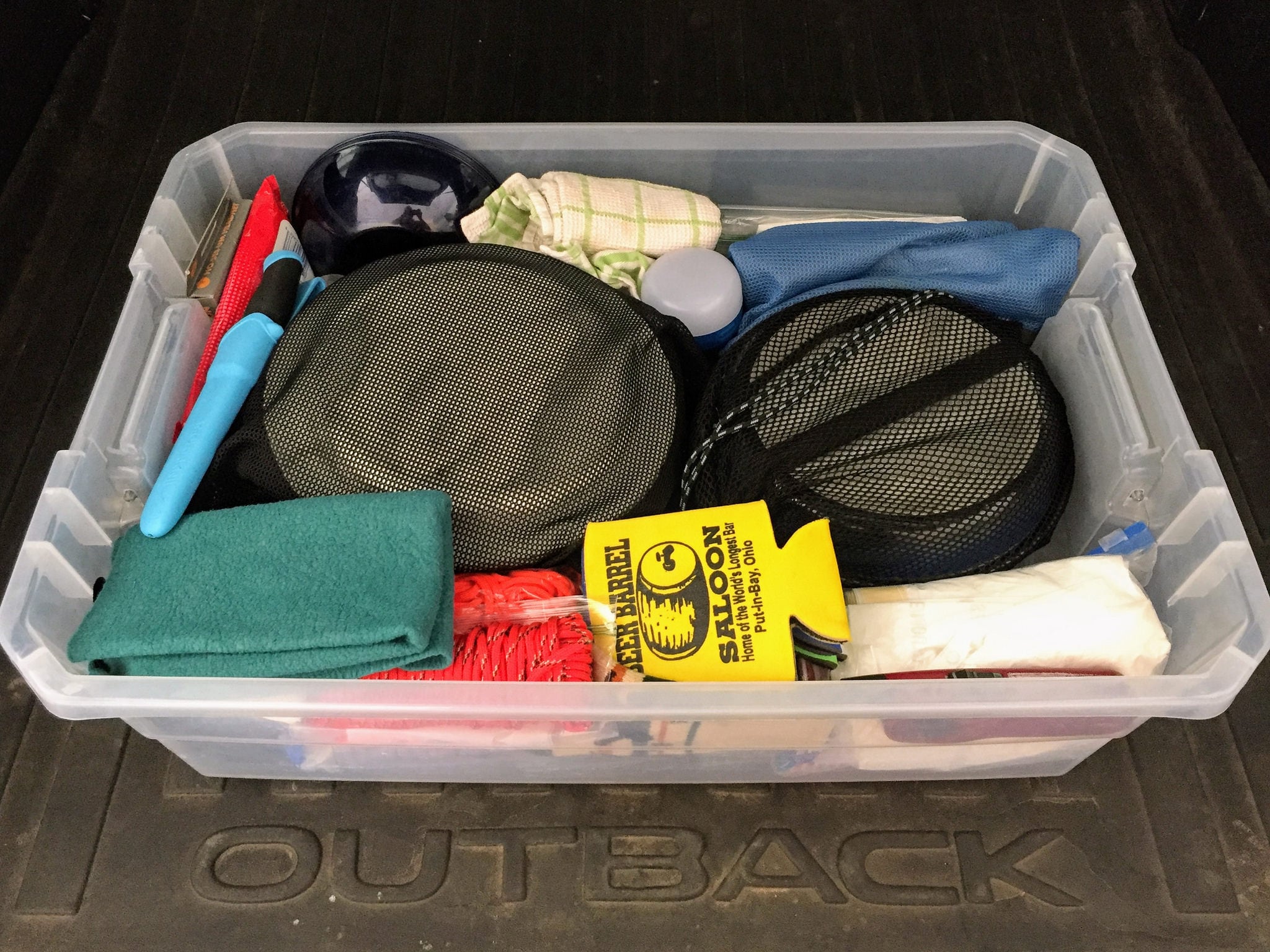
Bin contents
- Flexible plastic cutting boards (3)
- 1lb Coleman propane canister
- Nesting pot/pan set (3 each) & handle (an older version of GSI Outdoors Bugaboo that's sadly no longer available)
- Silicone coaster/pot handle (2)
- Plates (7)
- Bowls (7)
- Disposable paper plates (about 6)
- Butter knives (7)
- Big spoons (5)
- Regular spoons (5)
- Forks (7)
- Spatula
- Stirring spoon
- Tongs
- Camping spatula & spoon set
- Kitchen scissors
- Can opener
- Kitchen knife
- Bottle opener
- Small lantern (2)
- Tervis-style insulated cups w/lids (3)
- Yard trash bags
- Kitchen trash bags
- Paper towels
- 2.5 gallon ziplock bags
- Gallon freezer bags
- Quart size freezer bags
- Beverage koozie (4)
- Para cord
- Bug head nets (2)
- Two-sided dish sponge
- Dish scraper
- Bug spray
- Hand sanitizer
- Wet wipes
- Toilet paper
- Small blacklight
- Lighter
- Dish towel
- Pack towels (3)
- Carabiners (2)
- Medium binder clips (3)
- Spices
Notes
I quickly made a rather poorly-produced amateur video showing all of these items while camping a few weekends ago. I'm (somewhat reluctantly) linking to it here so you can get a better sense of how it all fits together. I'll try to put together a better one in the future.
I keep the serving utensils, cooking utensils, plates & bowls in separate bags. I happen to use some old Eagle Creek travel bags for that, but gallon ziplock would work just fine, too. Also, the utensils, bowls, and plates I use are all lexan-style.
The large 2.5 gallon ziplock bags are used for dirty dishes, when we're feeling lazy and would rather just bring them home to the kitchen dishwater. That probably describes 75% of our weekends. Ok, fine...maybe 90%.
Yes, we bring three flimsy plastic cutting boards, but they're mostly just used as clean surfaces to set food on. We do most of our slicing and dicing back at home before we leave.
I use the binder clips as bag clips for chips and other snacks.
The small blacklight is used to look for scorpions at night. I kinda just tossed it in there one day, but it can be fun to play around with, especially in the desert.
[/powerkit_collapsible]
[powerkit_collapsible title="Campfire bin"]
Campfire bin
What I use this for
This storage container is identical to the one I use for my main camping bin. I bring it when we're planning on having a campfire, or on longer trips when we might have a campfire. It also contains our camp shower, though that rarely gets used unless we're camping for quite a few days—trips in which we'd also likely have a campfire. We might also bring this bin when we might need some shade or rain protection, or expect to sleep in Sam the Subie.
Bin contents
- Plastic serving trays (2)
- Telescoping campfire forks (3)
- Roll of paper towels
- Lighter fluid
- Lighter
- Fire starter
- Hatchet
- Folding saw
- Cooking oil
- Aluminum foil
- Trash bags
- Extra 1lb propane canister
- Utility towel
- Heavier duty plastic shopping bags
- Camp shower
- Para cord
- Bungee cords (4)
- Bag of tent stakes
- Tarps (2)
- Clamps (5)
- Bug netting, blackout cloth, and magnets
Notes
We use the tarps, clamps, bungees, tent stakes, and para cord—along with some telescoping tent poles that get packed with our camp chairs—to create various shelter configurations, often utilizing the roof rack or open rear gate of my Subaru Outback.
The bug netting, blackout cloth, and magnet set is a custom solution I use for covering the windows when sleeping in the car. I'll have more specifics on this in a future post, but it's basically comprised of a set of no-see-um netting and dark "blackout" cloth trimmed to fit my various car windows. I have about two dozen rare earth magnets that I've individually covered with gorilla tape to create a sort of tab so I can easily grab them. I use the magnets to mount the netting or blackout pieces over the open car windows at night. That way, I can have some good airflow without dealing with insects, or sleep through the bright rising sun (or, sometimes, a full moon that's too darn bright).
We use the heavier plastic shopping bags (meaning, the ones just slightly nicer than grocery bags) to hold our clothes and other items when we're using campground showers. Since everything seems to get wet in public showers, the bags help keep our things dry, especially when shower curtains are missing. If we're using our own camp shower, the tarps and related items also allow us to create a makeshift shower privacy curtain if we need one.
The serving trays make it much easier to eat dinner in a camp chair near the campfire. I sometimes snag these for our daytrips too.
[/powerkit_collapsible]
[powerkit_collapsible title="Daytrip bin"]
Daytrip bin
What I use this for
We grab this smaller bin (roughly 16" x 13" x 9") for daytrips, which serves us well for basic picnic-style meals. We tend to keep our daytrip meals very simple, like cold sandwiches and some sides, so there's not much we need. It's rare that we'd heat anything up, so we don't need to bring a lot of gear as a result. To make things easy, we just use disposable plates and bowls from our tailgating supplies.
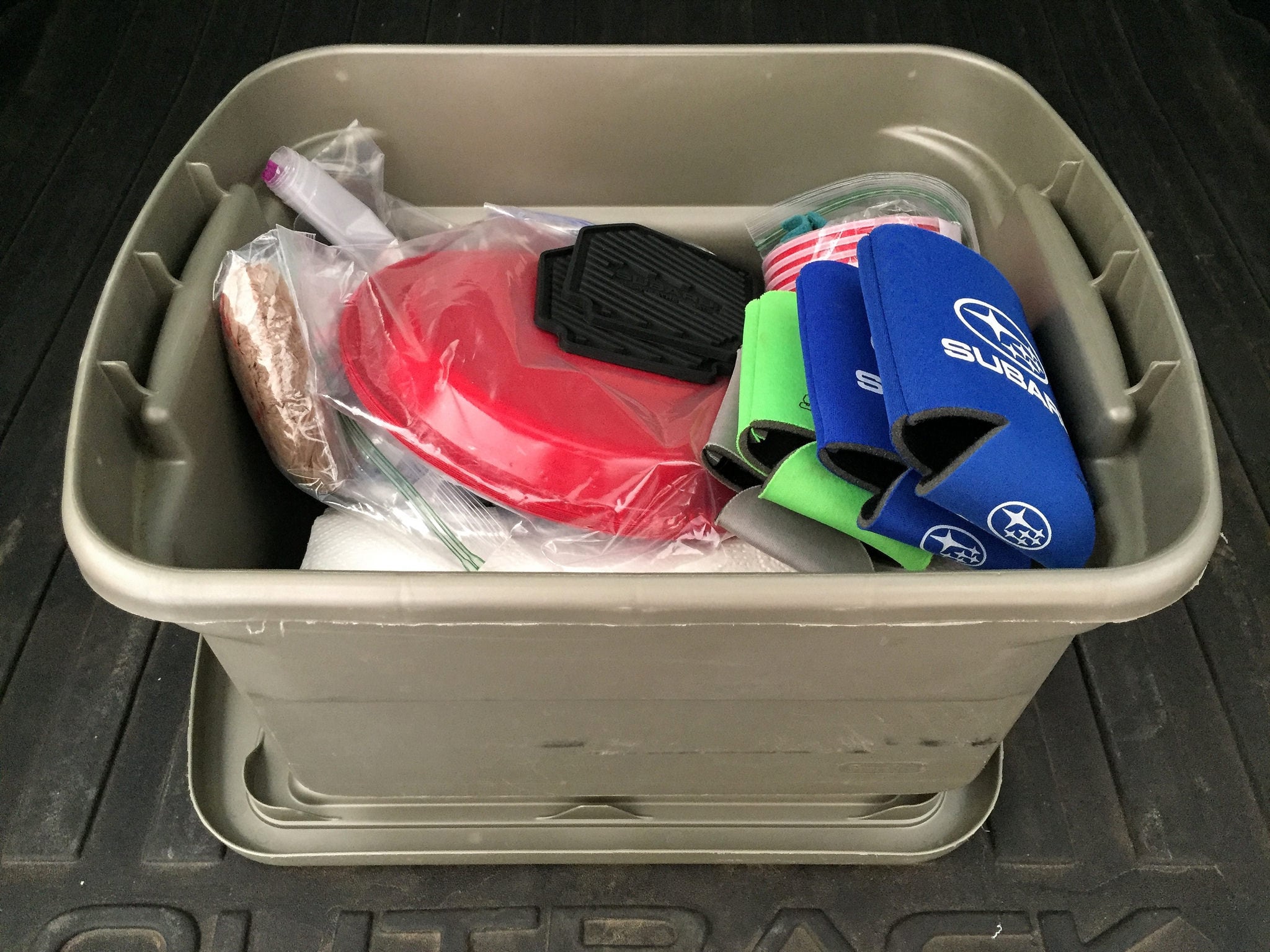
Contents
- Roll of paper towels
- Baggie of shopping bags
- Beverage koozies (4)
- 2.5 gallon ziplock bags
- Gallon/quart/snack ziplock baggies
- Disposable plates & bowls
- Disposable solo cups
- Plastic silverware
- Silicon coasters/pot holders
- Lighter
- Kitchen knife
- Binder clips
Notes
Why have a lighter when there's no stove on the list? Two reasons. First, we might use it to fix the ends of newly cut para cord we might use to string up a shade tarp. On the rare occasion that we do want to heat something up (probably hot chocolate or cider), we would have grabbed my backpacking stove, fuel, and pot—which requires a lighter. Those three items are small enough to toss into this half-full bin, so it's an easier solution that bringing the normal bin.
[/powerkit_collapsible]
[/powerkit_collapsibles]
Creating your own camping bin
Now that you have a sense of what I bring and why I bring it, it's time to put together your own bin. Start with brainstorming the items you'll need. It might help to mentally walk through an average trip. Everyone travels a bit differently, so consider what you'll need and what you don't.
What does your average trip look like?
Are you cooking a big meal, or just roasting some hot dogs? How many people will need plates, bowls, and cutlery? How much food prep will you need to do at camp? What other items will you need access to (such as a can opener, bottle opener, vegetable peeler, etc)? What's your dishwashing strategy? Do you need cups that work with hot water? What might you need for a campfire, if you often have one?
Basically, the point here is just to run through all the usual scenarios you'd encounter and list things you may use. Then, pare down the list to the things that you think should come along every time you go. Those are the items you put in your camping bin.
In addition, consider any items that you should have along, just in case. For instance, I only occasionally use a can opener, but we sometimes buy camp groceries on the drive to the campsite, so I make sure I have one of these in my kit—even though it might only get used once in awhile. Same goes for the bug head net; it's something I might not know to bring on any specific trip, but would dearly miss if I did need it. Be careful with how many "just in case" items you bring, though; it can be easy to end up with a cluttered mess of rarely used items.
How will the bin fit in your vehicle?
This might sound a bit silly at first, but I assure you it's not.
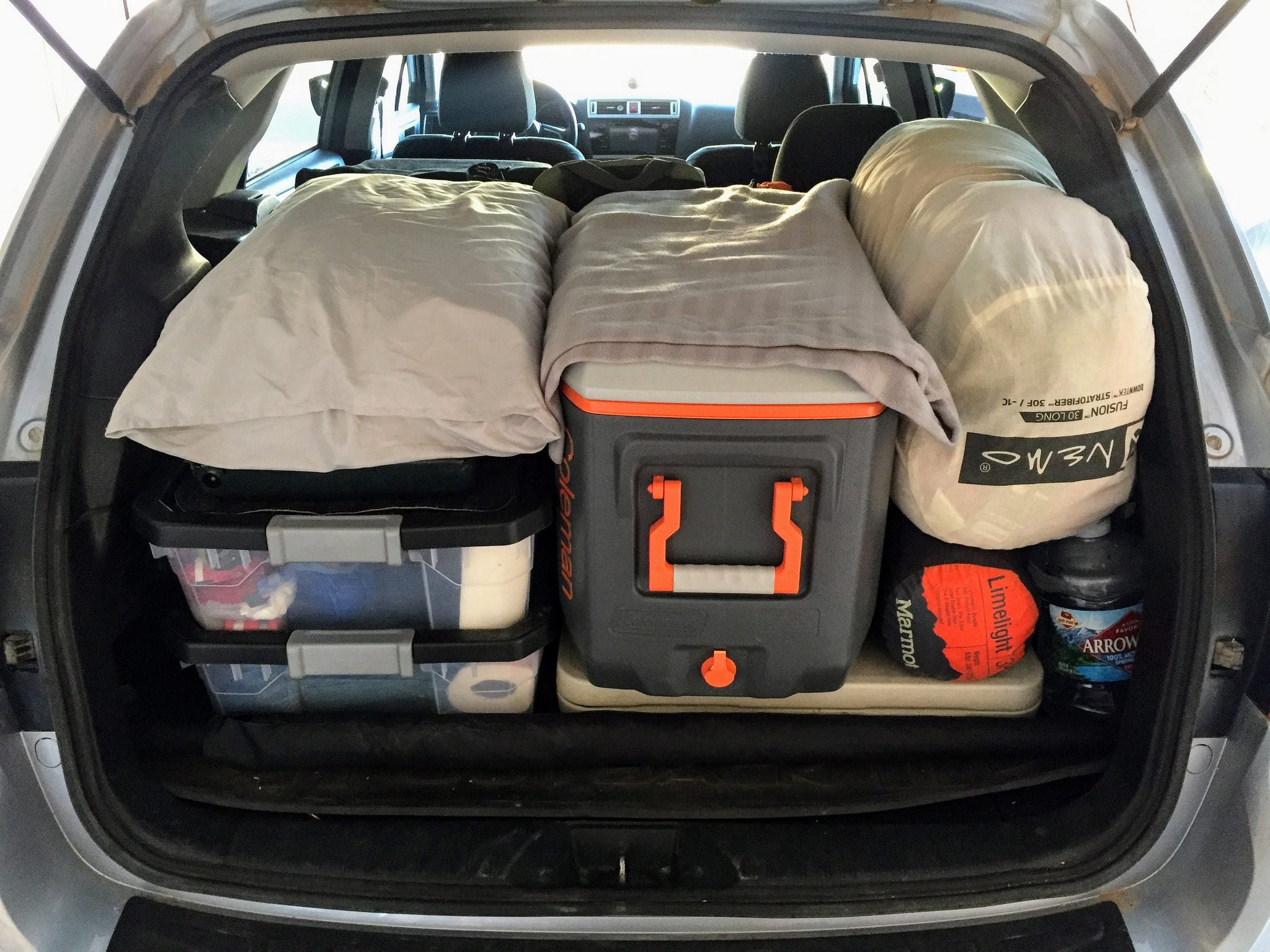
If your main camping gear bin is awkward or doesn't fit cleanly in your vehicle, it'll add frustrations you don't need. I've found that it's best to "test load" your vehicle with your main big items: tables, chairs, tent, cooler, sleeping bags—and consider what things must go where. For example, my camp chairs must go across the back of rear seats if I want my cooler to be easily accessible, so that influences how wide of a bin I can use. If you're planning on using multiple bins, you'll also want to consider how well they fit together, too. I bought matching, stackable bins specifically so that it'd be easier to pack them in the car together.
I used to use a taller, more narrow bin, but it was too tall to put anything useful on top of it and it created a weirdly-shaped void that usually resulted in unused space. If your bin doesn't "play nice" in the vehicle configuration you'd prefer, find yourself one that does. It's worth the hassle now to get it right than dealing with repeated consternation every subsequent trip.
Putting it all together
Now that you have your camping bin items together and have found a bin that will work for your space and gear, it's time to bring it all together. After a few times packing and repacking your bin, you'll probably notice that things seem to fit better if you pack them a certain way. I try to pack the bigger items in the same spots each time, and then fill in with the other items around them. Smaller items I use frequently go in designated spots (usually corners, for me). It's useful to have a system—that way, you don't have to rummage through the whole thing just to find that little spice container. That's basically what this entire post is about—creating systems that make your camping life easier.
What other bins would be useful to have?
My main camping bin is primarily focused on camp kitchen items. I suggest that you have a similar one, as it makes it easy to bring everything you need right to your cooking area. But that doesn't mean you can't have bins dedicated to other types of gear, too. For instance, we also have a sleep bin that contains our comforter, sleeping pads, pillows and lightweight throw blankets that we often use in warmer weather. I also have one for much of the gear I usually bring kayaking. If having a pre-organized gear bin would reduce the hassle of packing and help you get out more often—as it does for me—then you owe it to yourself to put one together.
Replenishing the bins
Since our goal is to be able to pack quickly—so that we can leave right after work on Friday, for instance—we keep these bins fully stocked and ready to go. Instead of having to look through the bins before each trip to see what needs to be replenished, we try to take care of that while we're at the campsite or on the road.
Our solution is to use the free Microsoft To Do app so we can add to a shared "camping bin replenishment" list as soon as we use something up at the campsite. Uh oh, down to only one trash bag? Add it to the list. Lantern batteries going dim? Add it to the list. Propane canister feeling a little light? Add it to the list. Do it right when you think about it. Yes, it's ok to whip out your phone at camp to do this. I also add anything here that I might want to add to the bin for the next trip. Again, log it when the idea hits you; don't expect to remember later.
Once we're back home from the trip, we'll replace anything that needs replacing (including recharging the batteries for the small lanterns) before we put the bins away. This is important—if you're not diligent in replenishing the camping bin, then you'll undermine your ability to just "grab and go" or you'll end up without something you need.
Auditing your kit
Once or twice a year, I like to take everything out of the bin and review if it's still something I should be hauling around. For instance, have I really used that blacklight? Maybe that can stay at home from now on. Doing this review helps reduce clutter and make it easier to manage the stuff you actually do use regularly.
I want to hear about your camping bin
Did an interesting item make it into your camping bin? Have a tip I missed above? Think I should add something specific to my own camping bin? Let me know in the comments. I'd especially love it if you linked to a photo of your own camping bin. I love hearing what everyone else brings.
Pin it
How to make more hiking or camping friends
Solo adventuring can be great—it's easy to do exactly what you want right when you want to do it. And it's a perfect time to dive into some introspection and contemplation.
But there's often no substitute for experiencing a new place with friends. Unfortunately, not everyone has a go-to travel partner, or an available crew to camp with. If you're looking to expand the number of friends you get outside with, you've found the right post.
Your existing group of friends
The first step is to check with the friends you already have. Maybe one of them has been dying to get outside, and just needs someone to suggest a destination. Or maybe you never quite realized that someone loves to hike or camp, but similarly doesn't have someone to go with. It's funny how often I see someone post a photo of a hike they did, or a new tent they just bought, and thought to myself, "wow, I didn't know they enjoyed that sort of thing." So, ask your friends. Post a few messages on facebook, then mention it at your next happy hour get together. Start here first.
Your existing irl social networks
After you've checked with your circle of friends, expand a bit to the other social networks you belong to. Check with your co-workers—the ones you can stand, at least. Check with the folks at your _____________ club, whatever that might be. Work, school, hobbies, parents of your kids' friends, neighbors, regulars at your gym class...we're all connected to various groups of people we already somewhat know, each of which may yield some new hiking partners. But only if you ask.
Meetup groups
Meetup has been an absolute treasure trove of outdoor clubs for me. I regularly kayak with three groups, day hike with another two, and occasionally jump on backpacking trips led by couple others. But it wasn't always that way.
A few years ago, I decided that I didn't have enough backpacking in my life. While several of my friends routinely said they wanted to go, I could never quite pin them down for a trip. So I headed over to Meetup.com and searched for some groups. I found half a dozen that were backpacking-focused and seemed pretty promising, joined each, and took a look at their trip calendars. There was one trip coming up to one of my favorite destinations, Aravaipa Canyon Wilderness, which requires permits that the trip leader had already secured. They had a spot open, so I RSVP'd yes. A few days later, I was sleeping under cottonwoods gazing at the stars with five people I had just met. They weren't all going to be future friends, but one of them is. And best of all, I got a fun overnight trip out of it.

A week later, I went with another meetup group that was heading to Havasupai, one of the jewels of the Southwest. I hadn't been there before, and the permits can be hard to get. It was only four days long, but I made a ton of friends on that trip—many of which are among my most cherished friends today.
Within a week, I was organizing unofficial trips for my new friends and have helped lead trips (and happy hours for connecting with new members) ever since. That group basically became my primary "outdoor adventure" crew, the ones I spent most weekends with. I'm not guaranteeing you a similar outcome, but it's a common meetup experience I've seen so frequently that I'm confident you'll make some outdoorsy friends if you give it a sustained shot.
"But I'm too shy for that"
Meeting new people and doing a trip with them isn't necessarily easy or fun for everyone to do. I understand, I do. I generally felt the same way. I'm not an outgoing guy. I'm rarely the popular one in groups. I was worried I wouldn't be able to keep up. I was worried that there'd be some creep or asshole on the trip that drove me nuts. I was worried that someone might be totally unprepared and we'd have to help him along the whole trip. I was worried I'd be the outcast on the trip, that I just wouldn't fit in. There were a thousand other worries I had, too. And yet, none of those things happened. Not one. That's the thing with most fears—your imagination is far worse than what's likely to actually happen.
If the idea of this simply terrifies you, and you're unwilling to force yourself to try it just once or twice—no matter how uncomfortable it might seem—then don't. It's that simple. Stop reading and focus extra energy on the first two steps, instead. But if you're intrigued, even just a bit, but still pretty anxious about the idea? Well, I say go for it. Talk a friend into going with you. Start with a group that does a social activity so you can meet the regulars first. You'll feel less anxiety if you know you can bail during one of these event more easily than an outing in the wilderness. Don't see any outdoor recreation groups that offer one? Email the organizer and suggest it. Likewise, if you're a woman and worry about spending a weekend with a bunch of strange, possibly horny, men who might constantly hit on you? Well, email the group organizer and suggest a girls-only trip. There are often ways to mitigate the fears or hesitations you might have. Start slow and work up to an actual outing if you need to. Or do what I did and just thrust yourself into it——like jumping into a cold lake instead of trying to ease your way in. Either way, give it a shot.
But what about small towns?
I should note that I live in Phoenix, a large metro area with great weather, abundant public lands, and plenty of people who enjoy getting outside. You may not live in such a place. You may live in a small town, far from a population center large enough for a single outdoor rec meetup group, let alone the dozens I can choose from. Bummer.
But all is not lost. Try searching for specific destinations instead. In the search box, type the place you want to go (it works best if it's a somewhat coveted destination). Change the "distance from" your location to "any distance" and select "all meetups" from the options on the right, then look through the results. You may find groups from across the state, or even from across the country, leading trips to that destination. It's not uncommon for people to join trips being led by groups far from own city.
Facebook groups
Check facebook for various hiking or outdoor-related public groups in your area. Often, individuals from these groups will lead hikes or other outings, sometimes formally and sometimes informally. If you don't see events being mentioned, ask if anyone might want to join you. Even if you don't have a lot of luck here, you'll probably enjoy conversing with them anyway. In addition, these facebook groups often offer the side benefit of providing some great ideas on future destinations to explore.
I couldn't find a kayaking trip scheduled for this Sunday in my normal meetup groups, so I jumped into a new facebook group I recently joined for kayaking the lower Salt River outside of Phoenix. One post and one day later, I have a small group of paddlers joining me on Sunday morning. It turns out that there are often people who would love to join a trip; they just need the suggestion to go. I see this regularly in other hiking facebook groups I belong to. Don't see an outdoorsy facebook group for your area? Create your own and see what happens.
Other clubs & organizations
You're probably already familiar with a number of national outdoor/conservation/recreation groups, many of which have a local chapter or partner that's active in your state. For instance, the Sierra Club in Arizona has a pretty regular calendar of member led-hikes and activities where you'd undoubtedly find others who enjoy the outdoors. Groups like IMBA have lists of local mountain biking clubs you could get involved in. American Hiking Society has a similar list of hiking groups. Hike it Baby has a network of local branches offering outings for families. There are obvious too many to list here, but a quick search will likely uncover plenty of local groups to investigate.
There are a number of new female-focused hiking groups springing up recently, such as Hike Like A Woman. Some of these are set up as national networks with local chapters—often with one or more local ambassadors—that organize hikes and other events.
There are also a number of local or regional outdoors groups, too—and even some outdoor retailers that offer women-focused events. REI's Force of Nature program also hosts a number of classes and events geared specifically for women. Other organizations, such as Outdoor Afro, Latino Outdoors, OutVentures, and Unlikely Hikers host events for communities often underrepresented out on the trail. I've listed just a small sample of the groups out there, so spend some time googling in your local area.
An often overlooked place for finding outdoor clubs is community colleges. Student orgs can be pretty hit-or-miss and don't always persist thru the summer, but it's worth checking your local community colleges for any active groups. The community college crowd usually has a much wider age distribution than four-year universities. So while you'll likely find many twenty-somethings in these clubs, you won't seem totally out of place even if you're 40-something.
Guided hikes & volunteer projects
In the suggestions below, the goal is to connect with others who enjoy the outdoors and who also live in your area. Since these things can vary greatly depending on where you live, you'll need to do a bit of digging to see what's available in your own area.
Some outdoor outfitters, like REI, offer various outings and outdoor ed classes. If you're anything like me, these are your people. It shouldn't be hard to get a conversation going about various trails or destinations, which provides a perfect segue into a "sounds great, so when do you want to go?" comment. Climbing gyms are also great places to make some new friends, though not everyone who climbs indoors enjoys outdoor activities.
Volunteer service projects on our public lands, such as trail maintenance or trash cleanups, can also be a great way to meet people who enjoy the outdoors. Not only might you make some new hiking friends, but you'll be giving back to the outdoor community. Check in with your local land manager for opportunities near you. You might also want to contact local outdoor outfitters, conservation groups, and "friends of" groups, which often sponsor or organize volunteer service projects, too.
If you have a county or regional park system, you might want to see if they do any guided or interpretative outings. You'll want to focus on places where locals routinely go, not the more touristy destinations that might attract out-of-towners. For instance, most visitors to metro Phoenix probably don't even know about the Maricopa County Regional Park system, so they're unlikely to attend their events. That might not be the case for nearby Lost Dutchman State Park, which sees its fair share of tourists given its popular RV campground and proximity to the famed Superstition Mountains Wilderness.
Some cities and counties also run their own outdoor programs through their respective recreation departments. Many times these are focused on general exercise and fitness, but plenty of them also include outdoor recreation activities—especially in places with urban mountain preserves and other outdoor rec opportunities.
Other social media networks
If you're a regular user of social media, especially open networks like instagram and twitter, then you probably "know" quite a few people. That is, you follow them, they follow you, and you at least occasionally have some sort of conversation with them. Well, maybe it's time to meet in person for a hike!
Sure, distance is often an issue for these sorts of relationships; these networks are worldwide, after all. But that doesn't mean you can't put a little energy into following more people in your own area. It's particularly easy to do this on instagram. Simply search by some local hashtags and you're bound to find others who enjoy the outdoors. It might take some time to develop an online relationship with the people you find, but it's a quick and easy way to find fellow hikers. Like facebook groups, you're also sure to learn about some outdoor gems in your area. Oh, and feel free to give me a follow on twitter or instagram while you're at it.
An important note on "meeting people from the internet"
Nope, this isn't a cautionary disclaimer. It's the opposite, actually. Sure, you should be safe when it comes to people you don't know. That's true whether they're people you meet at the grocery store, on the internet, or at your local church.

But, here's the thing. Most people are just fine. Sure, some can be socially awkward. Some are weird. Some are even creepy. And anytime your spidey sense alarm goes off, it's best to pay attention. But the vast, vast majority of people are perfectly safe to spend time with, especially in a larger group setting—whether or not you've met them on the internet.
Fifty years ago, it was perfectly acceptable to make friends at the bowling alley, back when being in a bowling league was far more common. But let's face it, it really wasn't much different than meeting someone from the internet. They were a complete stranger, you got connected because of a shared interest, and here you are doing stuff together in real life. It's basically the same thing as what happens with meetup, except that now you can actually stalk their profile a bit before you ever show up. And that's just one of many precautions not available to previous eras.
The internet is a fabulous tool for finding people with similar interests as you. For finding your tribe.
The bottom line
If you want to make outdoorsy friends, you live in the very best era to do so. Go on, make it happen!
Photo credits
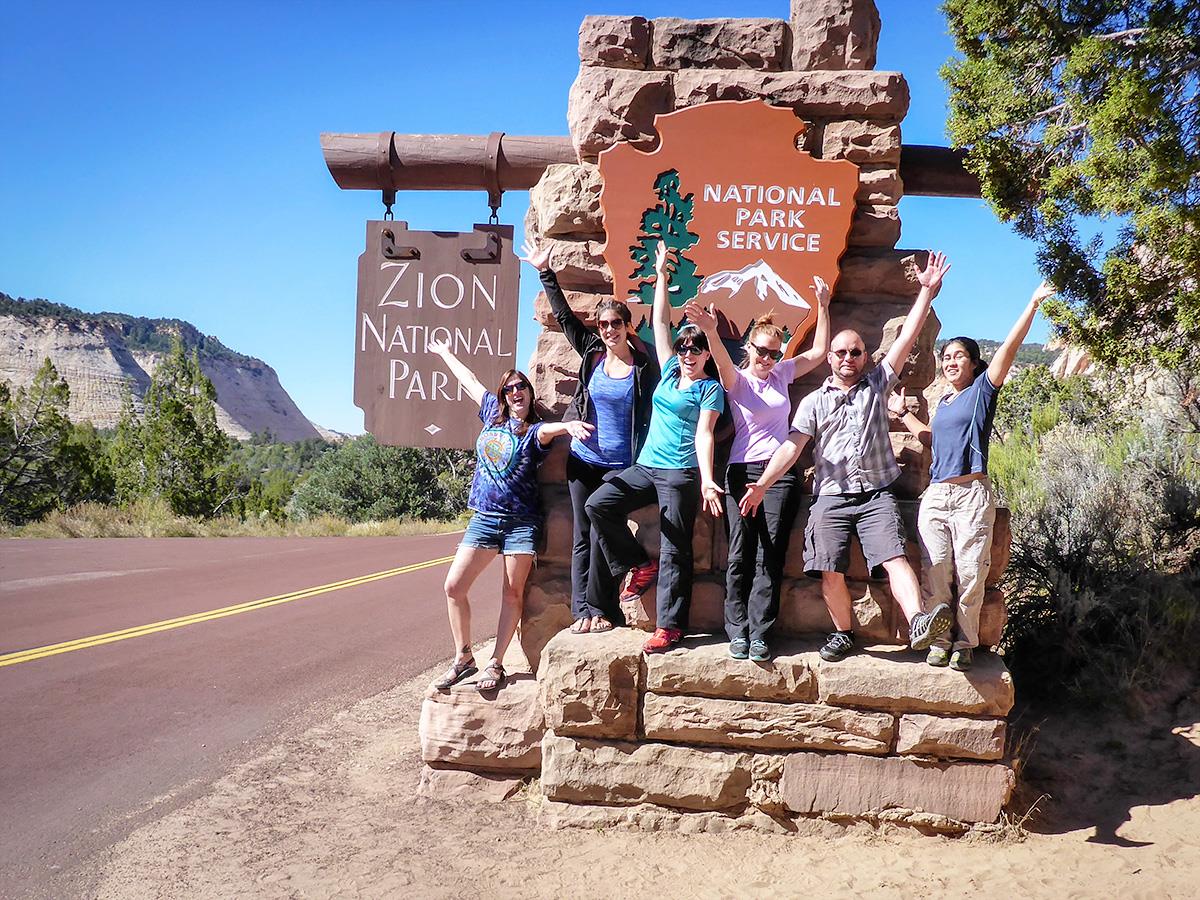
Jessica Schultz took the featured image, as well as the one of our group at Havasupai. She's currently adventuring around the West in her Airstream full-time. Follow her on instagram or at CampfireHappy. You'll be happy you did.
Want more stuff like this? Subscribe to the email list to get notified of new posts.
Camping? No, I'm just sleeping at a campsite
"I'm not camping, I'm just sleeping at a campsite," I explained.
They looked skeptical, trying to process what that sentence could possibly mean.
To them, camping was itself a largely weekend endeavor: full of beer coolers and dutch ovens, carloads of friends, pine trees and hammocks. It was the central feature of the weekend—billed as a chance to let off some steam, day drink with some friends, eat more than you should, and escape the city heat. The point of the weekend was the act of camping itself.
But that wasn't what I was doing. I was camping—well, I was sleeping in a tent at a campground, at least—specifically to avoid paying for an expensive hotel room. As a result, I hadn't brought much beyond the basics: a tent, headlamp, sleeping bag, and sleeping pad. I also had some snacks, a disposable cooler, and a barebones cook kit, though I had opted to grab a cheap sub on my way to the campground instead of cooking some elaborate dinner over a campfire. I was doing it all wrong, in their minds.
Don't get me wrong, I love camping for camping's sake. There are fewer things I enjoy more than sharing some adult beverages with good friends next to a campfire with a view. I'm constantly pestering my friends to join me for a night or two on the Mogollon Rim during hot Phoenix summers. Lounging in a hammock, staring up at the star-filled night sky above, the cool breeze carrying with it the relaxing scent of pine trees? Yes, please! I need that in my life.
But for me, camping is both a means and an end. It's not solely a weekend activity with friends, it's also the way I can afford my other travel adventures. And there are many other travel adventures to be had, after all.
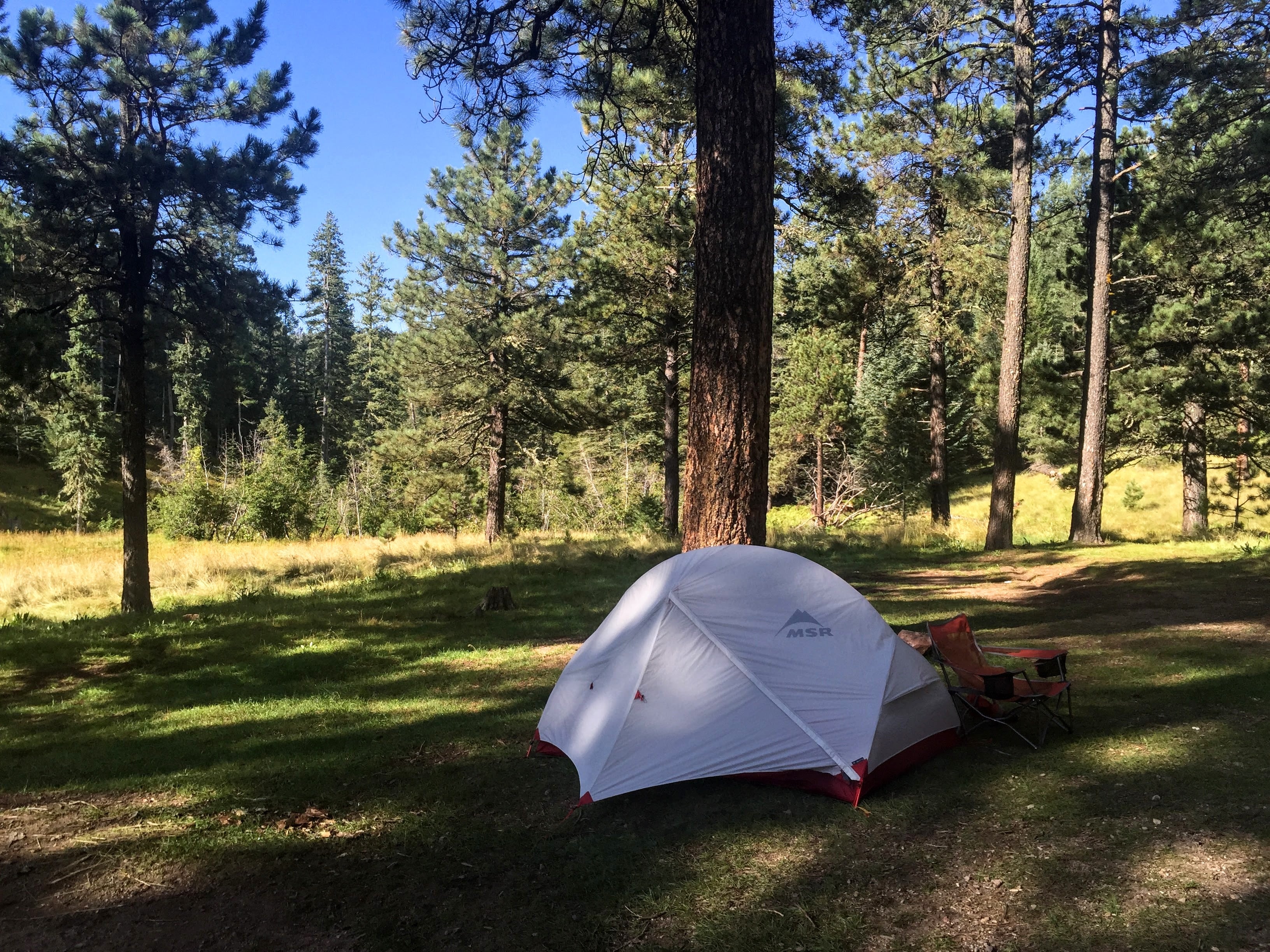
Camping is the single best strategy to save money while traveling here in the USA. Hotels are expensive, and they often entail additional hidden costs. Once you have some camping gear, the primary cost of camping is a far cheaper campground fee and maybe the occasional $5 propane canister. Or you can find a dispersed campsite on our public lands and save the campground fee altogether. For budget travel, camping is a great deal—even if it requires a bit more time and gas...and far less glamour.
If you can get comfortable with camping for traveling's sake, then you can unlock a whole new set of travel adventures. So when I've set my eyes on a new trip, and glanced into my wallet only to see moths fly out, I've quickly turned to "sleeping at a campsite," or what you might call travel camping.
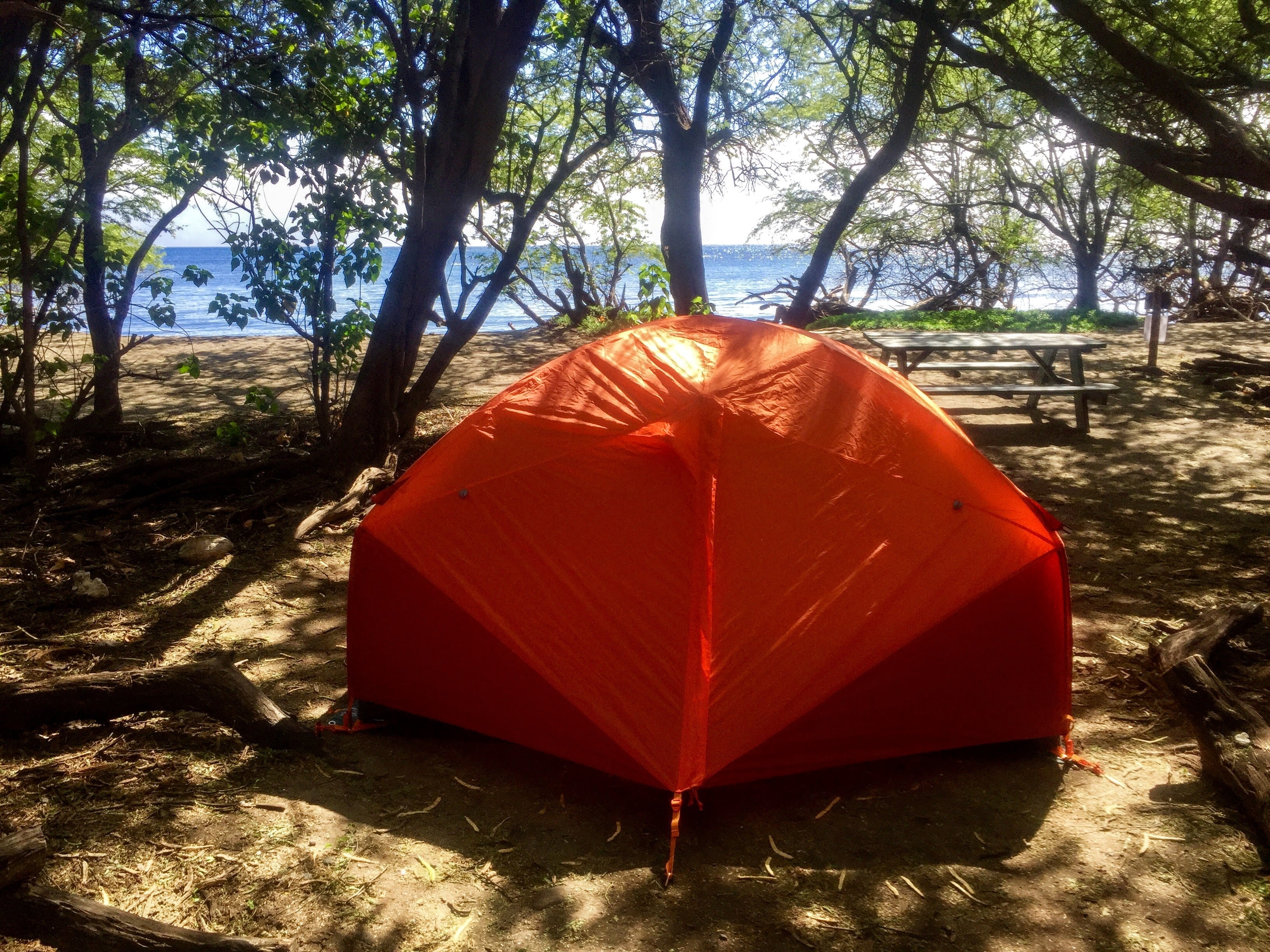
Want to travel to Maui, but can't afford the $300 hotel rooms? Maybe tenting it at that $20 campground that's 10 minutes outside of town isn't so bad—especially if doing so allows you to spend 9 days on the island instead of just 2.
Want to take that long road trip to visit a bucket list destination, but can't afford both gas and hotel rooms? Maybe a quick overnight stay at that state park along the way can help.
I'm not saying that you shouldn't stay in a hotel occasionally, or cash in some points for a room with your own private bathroom and complimentary little shampoo bottle. But adding the travel camping routine to your repertoire? Well, that gives you quite a few more options to play with. Suddenly, skipping that second hotel night stay to camp instead means that you can now afford that special boat tour, or maybe to extend the trip an extra day, or to indulge in a night of bar-hopping around the trendy downtown district. That flexibility can sometimes mean the difference between an experience you'll never forget, and a slightly more private place to take a shit.
If you follow my travels, you know that I spend a ton of nights each year sleeping in a tent. But the majority of those are actually travel camping nights—not nights I'm spending backpacking or "camping with friends" (though I'd certainly love far more of those last two). Most of the nights I camp aren't for the camping at all—it's simply a way to spend more of my time traveling, exploring, and adventuring. And that's why I do it. And why you should too.
My primary goal with this website is to help you Just Get Out More. Since travel camping is one of the key strategies to doing that, I'll be writing in much greater detail on how I go about doing it in the not-too-distant future.
How to make ice last longer in your cooler
Making ice last longer in a cooler requires a bit of pre-planning and following some best practices while you're on the road. Here's a simple guide for how to get the most out of your ice cooler.
The basic underlying principle
The basic concept behind making ice last as long as possible is this: limit the warmer things it comes into contact with. Basically, every tip below is intended to serve this one goal. For instance, the more warm outside air the ice comes into contact with, the faster the ice will melt trying to cool that air, and the sooner you'll be buying more ice. By focusing your attention to reducing the things that the ice needs to cool off, you'll make the ice last that much longer.
Preparing for a trip
Always pre-chill
This one is pretty easy and has the most immediate impact on your ice. Don't start with a warm cooler or with room temperature drinks or you'll immediately be starting from a deficit. It can take up to 2.5 pounds of ice just to cool two six packs kept at room temperature. Since I keep my coolers in the hot garage here in Phoenix, that means bringing the coolers inside the night before a trip and adding a small refreezable ice block to pre-chill the cooler itself. I also make sure all of the items that will be going into the coolers are properly cold too. That way, when I finally load everything in the morning, my ice won't be wasted cooling everything down to a cold starting temp.
Use separate coolers
For longer trips, always bring separate coolers for your food items and for your beverages (and any other items you more regularly need to access). By doing so, you'll ensure that the items that need to stay cool the most—the food items–aren't accessed as frequently and stay colder.
For example, on long weekend trips, I usually use a 70qt cooler for our main food items, supplemented by a 28qt cooler for drinks. The 28qt cooler goes in the backseat so that we can snag a soda refill while we're on the road, whereas the larger food cooler lives in the back of the vehicle. We also sometimes add a "stash" of additional beverages in the large cooler for replenishing later in the trip. Having a separate drink cooler is especially useful at camp, where you might have it closer to the action than your large food cooler. If you're planning on having some adult beverages by the campfire, it's especially useful to limit access to just this cooler alone.
If you're bringing food for what seems like a small army, you can also divide your food coolers into various days of the trip. That way, you're only opening the "Day 6/7 cooler" on days 6 and 7, which will help ensure that those items stay cold longer.
Keep it organized
It pays to stay organized when filling your coolers. That's because the more time you spend with the cooler lid open, searching for that bottle of mayo or that pack of hot dogs, is more time that you're replacing cold air with warmer outside air that the remaining ice will have to cool.
I suggest a few practice runs playing around with the layout of your cooler and the items you commonly bring on trips. Having a standard way of organizing the cooler means that you—and hopefully those you usually travel with—will always know where things are. If you want to be extra organized, you can even tape a layout map to the top of the cooler. You might get teased a bit by your campmates, but you'll have the last laugh when your ice survives the whole trip.
Give priority to perishables
Put the items that are the most perishable, like meats and dairy, closest to the ice. Items that need to stay cool the least, such as vegetables, go near the top. This seems like a no brainer, but I'm amazed at how many people fail to do this.
Use a lid barrier
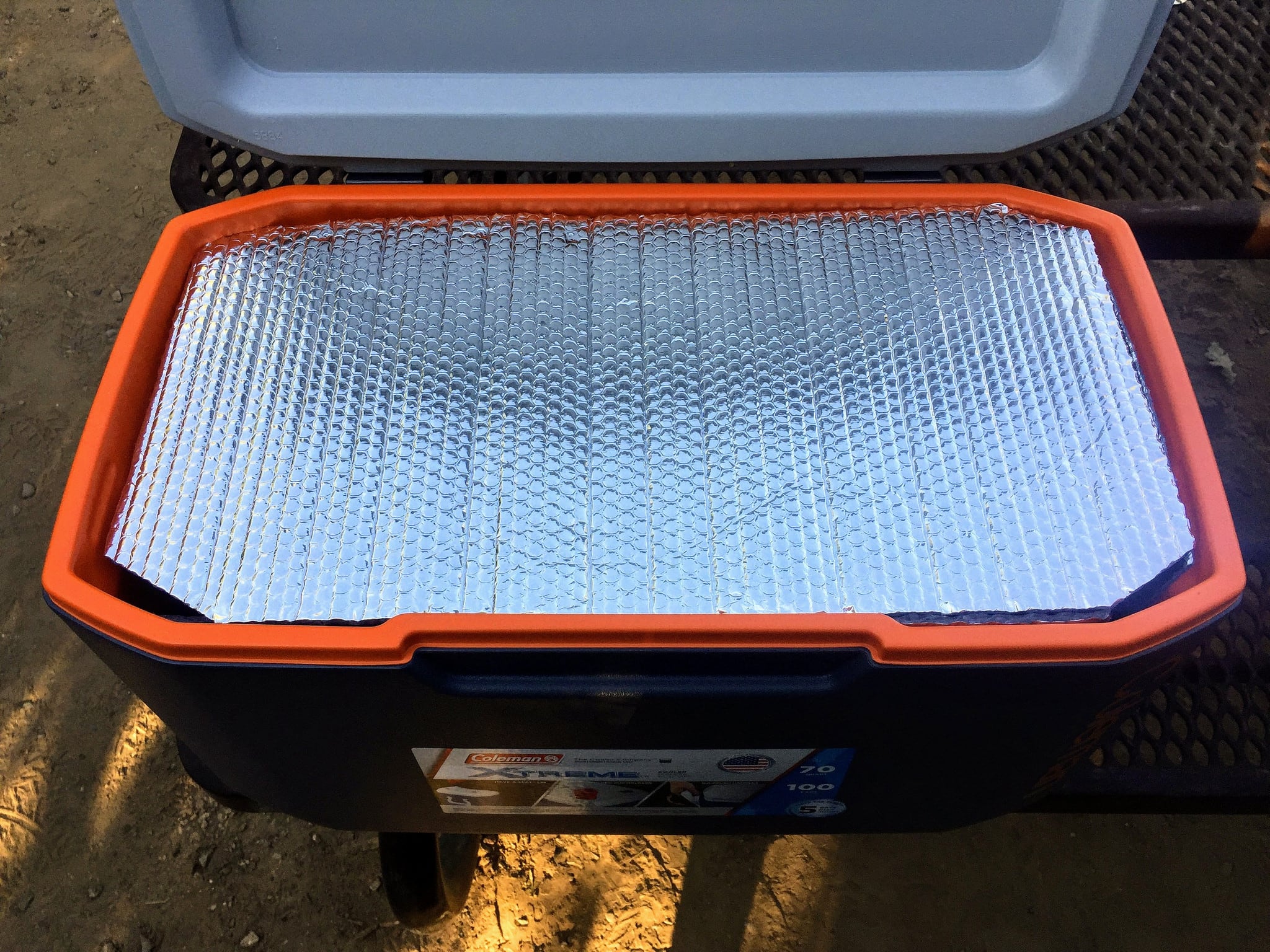
I'm a big fan of using a lid barrier in a cooler. I use a cut-out of reflectix (a sort of aluminum-lined bubble wrap that is used as insulation) to cover the contents of every cooler I use—even the flimsy soft-sided ones. As the ice melts and I consume items from the cooler, the lid helps insulate the ice and food from the resulting warmer dead air above it. In fact, I also line the sides of my primary food cooler with reflectix, too, which seems to add quite a bit to its performance. It's a great deal in my book, as you'll recoup the cost of an entire roll in just a few trips. If you can't go the reflectix route, you can also trim something like a cheap foam camping pad or even the lid of a styrofoam cooler. Even a plain old towel is better than nothing.
Adding the ice
Cooler manufacturers recommend about .75 pounds of ice per quart. That means roughly 50 pounds of ice for a 70qt cooler! By following the steps outlined in this guide, however, I routinely get away with about half that. For long weekend trips of 3-4 days, I typically use one 10lb block of ice in my food cooler, and then split a 20lb bag of cubed ice between my food and drink coolers. Occasionally, I'll split another 10lb bag between the two coolers late in the trip, especially if I've added more beverages or food.
Block ice vs cubed ice
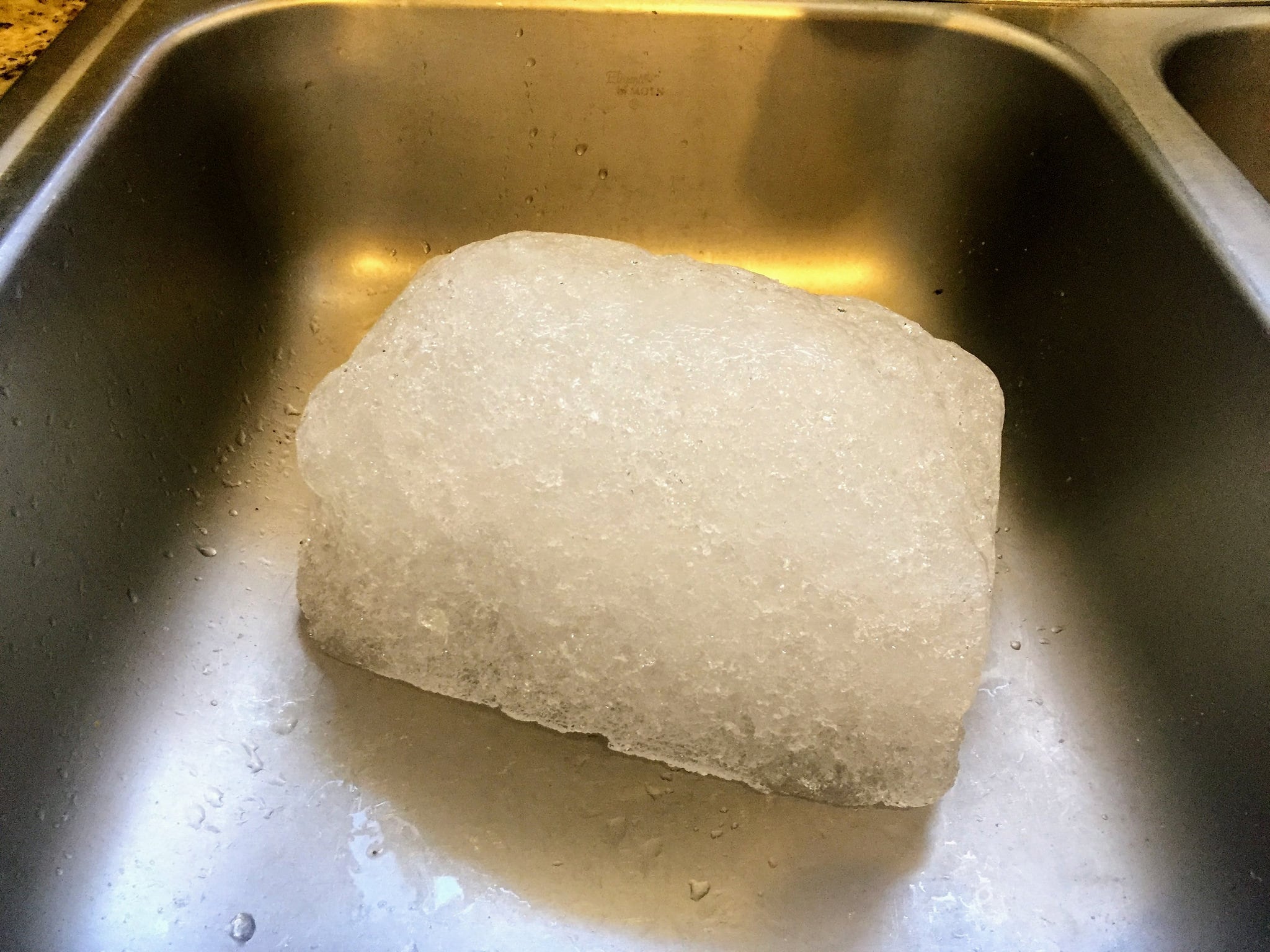
Don't fall for the "block ice vs cube ice" debate.
Get both.
Cubed ice is best for more effectively chilling items, while block ice will last much longer. For most uses, a combination of both works the best. Start with one or two blocks of ice, fill the remaining space with the items you want to keep cold, and then add the cubed ice at the end. The blocks form a central core of solid ice, while the cubed ice falls between the gaps. You get the best of both worlds.
Keeping your food dry
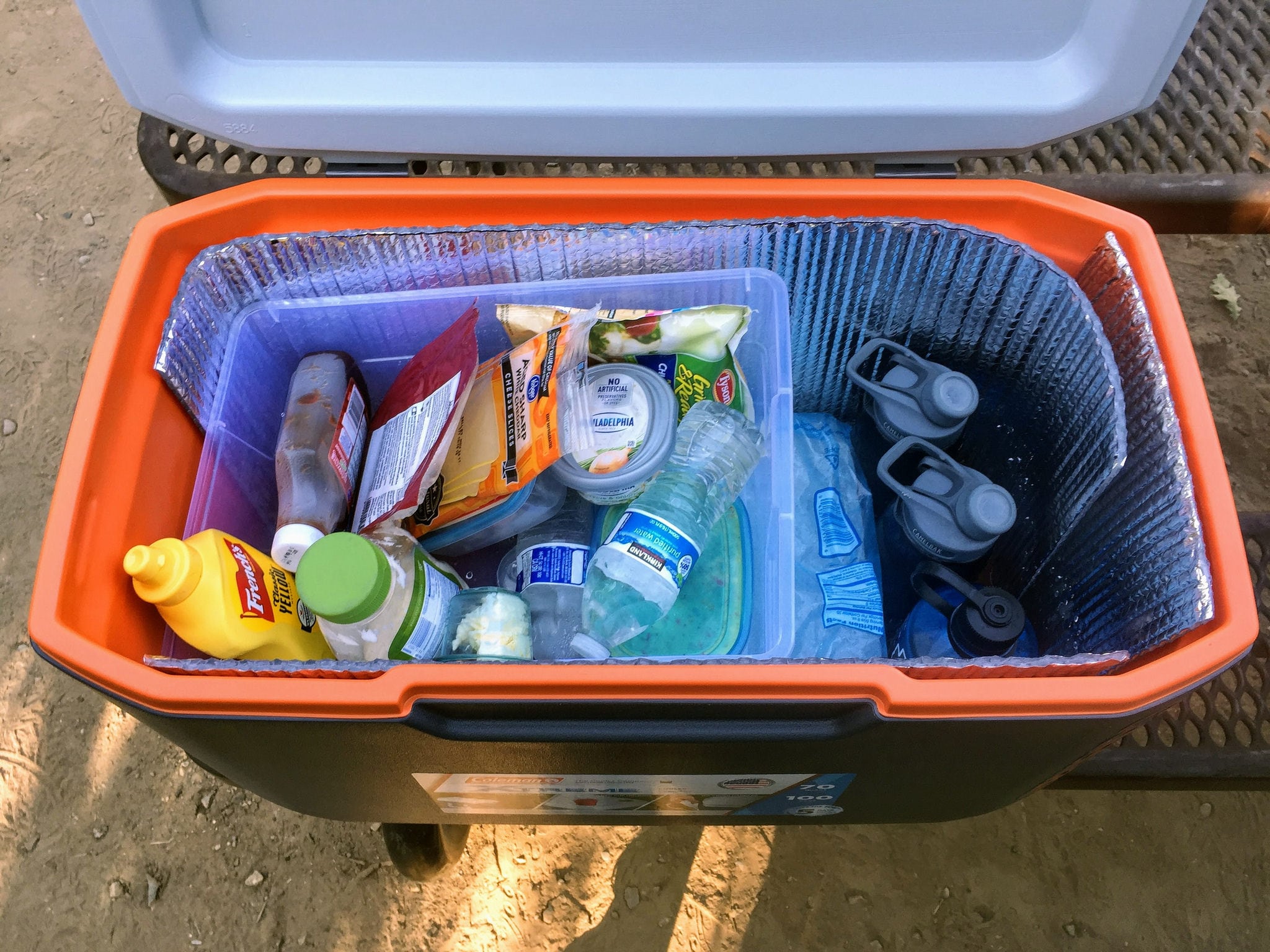
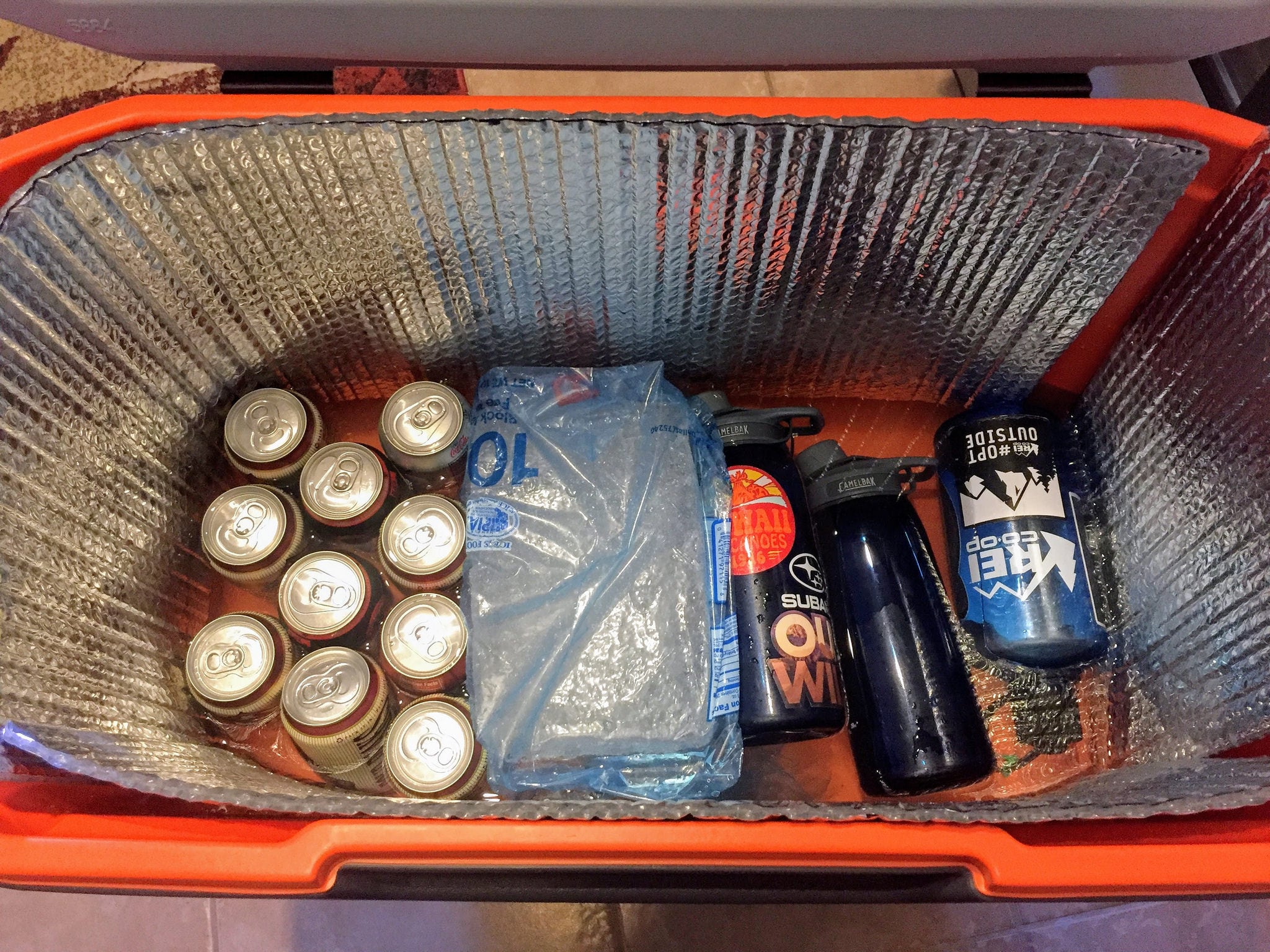
Ice melts, so be sure that everything that you want to keep dry is wrapped in a ziplock bag or waterproof container. Yet somehow, icy water seems to make its way into some of those bags and containers over time. As a result, I use a cheap $2 plastic bin inside the cooler that I load all of my food items in. The bin sits on top of the ice and also helps keep everything organized and accessible. It's easy to remove all of the food with one hand, or hold it up while I toss in some more ice.
Use frozen water bottles
My favorite trick for helping to keep ice longer is to freeze several liter water bottles for use as additional ice blocks. I often toss these into the food bin mentioned above to ensure that things stay cold (you can see a couple in the photo above, too). Once these frozen bottles melt, they conveniently transform into cold water bottles. Sometimes, I'll do the same with more rugged nalgene-style water bottles. It's great to have icy cold water for that mid-trip hike.
I also freeze one or more larger 2-quart bottles I've filled with water. Because they're larger blocks of ice, they last longer and help supplement the ice I otherwise need to buy. The best part of this is that you can just toss these bottles back into the freezer after the trip and they're ready for next time. You'll occasionally need to replace these after they've been thawed and re-frozen several times. When I'm using a small cooler for a daytrip, I'll often skip buying any ice and just use these frozen bottles instead.
Fill it up & reduce dead air
A full cooler will stay colder longer than one with a lot of dead air. So first, make sure to choose an appropriately-sized cooler for your adventure. Then, be sure to fill it with enough ice for the trip. Still have space? Maybe it's time to add a few more frozen water bottles. If you still have extra space left in the cooler, consider filling it with a towel or other insulator, like foam pads or additional sheets of reflectix. The goal here is to leave as little space as possible for warmer outside air to settle inside the cooler when it's opened.
Use dry ice to keep things frozen
Dry ice will help keep your food cold—even frozen—for much longer than normal ice, but it requires some special planning and safe handling. For instance, you'll need to wear gloves to handle it, and it must be wrapped in paper, not plastic. Because it's the solid form of carbon dioxide, it doesn't melt into water the way ice does. It's not sold at just any ol' gas station like regular ice, so you'll need to do a bit of research first, too.
If you use dry ice, you'll need to give some special considerations to how you'll organize your cooler. Most importantly, it can cause damage if it comes into contact with the sides of your cooler. There are a few ways to deal with this, but the easiest seems to be buying a styrofoam cooler and cutting it down to create a sort of "tray with sides" that the dry ice can sit on. Beyond that, you'll also want to keep in mind that because it's so cold, anything touching it will freeze. That makes it great for keeping frozen things frozen, but it can also wreak havoc on items that you don't want to freeze.
One technique for using dry ice involves using it in a dedicated cooler to refreeze some reusable "blue ice" packs. Basically, you use blue ice blocks in your normal cooler, with a spare set lined around a dry ice block in another cooler. When the blue ice blocks in your normal cooler warm up, you simply swap them out with the ones in the dry cooler. Depending on your situation, you'll likely have to do this swapping several times during a trip.
While you're on the road
Keep sun and heat off the cooler
Always keep your cooler covered from the sun, whether it's in your vehicle or at the campground. The hot sun can make cooler ice melt twice as fast as one in the shade. I always cover my food cooler with a blanket or pillow and my drink cooler with a fleece or down jacket. You could also make a cover using reflectix, but I recommend putting something over it to reduce the insane sun glare you'd get. Having system like will ensure that your coolers remain protected from the harsh rays of the sun. It's also important not to leave your cooler on hot asphalt or other warm surfaces, like metal picnic tables that have been in the sun all day long. Again, a piece of reflectix might be a perfect solution for reducing the heat transfer when the cooler is on a hot surface.
Similarly, it's best to keep the cooler inside the air conditioned vehicle as you're driving, rather than on a roof or hitch carrier. If it's appropriate, don't keep your cooler in a parked vehicle that's baking in the sun. As any desert dweller can personally attest, vehicle cabins can get extremely hot just sitting in the sun. Keep in mind that if bears or other food-snatching animals are present in the area, you may not have a choice but to store your food in a hot car or a metal bear box in the sun. In that case, do your best to keep it as cool as possible; I sometimes employ towels or my sleeping bag to help insulate.
Keep the lid shut
Don't leave the lid open longer than necessary. Consider what you're getting from the cooler before you open it. This is pretty simple advice that goes a long way towards extending the life of your ice. Keep it shut.
Put food back quickly
It's easy to grab all of the food items you'll need for a meal and let them sit out while you cook, prepare, and eat. However, your ice will have to work less hard to cool foods that are still cool and haven't warmed up to ambient air temperature. So when you have what you need for your meal, return the remaining items to the cooler promptly.
Don't drain cold water
Just because your cooler touted a water drain on its label doesn't mean you need to use it. Recently melted ice is still helping to keep your food cold, so you don't need to drain your cooler just because you hear some sloshing. Melted ice water preserves frozen ice better than empty air space. The only time you need to drain water from your cooler is when you've purchased more ice and you need the physical space in the cooler.
Adding more ice
If you've followed these strategies, you won't need to add more ice nearly as often as you otherwise would. That said, I often adhere to the "better safe than sorry" philosophy when it comes to food items, so I might add an additional 10lb bag of ice while gassing up my vehicle during a road trip. There are many factors that come into play here, so it's hard to provide a useful recommendation for when you should consider adding more ice. If you're in doubt, you might as well spend the extra $2-3 bucks and buy an extra bag.
When you're at the store buying ice, try to grab ice from the back of the cooler where the refrigeration unit is usually located. While all of the ice in the cooler is below 32° F, the ice in the back is usually several degrees colder, as it doesn't come into regular contact with the warmer outside air when the door is opened. You might get an annoyed look from the convenience store clerk who faced all the ice to the front, but they aren't the ones paying for the ice so grab the coldest one you can find.
Use a smart thermometer
If you constantly find yourself wondering if the food in the cooler is, indeed, still cold enough, then it's time to invest in a thermometer. There are several inexpensive models (like this one) that will not just tell you the current temperature in your cooler, but will keep track of both the high and low temp readings. Keep it in your food bin in the cooler and you'll be able to keep close track of how your food is doing. Press a simple reset button to clear the recorded values as you place it back in and close the cooler lid.
Which cooler to buy
There are quite a few outdoor blogs with reviews and comparison demos of various cooler models out there if you're interested. But keep the following points in mind as you read through them and consider what to buy.
Maybe you don't need that Yeti...
For all of the swooning over high-end premium coolers like Yeti, I'm skeptical that there is a large market of people who actually need the added performance that they provide. I'm not picking on Yeti specifically here; to be fair, that's usually true of any high-end piece of outdoor gear. The top-of-the-line stuff performs marginally better, but almost always at many times the cost.
Does it make sense to spend an additional $350 to get that extra 10-15% of performance? Maybe it does if you're off on a two-week wilderness rafting trip. But for someone like me, who uses mine almost exclusively during weekend camping trips, or during occasional long road trips where I'm passing countless gas stations and grocery stores? Nah. I'd rather use that money for more travel, personally.
But skip the low end stuff, too
But that doesn't mean that you should just grab the cheapest cooler you can find. If you spend any significant time using a cooler, I'd recommend getting a good one. You just don't need to get the very best one you can find. Think about what features are actually going to be useful for you, and what sizes are most appropriate. Do you need a certified bear-proof cooler when you always keep your cooler in the car at night anyway? Take some measurements and be sure that the cooler will fit where you need it to in your vehicle. Things like that may end up mattering far more than whether it can keep ice for 5 days versus 6, especially if you're usually only out for the weekend.
The coolers I use
I recently upgraded my main food cooler from this Igloo MaxCold 70qt rolling cooler to this lovely Coleman Xtreme 70qt cooler. I'm pretty damn happy with the change, even though both claim to keep ice for 5 days and have identical capacities. Why?
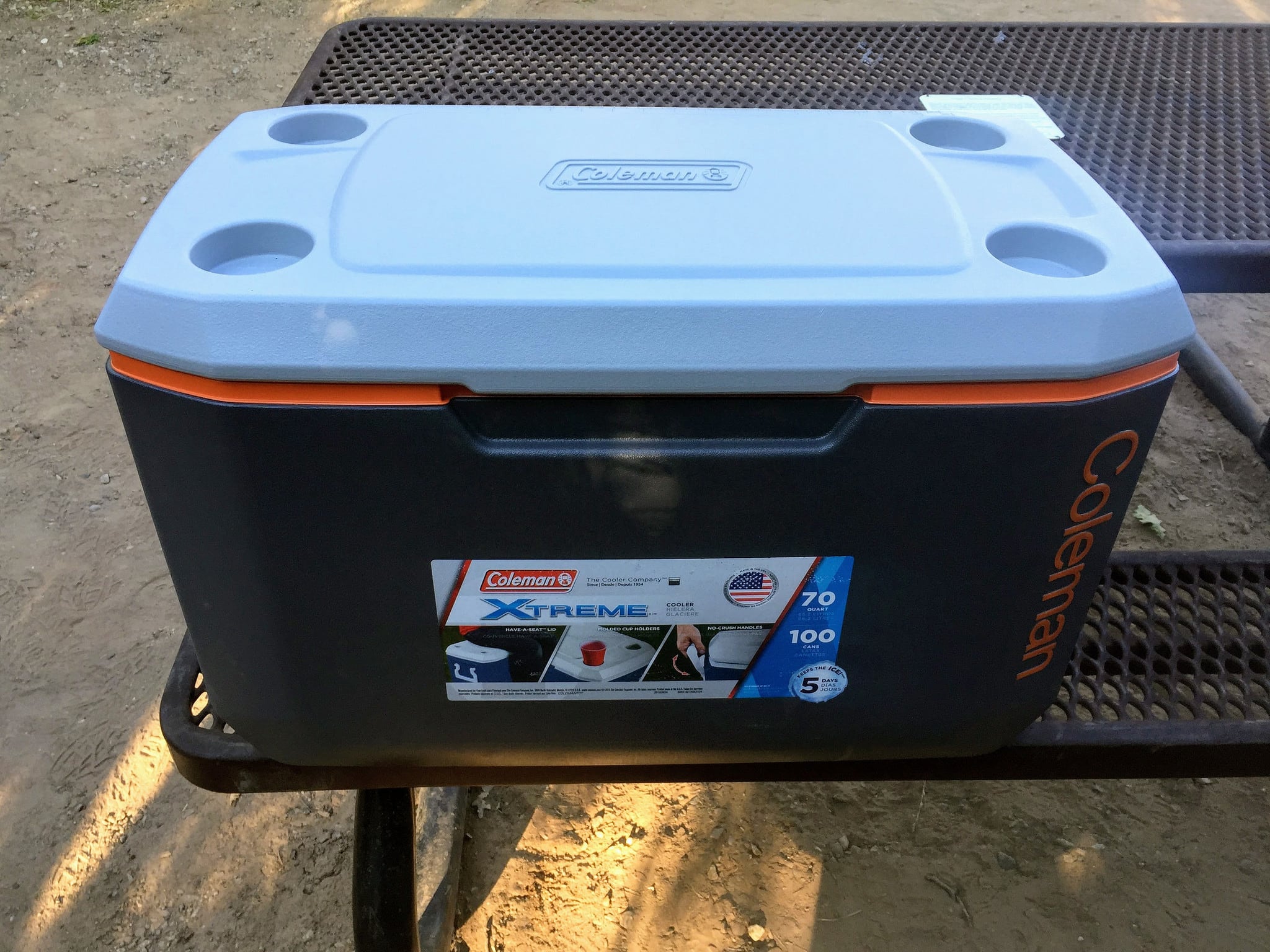
Well, the awkward cube-shape of the Igloo made it difficult to fit into my Subaru Outback without partially obscuring the view out the rear window. Also because of its height, I couldn't open the lid enough to grab anything while it was in the vehicle. I never used the wheels, since I rarely camp anywhere with paved campsite walkways. I also hated that its lid was easily removable, as it would routinely topple off when I didn't want it to. Most importantly, it didn't work well for how I like to lay out my cooler—it was too tall and not long enough. Don't get me wrong, this cooler is perfectly good and I'm keeping it for those times when it would be a great solution, like tailgating at college football games in the fall.
But for road trips, the more horizontal Coleman model works far better for me. The food bin I use fits perfectly on top of a standard ice block, while still providing easy access to water bottles or drinks along the two sides. It fits very well in the car, which is makes packing and unpacking everything else a breeze. I can even open it while it's packed away to snag a quick item. And it's unexpectedly handy to use as a quick seat. It sounds silly, but my overall experience is far better with the new cooler than the old one.
The main point here is that there are a number of considerations you should take into account when choosing a cooler. Don't be afraid to make a selection based on criteria other than its raw insulating capability.
Have any additional tips?
Let me know in the comments if you have additional tips or tricks for extending the life of your cooler ice.
Share or pin this
Help your friends and followers learn how to keep ice longer in their cooler, or stash this guide away for your next trip.
Disclaimer: I've included a few Amazon affiliate links in this post. If you decide to purchase something using them, it'll cost you nothing but will help defray my costs.
Campsite 12 at Kodachrome Basin State Park
Sometimes, you find yourself in a really great campsite. Last weekend was one of those instances.
While we often disperse camp on BLM or National Forest lands, we had decided to reserve campsites last weekend, given our rather aggressive itinerary. Kodachrome Basin State Park seemed like the natural first night's stop, since we'd be driving Cottonwood Canyon north through the middle of famed Grand Staircase-Escalante National Monument. We selected site 12 from the available options, and it did not disappoint.
What makes a good campsite?
For me, there are a few things that I tend to prefer in campsites. Please note that I'm referring to developed campgrounds here—not dispersed or backcountry sites, which I'd evaluate using much different criteria.
First, I prefer small to medium-sized campgrounds, usually between about 15-40 sites. Larger campgrounds tend to have very small sites that feel nearly on top of each other, and tend to be more crowded to begin with (hence, their large capacity). Extremely small ones often lack useful amenities, like flush toilets and sinks. Don't get me wrong, I'm fine using vault toilets and otherwise roughing it. But if I'm paying $15-30 for a place to sleep for the night, I expect a few additional conveniences. It's often nice to have showers too, especially if you've been outside all day. I tend to sleep better when I feel clean. I don't rely on firewood being available for purchase at the campground, but it's always nice to have as a backup or supplemental option.
While campgrounds can sometimes be a fun social experience, I usually prefer more privacy. So I look for sites along the outer loops and especially those that have a visual barrier between my site and neighboring ones. Shade can be an important factor too, especially here in the desert southwest, so some tree cover or a shade structure is often appreciated.
I usually don't care much about distance to the restrooms or water spigots; neither is usually too far way to cause much hassle. However, the inverse isn't true—proximity to the restrooms or water can mean a constant stream of visitors passing by your tent. Worse, occasional whiffs of an overly ripe vault toilet can really ruin the camping mood.
If you're tenting it as I often am, a flat tent pad that's not too rocky is key. After that, it's all bonus. Being a westerner, I have a relatively high expectation that really good campsites should offer some sort of expansive or scenic views, too. Proximity to streams or lakes is usually nice as well, though sometimes that means more bugs or higher winds.
Evaluating campsite 12 at Basin Campground
On par, campsite 12 was nearly perfect for our needs last weekend. The campground is the perfect size, and offered just the right amenities. The restrooms were clean and modern, and the shower stalls were spacious. While there wasn't any way to adjust the shower temperature, it was exactly the right temp for me. In addition, a sink for washing dishes and a self-serve supply of firewood—a handy to carry bundle for just $5, with proceeds benefitting the Boy Scouts—were appreciated conveniences.
The site is well isolated from neighbors with its own mini loop, making it feel like you were alone. Due to the configuration of the campsites, all RVs were on the other side of the campground. Best of all, it was at the far end of the campground near the head of the basin, making for some excellent panoramic views. We'll be back the next time we find ourselves looking for a campground in the area.
If you go
There are multiple campgrounds atat Kodachrome Basin State Park, but the one you're looking for is the largest one, Basin Campground. Campsites are $20 per night, plus an $8 registration fee. Check availability on site 12; if it's already taken, there seemed to be several other sites that looked like quality backup choices. Not all sites are reservable online, so you might be able to snag one on a first come, first served basis, too.
Five ways to keep cool while hiking in the desert
One of the keys to desert hiking is staying cool. The most obvious way to do this is to limit your desert hiking to the cooler months. But for some places, there aren't exactly many "cooler months" to begin with. As someone who has spent my own fair share of adventures in the triple-digit heat of the Sonoran Desert, here are my five go-to tips for staying cool in the summer heat.
Bring your own shade
Part of the reason it feels so hot to hike in the desert is that there is often little shade. The constant pounding of the sun can really wear you down. The easiest way to avoid this is to bring your own shade. And the easiest way to do that is to carry an umbrella. Umbrellas are great because they keep your skin and clothes cool, and they can help you avoid sunburn. Even if you don't want to carry one while you're actively hiking down the trail, they're great for creating some temporary shade during breaks and lunch.
A couple quick notes on umbrellas. Don't worry so much about buying an expensive umbrella made especially for trekking. They work slightly better to reflect sunlight and are a bit lighter; but for most people, I don't think they're worth the extra money. The desert is full of things that poke, snag, and stab—and you shouldn't be surprised to find a tear in yours at some point. It's a good idea to bring some duct tape on any outdoor adventure you take, and this is just another one of those reasons.
Stay covered
It might be counterintuitive to those visiting the desert to catch some sun, but you'll stay cooler by covering up rather than stripping down. Again, it's all about keeping the sun off your skin. The best endorsement you can find for this is from those that spend their workday outside. Drive some neighborhoods and see what the folks doing landscaping work are wearing. Invariably, you'll find they're donning lightweight long pants, loose long-sleeved shirts, and either a wide-brimmed hat or (especially if it's windy), a baseball cap over a bandanna that's covering their neck and ears.
The added benefit of this approach is that you don't need as much sunscreen (you'll still need it for exposed skin like your face and back of your hands), which most people don't reapply nearly often enough anyway. And as mentioned above, the desert is full of things that poke and scrape; after wandering through the brush, you'll appreciate the long pants and long sleeves. Trust me on this.
Get wet
The first rule of hiking in hot weather is to bring far more water than you think you'll need.
Don't break this rule.
One of the best ways to stay cool is to dampen what you're wearing. I use the extra water I've brought with me to do this regularly throughout the day. I add some water to the inside of the hat I'm wearing, letting it soak through to the outside before tossing it back on my head. If you have a quick-dry hat, you might want to toss a cotton bandanna inside to capture and hold the water longer. You can also wet the bandanna and drape it across your neck.
Ice your water
Not all of that extra water needs to be in a drinkable form, however. I often like to freeze a water bottle or two the night before a hot weather hike. You can use these as ice blocks in your pack to help keep your lunch and/or snacks cold (side note: a frozen snickers bar is an amazing snack in hot weather).
Feeling a bit hot? Take a break and snag the frozen water bottle from your pack. If your hike goes long and you start to run out of water, this becomes a very nice backup option as it melts. Otherwise, toss it back in the freezer when you get home and it'll be ready for next time.
You can also add ice cubes to the water bottle (or water bladder) you'll be drinking from. I usually transport my water to the trailhead in a cooler to help keep it as cold as possible before starting the hike. I also keep some cold water (as well as a post-hike beverage, like a soda or a "yay we did it!" trail beer) in the cooler, along with a snack that'll help cool me off. There's nothing like arriving at your car after a hot hike to find a cold beverage.
Time it right
Finally, when you hike is an important consideration during the hot summer months. Early morning is the best time to be on the trail, followed by after the sun starts to set. The desert is really alive at night, and not much wildlife will be out in the middle of a hot day. You shouldn't be either. Bring a headlamp and explore the desert at night—just remember, it's harder to navigate in the darkness, so be prepared.
Most of my mid-week summer hikes involve hitting one of the mountain preserves here in Phoenix right after work and just before setting sun. You get the gorgeous sunset, get to watch the desert come alive, and get to see the city lights at the summit before you head back down. And since the desert breeze kicks up around dusk, your hike will be far more comfortable than it would have been just two or three hours earlier.
Have another tip for staying cool? Tell me in the comments!
The secret about National Park visitor center restrooms
If you've been to quite a few National Park units—especially the ones that don't close at night—you may have noticed something odd about the layout of their visitor centers. In nearly all of them, the public restrooms are located on the exterior of the building, as opposed to down an interior hallway inside the visitor center. There are exceptions to this, certainly, but it's prevalent in the types of national parks where visitors are coming and going after hours, especially ones with a campground.
Because they're accessed from the exterior, these restrooms are open 24 hours a day, 7 days a week—even when the visitor center itself is closed.
That's a great tidbit to know, especially if you're camping in the park's campground or on nearby public lands.
Upgrade your park camping experience by making a stop at the visitor center restroom.
Unlike the available facilities at many park campgrounds, the visitor center restrooms will have flushing toilets, sinks, and even mirrors. And since they're often cleaned right after closing, you'll usually find them freshly stocked with paper products and in spic-and-span condition. You'll usually find a water spigot there, too.
This last weekend, Jen and I camped at Natural Bridges National Monument in southern Utah. The park campground is small and a bit sparse in amenities—there's no drinking water and only two pit toilets are available.
That might not sounding like a particularly appealing campground to some. But don't let that keep you from staying there.
It's a short walk down the park road to the visitor center restrooms, where you'll find flushing toilets, sinks and mirrors, and fully stocked paper products. And did I mention that the floors will have been freshly mopped?
And since few people seem to make use of these restrooms after hours, you'll likely have the place to yourself. We certainly did this weekend.
Keep in mind that many state parks and other recreation areas also have "always open" restrooms attached to their respective visitor centers, too.
So the next time you feel skittish at the thought of using a campground pit toilet, consider making a stop at the visitor center on your way to the campground each night (or morning, or both).
The single best way to save money on travel
Travel can be very expensive. But it doesn't have to be.
There's one simple way to save money on your trips:
Camp.
Yep, not an earth-shattering secret, I know. But it's still a powerful way to travel. Not only does it allow you to experience the local environment in a more intimate way, but it allows you to save some serious bucks along the way.
By camping instead of staying in hotels, you can often save enough to extend your trip by 30% or more. That's huge.
If your goal is to travel cheaply enough to afford an additional vacation or two this year, camping might be the answer.
A fraction of the cost
I never stay at the high end resorts or hotels, but I usually try to avoid the bottom-barrel motels, too. For me, a clean room and preferably a good pillow is what I'm looking for. That means that I'm routinely spending $75-200 a night on a room. That adds up quickly, especially considering how little time I usually spend in the room.
By contrast, camping is a fraction of the cost. Campsites at developed campgrounds usually run between $15-45 or so, with full service RV campgrounds starting around $50. And you can also camp for free in dispersed campsites in most national forests and BLM public lands—that's tens of millions of acres where you can sleep for free.
To put some numbers to it, here's what a stay in Grand Canyon National Park would cost you for a 3-night, mid-week trip over July 10-13, 2017. The cheapest hotel currently available on hotels.com is a nice 3-star Best Western in Tusayan, about 6 miles from the park boundary.
Best Western in Tusayan: $270/night ($810 total)
Mather Campground: $18/night, ($54 total)

➞ Savings: a whopping $756
Maybe this is a bad example, and you'd be cool with staying 60 miles away in Flagstaff where you might be able to snag a $120 hotel instead. Ok, fine. But you'd still be saving $300 by camping. And you'd be within walking distance of the sunrise or sunset over the canyon. And yes, you'd still have flushing toilets and showers, plus a picnic table and fire ring—and even a free ranger campfire program.
It's not just about not paying for a hotel
The most obvious expenditure you'll save by camping is on hotel bills. For my travels, that's usually the highest cost. But camping provides another possible cost-saving measure: the ability to cook your own meals.
Cooking for yourself will undoubtedly save you gobs of cash. Sure, it's much more work to cook for yourself. But if you're looking to save money, this is another great way to do that.
Don't want to cook? No worries, you can just as easily eat out and head back to camp whenever you're ready to unwind and go to bed.
Speaking of unwinding, is there anything better than an adult beverage around a campfire? Yeah, that's a lot more fun than drinking in the hotel bar or alone in your room.
Camping isn't always an option
Granted, camping won't always be an option. If your goal is visiting Manhattan...well, camping probably isn't a particularly viable choice. But it does work for a surprisingly large subset of America, especially when you're on the move between places.
Weather plays a major consideration as well. I don't recommend camping during your summer swing through Phoenix, for instance—though you could camp an hour north in the cool pines of the Mogollon Rim without any issues. Likewise, camping in extreme cold or snow offers other unique challenges that you might not want to deal with.
On the other hand, lodges in popular national parks often sell out weeks or months before the campgrounds.
Camping does require an initial investment
Now, you'll need at least some gear to make camping a reality. But you probably don't need as much as you think. Even better is that after that initial your gear will last years and years, reducing the cost of future trips.
The most basic gear needs:
- tent
- sleeping bag
- sleeping pad
- headlamp
You don't need the very best of these, though the more you spend the better gear you'll get. But for occasional use, some of the cheapest models you can find at Wal-Mart or on Amazon could be perfectly functional for your needs.
And you don't actually need a tent, or a sleeping bag, or a sleeping pad—you just need to accomplish the same function. You can use your own blankets as a sleeping bag, or a foam mattress topper as a sleeping pad, for instance. And I often sleep in the back of my Subaru Outback instead of pitching a tent.
You can also rent gear from places like REI, or simply borrow it from friends. In fact, that's probably the best way to get started.
The other benefits of camping
Saving money—often in order to extend my trip—is usually my primary motivation for camping during road trips. But there are quite a few additional benefits of camping you shouldn't overlook.
- Camping provides a more intimate connection to place. You'll learn more about your destination by spending time in its native environs.
- It's also good to disconnect from screens, and it's good to see the stars once in awhile. Disengaging from the digital world can refocus your mind on more important aspects of life—not just how many likes your last instagram post has gotten.
- Camping also fosters deeper personal connections with your traveling companions. Shared experiences such as camping create stronger memories and nurtures relationships.
But probably the most obvious benefit is the flexibility it provides. When you're self-contained, your schedule has a bit more give in it and you're not quite as locked in to your initial itinerary. So if you run across something unexpected that you really want to do, you can. And if you're not enjoying where you're at, you can move along to a new destination.
Stay tuned
You'll read quite a bit here about camping, including both tricks and gear to make your time outside that much better. So don't worry if you're not quite an expert just yet. I'll help you get there.
A short guide to park passes
When someone hears about my national park quest, they often ask me if I've visited a particular place that they have enjoyed. As often as not, the location they mention is not part of the National Park System.
That's not particularly surprising. There are a wide variety of land management agencies at the national, state, and local level—each of which have different purposes, rules, and fees. Unless you're really paying attention, it's easy to get confused.
If you're inclined to buy an annual park pass—which I hope you'll consider doing—it's important to understand what you're getting. I'm using metro Phoenix as the example here, so your local passes may vary.
So in the interest of clarity, here's a quick rundown:
Maricopa County Parks
This includes just the 10 or so regional parks in Maricopa County, Arizona. The big question is whether or not you'll be boating at Lake Pleasant—there's one annual pass for the lake, and a separate one for the rest of the parks. Other counties or metro areas may or may not have their own park systems and annual passes.
Arizona State Parks
This includes the state parks that are still open. Again, you'll need to decide if you'll be doing a lot of boating. The standard pass doesn't include the river parks on weekends (Friday-Sunday) or holidays, while the premier pass does. All states have a state park system, but their rules for annual passes varies.
Arizona State Trust Lands
This includes state trust lands (which are not considered public lands) and is actually a permit, so be sure to read the fine print as they include some important restrictions. You won't find any visitor services here. Most Western states have their own systems of state trust lands; their primary purpose is not recreation, so don't expect park-like amenities or rules.
Federal lands
This includes National Parks, National Forests, National Wildlife Refuges, and Bureau of Land Management lands where you pay an entrance fee. If it has the word "national" in the name of the area, it probably fits under this heading. There's a single pass called the America the Beautiful: the National Parks and Federal Recreational Lands Pass that is supposed to cover entrance fees for all of these.
A very important note here. Some National Forests, including several in Arizona, now exclude some very popular fee areas from being covered by this pass. They call some of these sites with "enhanced amenities" and others are technically operated by a private permittee or concessionaire, but you and I might not notice the difference. Yes, this is total bullshit that's still a better-than-nothing attempt to deal with the inadequate budgets Congress appropriates for our public lands. These areas also often have their own local Forest pass (Tonto Pass, Red Rock Pass or Grand Red Rock Pass, and the Coronado Pass are Arizona examples) with daily and annual options which vary with each national forest.
You can also get a highly reduced or free pass if you are:
- disabled
- at least 62 years old
- a 4th grader
- in the military or a dependent of someone who is
- a federal public lands volunteer
A few additional tips
- You can usually buy these pass at any staffed entrance station or visitor center.
- Many places have annual passes for a specific park location.
- These passes usually admit a carload but don't cover any additional fees—like camping or tour fees.
- Areas managed by a concessionaire aren't covered in the federal pass, even for basic things like parking or entrance fees.
Speaking of park passes, don't you think we should have an America the Beautiful pass for kids?