
Intentional Life
The last years of your life suck
Unless you die earlier than you need to, the last years of your life generally suck.
When planning out the course of our lives, many of us see retirement as our “golden years.” Not just the slow wind-down of our lifespan, but the culmination of a long-time goal: the end of the “ugh I have to go to work again today” phase of our lives. It means the freedom to do, well, whatever we want.
It’s something we aspire to, and often make sacrifices to attain. We work harder—postponing important personal goals—during our “working years” to help ensure that we have a better retirement. We don’t take that bucket list trip, or we spend the extra weekends pounding out work deliverables in order to “get ahead.” We defer experiences we want to have. We don't save time or energy for the things we say we really care about.
In short, we try to play the marshmallow game to win both marshmallows.
But what if the last several years of your life won’t be fun, no matter what you have planned for it? Odds are good that it’s going to suck—at least in comparison to your life right now. Put another way, what if the second marshmallow is disgustingly stale? Or maybe more to the point, what if you wait too long and both marshmallows are stale?
What to expect when you’re old
There’s a roughly 50% chance that your partner will die before you. You’ll spend an increasingly large portion of your life in doctors appointments, and awaiting test results, and being seen by various specialists worried about various ailments. You may have significant long-term health issues that detract from your quality of life. Many of your friends will die, or move away to be closer to family or medical services. Small injuries may have big consequences, disrupting or potentially ending your ability to enjoy the hobbies you love. Various body parts won’t work as they used to. You’ll slowly (or sometimes quite quickly) lose important parts of your independence. You’ll get more forgetful, and probably feel bad about it. Your hearing, eyesight, finger dexterity, strength, and mobility will all decrease. You may need daily assistance to complete many of the relatively routine daily tasks of living.
In short, at some point, your life will very likely not be as you’d like it to be.
A new perspective
Now, that doesn’t mean that life will be horrible. You’ll probably have a much better perspective on what really matters in life. You may be very grateful for the opportunity to live yet another day, even if it doesn't look like you might have expected it to a decade before. You’ll adapt, as best you can.
But you won’t be living the same life you did before.
It’s important to plan ahead for this period of your life. Trust me—if you don’t, you may not have much input into the decisions that must be made. It’s also a tremendous burden to push onto your partner, or children, or siblings, or whomever will have to do it for you.
How to plan for your last years
When I do this mental exercise, the first thing that stands out is that it’s a period for which I shouldn’t optimize for doing fun things. Simply put, I know those last few years of my life won’t be fun. They’ll be challenging. I’ll have increasingly little control over my daily life. I won’t need money for travel, as I likely won’t be doing any. In fact, there’s not much “extra” money can do for you.
That doesn’t mean I should spend it all and leave no resources available for those last years. Not at all. Make your last years as good as you can; just don’t count on those years being nearly as good as the previous ones were. Once you cover your basic living costs, you won’t need much more—there’s no additional utility in having a nicer house, or a nicer car, or even a nicer TV.
You’ll want enough resources for good care, and a comfortable place to live, and some basic spending money. But there’s just no marginal benefit in having expensive versions of any of those things. They don’t move the happiness needle at all by that point (and they probably never did to begin with).
What this means to me
So when I think about the last stage of my life—the one that will likely suck—I want to have accomplished everything I wanted before that time arrives.
That means not deferring the experiences I want to have now for the possibly mythical retirement years I am looking forward to. Because not all of those years will be grand. Some—hopefully. But not all of them.
So do more now.
Do it when you can really enjoy it.
And paired with the compounding nature of memories, this will provide you with far greater personal value over the course of your life than waiting until late in life to have the experience.
Better yet, when you do finally reach that stage of older age when you encounter more of the suck, you’ll feel good to know that you predicted this—you did the important stuff early. You front-loaded valuable experiences. You accomplished what you wanted to. You had your grand experiences already, when you could most enjoy them.
I suspect that will make the transition to those sucky years just a bit easier.
This was originally posted on Hey World.
Best reasons to #OptOutside on public lands this Black Friday
This is a short draft written for #NatureWritingChallenge, a weekly exercise to spend an hour writing about a specific topic about the outdoors, then participating in a twitter chat with the other participants.
This week’s topic is the title of this post; though as it turned out, this post is less about #optoutside on Black Friday specifically and maybe more about choosing a life that opts outside regularly. Either way, I think you’ll get my point.
I’ve intentionally abandoned the frantic crowds of Black Friday since 1999, when I first ran across Adbusters.org’s Buy Nothing Day campaign back in college. I’ve since skipped all the crazy sales on all on the crap I really don’t need, choosing instead to either travel during Thanksgiving weekend, spend the day outside recreating, or attending the biennial Territorial Cup game when it’s played at Sun Devil Stadium.
For me, #optoutside wasn’t a new idea—it was just REI finally promoting what a bunch of us had already been doing. If you haven’t been opting outside on Black Fridays, here’s a short list of why you should change that this year.
1. They’re YOUR public lands
No need to buy a damn thing—you already own them!
And they’re among the most amazing places in the world. Spend as much time as you can enjoying them.
2. Memorable experiences > crap you bought on sale
You probably don’t need that thing, anyway. And your family would probably enjoy something a bit more personal as a gift, too, don’t you think? When you’re old and gray, the last thing you’ll remember or care about is that cheap TV you bought on Black Friday. Instead, you’ll remember the things you did and the experiences you had. That day you brought your niece to that cool waterfall and she played in the pool at its base. Or the great sunset you enjoyed during that scenic drive with your girlfriend.
Products become obsolete and worthless, but a funny thing happens with memories—as time passes, your brain remembers them as being even better than they seemed at the time. Memories gain value over time, so they’re a much better investment.
3. Hyper-consumerism blows
When you focus too intensely on what you own, you forget what’s actually important in life. When your self-worth is derived from what you’ve bought, you rob yourself of the uniqueness that makes you you.
Worse is that you’ll never gain any lasting satisfaction by buying stuff. You might get a temporary bump in satisfaction, but there will always be something “better” that comes out that you’ll need to buy to feel the same level of personal worthiness. That’s an awful treadmill to climb onto.
4. The outdoors is good for you
You probably already know this. Yes, you get some exercise. Yes, it’s far better than sitting on the couch or endlessly scrolling through facebook. And yes, it’ll also help you relax and reduce stress.
But beyond those things, it’s also great for deepening relationships. For being present in the moment. Or for new experiences. For contemplation. Or finding common ground. For sharing new places with people you love. Or making new friends.
Basically, for all the things your soul craves.
5. Minimalism & intentionality are sexy
The four most important things you own are your time, your attention, your attitude, and your health. Those four things are the currency of life.
All the stuff you own requires you to spend that currency—you spend your time to make money to buy the stuff, then do the same again to pay to store it somewhere, and then it requires more of your time and attention to manage and use it. We don’t think about it very often, but the cost for our stuff can be a lot higher than you’d expect.
I’m not saying you shouldn’t buy anything, ever—I’m just saying that you should carefully and deliberately consider what things you decide to own. Maybe you don’t need a need new 4k TV because you’d rather save that money to travel, or maybe you don’t need to spend as much of your limited time consuming content from it.
The point here isn’t to shame you into a life of owning nothing or to be overly preachy. It’s just to have the conversation with yourself about what you really want and what things should earn your attention. Being intentional and deliberate with your life helps ensure that you’re living the life you actually want, as opposed to the one that so many people seem to just default their way into.
Being present and intentional in life? Well, that’s sexy af.
Not convinced?
Well then, fuck it—just #optoutside for the ‘Gram instead.
I gave up the NFL to make more time for adventuring
Football season is once again upon us, but I won't be donning my favorite jersey on Sunday mornings this season, yet again.
Don't get me wrong. I grew up a San Francisco 49ers fan. Well, make that a rather passionate Niners fan.
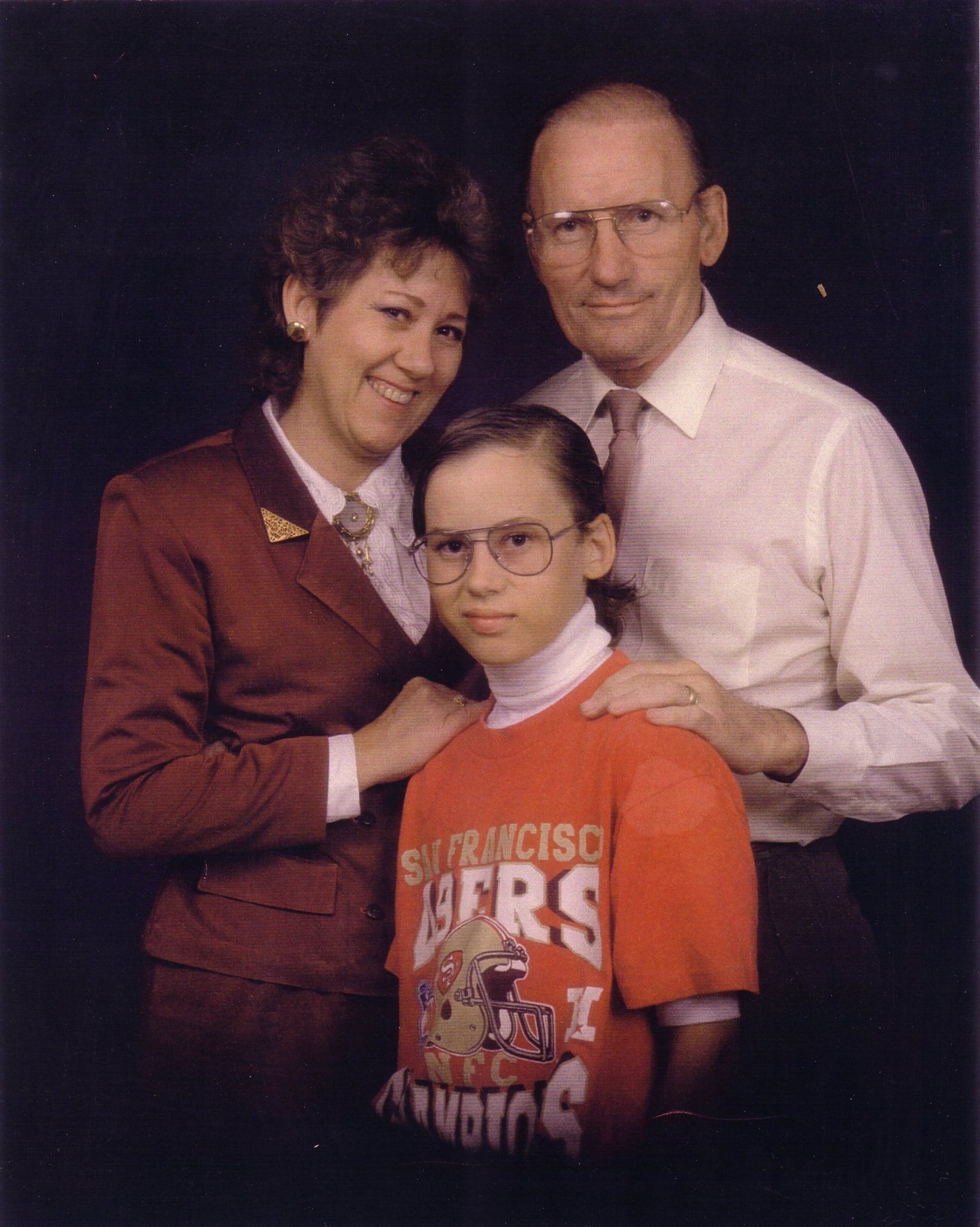
How passionate you ask? Well, passionate enough to persuade force my parents to let me wear a Niners shirt during one of our few formal family portraits. Yes, that's an actual family photo from my childhood.
I remained a dedicated fan through my youth and into adulthood. I'd rejoice in the playoff runs and endure losing seasons. But my loyalty to the game—and especially my team—never waned. One of the true constants in my life has been spending my fall Sundays watching NFL football. I'd record and later rewatch Niner games so I could better understand how plays and the game unfolded. I attended game watching parties with the local 49ers fan club. I made a pilgrimage to Canton to worship the busts of 49er greats, and I could batter rival teams with an unusually comprehensive bevy of cutting insults. I owned far too many products sporting the team logo.
And then three years ago, I gave it all up—cold turkey.
In short, I gave up the NFL to make more time for travel and adventuring.
I boxed up all the shirts, hats, jerseys, cups, plates, and other memorabilia I owned and unfollowed countless NFL and 49ers social media accounts. That might seem a bit dramatic to some, but sometimes the best breakup is a clean break.
Don't get me wrong, I still love football. And my fall travel opportunities remain substantially limited by the football schedule—I'm an even bigger Sun Devil football fan, after all. But it all came down to choices. And while I loved watching pro football on Sundays (and Mondays, and even Thursdays), it wasn't worth devoting so much of my fall to the sport. Because it's not just watching a game or two or three every week, but also keeping up with the latest news, the latest conjecture, the nonstop discussion and analysis. You know, casually turning on the NFL Network and suddenly wondering what happened to the last two hours. There are surprisingly large phantom time costs involved. Until I opted out, I didn't realize that being a diehard pro football fan takes up a lot of one's free time.
Choosing priorities
Obviously, I'm not arguing that you should join me in ditching the NFL. It's simply a gentle reminder to be intentional with your time and attention.
Life is full of tradeoffs and opportunity costs. You can't have everything, so you have to prioritize based on what's most important to you. Maybe the NFL makes the cut in your own life. For me, making space for more adventures—even if that's just squeezing in a hike or day trip each Sunday—was more important than participating in America's most popular fandom. And yes, even if it was something that I truly did love.

Don't get me wrong—I do occasionally miss it, at least a bit. But overall I'm pretty happy with my decision...surprisingly so, in fact. I had expected it to be more difficult than it really was. I had forgotten that it can be a bit of a relief to step away from something; doing so often provides an odd yet empowering sense of newfound freedom. And when I can direct that new freedom towards something I love doing even more? Well, that's worth making the change.
As I dropped the NFL, I also made a conscious effort to curtail my investment in college football. I don't read up on other teams much anymore, nor watch random games on television, even when it's a much-hyped matchup of top 5 teams. In fact, it's rare that I watch a game that doesn't involve my Sun Devils. Ok...I admit that I still occasionally gleefully watch that awful team down south lose again, just for funsies.
Making some choices
If you want to travel more, or go on more adventures, then you may need to make some adjustments to your life to make that possible—whether that's freeing up time, saving money, or both. Often, that will involve some choices—potentially hard choices—about where you place your focus.
I'm often asked how I manage to travel as much as I do. Some of it stems from some pretty big decisions I've made in my life, such as choosing not to have kids, or not pursuing more financial stability by working 70 hours a week in order to climb the corporate career ladder. And it's also because of how I travel—traveling fast and camping in order to avoid the expense of hotels—even when I have to fly to my destination. But it's not just those things alone. It's also the priority I generally give travel in my life.
It means skipping happy hour after work on Tuesday so that I can do laundry and prep for a weekend trip, so I can leave immediately after work on Friday. Or choosing a cheap sub over a nicer restaurant so I can save some gas money for next weekend's road trip. Or typing this on a 6 year-old MacBook Pro, even though my battery is toast and I've been dying to upgrade. It means driving my car into the ground before replacing it with something better.
But it's not just about saving money. After all, my divorce with the NFL centered on saving time, not cash.

Being time poor but great at bar trivia
I'm not well versed on pop culture. That's rather clear to anyone who knows me today. I haven't seen the latest movies, I only watch a handful of tv shows, and I don't spend any time following celebrities. Most modern pop culture references zip over my head. I'm simply not someone you want on your bar trivia team. I bet most of the people who've met me in the last decade or so would assume that's just "who I am."
The truth is, that wasn't always me. I used to go to the movies at least once a week, and I had enough shows I watched regularly that it was a constant struggle to keep a sliver of space available on the DVR. And I sought out all the football I could find, at least when I wasn't playing it on xbox instead.
It was actually a period of minimalism—an attempt to reduce the number of material possessions I owned—that helped spark the change. I was already thinking critically about what items I owned, and why I owned them, so it was natural to turn the same analysis towards how I spent my time. And it's astounding how much of a time sink all of this pop culture consumption can become.
The opportunity cost of time wasters
When I sat down and looked at how I was spending my time, something jumped out at me. It was all the things I didn't seem to have time for anymore. I wasn't reading any of the books I had bought. I hadn't written a blog post in ages. I wasn't hiking as often as I'd like—and when I was, I was simply returning to the same familiar trails instead of seeking out new ones. I had countless projects I wanted to work on, but I never seemed to have time to get started on any of them.
I was spending, at minimum, a dozen hours a week watching tv or movies that I didn't care too much about—shows I probably wouldn't miss if I just stopped investing in them. It's remarkably easy to keep watching a show after you're a season or two in, even if it's no longer especially entertaining. The sunk cost fallacy and simple inertia are more powerful than we realize. And as a result, I was stuck just passively consuming entertainment instead of creating my own.

So, let me pose a question. What could you accomplish with an extra 12 hours a week?
Could you spend some of that on a side hustle that could fund that big trip to Alaska you've been fantasizing about? Could you plan out some weekend adventures that you might not otherwise had gotten around to taking? Could you spend it learning how to be a better photographer, or maybe a better photo editor? Could you spend it prepping your gear so your next trip was easier to prepare for? Could you spend a day finally completing that day hike that's been on your list for a decade?
Would any of these things inspire you to cut out a few hours of senseless sitcom watching each week? Because it sure did for me.
A constant reassessment
There are simply endless ways to waste time—and that was true long before social media cratered our collective productivity. But the key is to be proactive in deciding what's most important to you and what's worth the time you give it. And let's be clear: I'm not perfect at this, by any means. I'm surely due for a reassessment of how much time I spend on twitter, for instance.
An important thing to keep in mind is that your own priorities will likely change over time. This endeavor is something that requires periodic re-evaluations. And to be truly valuable (and I'm convinced it is), this requires candidly honest assessments, not simple rationalizations.
The point is to be open-eyed and intentional about how your time gets spent. If you want to just get out more, then you may have to make some trade-offs to accomplish that. You may need to reduce some of your existing time commitments, even if that means renegotiating your relationship with something you otherwise enjoy—maybe even something like the NFL.
Have you cut out something from your life to make more time for travel and adventure? Tell me about it!
I am going to die on December 27, 2060
It's going to be a Monday, about six weeks after I celebrate my 82nd birthday. And it's the day I'm planning to die on.
Why did I choose that date? Well, not for any big, significant reason, really. Basic life expectancy calculations place my death somewhere between ages 84 and 87. So I figured that, since most lives are marked by a downhill spiral in the last few years before death, I should choose an age a few years before that instead. I ended up picking the round number of 30,000 days of life, which lands on December 27, 2060. So that's my Death Date.
Why I chose a Death Date
It seems a bit morbid to select the date you're going to die, right? Perhaps.
I don't expect to actually die on that day, of course. But if you want to achieve a goal, you need a deadline—even if it’s an artificial one.
My Death Date is my artificial deadline.
Counting down from that date makes the inevitable prospect of death a bit more tangible. It's easy to think about death as this amorphous thing that only happens in the distant future. But seeing it approach in raw numbers helps ensure proper perspective. And knowing that date will be here sooner than I’d like provides motivation and focus to achieve what I want to before I die.

A recap of my 101 Things in 1001 Days project
My 101 Things in 1001 Days challenge ends today.
The 101 list was an experiment to see if I would accomplish more than I would with New Year's resolutions. I did. I figured that the longer time period and longer list of potential projects would allow me more flexibility in achieving the goals I had set forth. It also did.
I completed just over half of the items on my list, quite a bit fewer than I expected when I began the project back in 2008. What I didn't expect, however, was to be dealing with a major life change just a year into the project. I was making very steady progress on the list until life got a bit more uncertain. Suddenly, many of the items I had placed on the list no longer made sense or were unattainable, and there were a bunch of new goals I had that weren't included in the original list.
How I did
In spite of falling short of the original goal, I'm happy with the progress that I made. I feel like I accomplished a significant number of items that I otherwise wouldn't have without the project. I found it to be a worthwhile exercise and I'm happy that I tried. I also learned a number of lessons along the way that might be useful in your own 101 Things project, should you decide to embark on one.
Making your own list
I found that putting together a 101 Things list is actually quite a bit more difficult than it seems. In fact, it can be challenging coming up with worthwhile items that you're willing to commit to. I found that a good mix of easy and more difficult items helped to keep my motivation and focus during long span of the project. Between reaching the more difficult or complex goals, I could mark off a few easier items and feel good that I was making progress. I also recommend including some items that have been nagging to get done for longer than you'd like to admit. You'll feel great when you finally sit down and get them done.
One of the most important things to consider when putting together a list is to make your items as measurable and achievable as possible. Don't settle on unclear items like "get in shape" or "lose weight;" instead, focus on things that someone else could easily measure, such as completing a 5k run or losing a specific amount of weight. Otherwise, you won't have a specific goal to shoot for and you'll have no real way to measure your success when you're done.
I'd also recommend including only achievable items. Stretch yourself, but don't make items so difficult that you give up. This is not a listing of your dreams—it's a list of goals that you want to meet in the next 2.5 years. And certainly don't include any items that you don't have control over, such as falling in love or getting engaged.
Substituting items
Realizing that things might change partway through the project, I started a substitute list that I appended to the original list. That way, I could add things that I wanted to pursue as goals. This was a good move, but I always felt a little like I was cheating by substitution so I also kept the original items on the list to maintain perspective. My total count includes substitute items.
Tell people about it
Another lesson I learned early was to tell people about your list. Having people occasionally ask me how the project is going provided some useful reminders. Posting it online and linking to it also helps to get the word out and keep you invested and engaged in completing the project. I'd also recommend posting yours on the Day Zero Project website (you can also find some inspiration on the site) and updating others on your progress.
What's next for me
I haven't decided yet if I'm going to embark on a new 101 Things list, or if I'll try something else. Given the amount of uncertainty and change in my life right now, I'm leaning towards focusing on a "33 before 33" list, then maybe tackling another 1001 day project next year.
Since I'm unsure of the fate of the original post on 2mins.org, I've repasting it below.
My 101 Things in 1001 Days list
Following the lead of others, I decided to forgo establishing any New Year’s resolutions in 2008, opting instead to start my own “101 things in 1001 days” project. I’m usually not big into the resolution thing to begin with, but recently I’ve been thinking much more about enjoying life and not letting it float past so quickly. The year deadline doesn’t appeal to me, and I think I may be able to mark off each item in the project’s allotted 1001 days.
After putting together a draft list several weeks ago, I decided to retro-actively set my official start date as March 1, 2008. It’s a little bit like cheating, as I’ve already completed two items before I got around to posting this, but in my defense, I only completed those items in the spirit of the project. Some items should be a piece of cake to finish (delete old hosting accounts, attend a hockey game) while some might take a little bit more focus and determination (buy house, travel outside the continental US). I’ll continue to mark off items as I complete them, and may also add a separate post about such occurrences. Anyway, on to the list:
My 101 Things in 1001 Days Project
Completed 55/101 items
Deadline is Nov 27, 2010
Purchases
buy a second car
buy an ultralight sleeping bag or tent completed March 30, 2008
buy a new ASU jersey completed September 8, 2008
buy a new camera completed April 26, 2008
buy a new mac laptop completed April 19, 2008
buy new glasses completed July 6, 2008
buy ASU pantscompleted November 29, 2009
buy a scanner completed March 2, 2008
buy/make a hiking pin display completed April 4, 2008
buy a nice big HD television completed September 20, 2008
Learn new skills
learn how to grill a great steak
learn 5 new photographic techniques
take advanced GPS or GIS course
take NEPA course
cook a chinese dish
learn to identify five new desert plant species
learn to identify three new bird species
Home organizing/decluttering
seriously organize the garage
get rid of the ford taurus completed August 2009
clean out file cabinets
donate or sell my button maker completed May 8, 2008
declutter my office
organize football memorabilia completed October 5, 2008
scan my favorite old photos
ditch my CDs completed October 6, 2008
set up a password management system completed April 26, 2009
scan all nps passport stamps completed October 24, 2008
organize/declutter hiking gear completed September 2008
donate another computer completed October 6, 2008
Travel
travel to the east coast
travel outside the continental US
visit at least three new states completed July 2008 roadtrip
travel to an ASU away game
rent an RV
visit 20 new NPS units completed July 2008
visit Ft Bowie National Historic Site completed Winter 2010 roadtrip
collect 25 passport stamps (renewals OK) completed July 2008 roadtrip
visit the north rim of the Grand Canyoncompleted Sept 2010
stay overnight in the White Mountains completed 4/20-5/1/08
Hiking/outdoors
go kayaking completed June 27, 2009
go on a backpacking trip of at least 3 nights
hike 25 new trails in the state 9 down
hike the backcountry of the Superstition Wilderness
visit 5 new wilderness areas in Arizona completed 2 (Bear Wallow, Pusche Ridge)
lead a Sierra Club hike (not a monument)
go camping with friends completed 4/30-5/1/08
New habits
learn to wake up earlier/get up early >25 days in a single month
consistently use an inbox for more than a month
get eight hours of sleep for at least 23 days in a single month completed May 2009
establish a morning routine
take at least 3 steps to significantly reduce our environmental impact 2 down (reduce waste by using reusables, buying only green electricity and reducing usage)
develop a regular stretching routine
improve my posture
Technology
transition scottspics.com to rscottjones.com completed October 5, 2008
redesign rscottjones.com
figure out how to use my desktop computers with my mac complete January 27, 2009
fully complete the switch over to mac completed September 2009
make a decision about all of the domains I own
upgrade the RAM on my iMac completed Mar 2, 2008
become more proficient in using my iphone keyboard completed
make a new avatar for myself completed April 5, 2008
create an online file storage/backup system
organize computer document files/folders
redevelop godevils.org
flesh out vacation listing completed October 12, 2008
develop reference or file/note management system on mac completed July 29, 2009
delete old hosting accounts completed October 5, 2008
Accomplishments
get married completed July 15, 2008
get involved in a new nonprofit Completed May 1, 2008
contact three old friends from high school Completed August 11, 2008
re-enroll at ASU
write something meaningful
make flickr’s explore with one of my own photos
publish something
post 15,000 pictures online
“make” a birthday gift for friend or family member
write a personal manifesto
keep a hiking and outings log
count, log, and scan all of my nps passport stamps
make 3 new friends that I see regularly completed July 2009
participate in Pat’s Run
Activities
attend a hockey game completed October 23, 2009
bowl another 250+ game
visit Pat Tillman Freedom Plaza
attend camp tontozona no longer possible
watch 10 “classic/old school” movies (Done: The Candidate, Godfather, Soylent Green, Fahrenheit 451, Grapes of Wrath, To Kill a Mockingbird, Deliverance, Mr Smith Goes to Washington, Taxi Driver, 2001: A Space Odyssey)
take a photographic tour of the city with flickr group
watch a meteor shower completed November 17, 2009
read at least one book from my bookcase that I haven’t yet read completed December 5, 2009
read Walden
surprise Kim with a nice weekend away
write my own list of top lifehacks
Health/wellness/financial
lose 15 lbs completed August 2009
complete a 5k run
max out my dental insurance completed April 21, 2008
get tooth fixed completed April 21, 2008
go one week without sodacompleted
write out a will/last testament
payoff all but one credit card
start/consolidate my investment accounts
buy my own home
Bonus/substitute items
refinish cedar chest gave it away
backpack at least 20 miles on a single trip
visit either Seattle, Chicago, Philadelphia, Detroit, New Orleans, or Boston completed December 30, 2009 (NOLA)
save $5000
tour ASU’s football facilities completed November 28, 2008 (thanks Jerry!)
go completely paperless (bills, financials)
find solution for grill equipment
buy framed ASU/Sun Devil Stadium photo completed November 8, 2008
put together a home inventory
create a digital archive of important files and add to safe deposit box
scan and post hiking patches
buy Pat Tillman jersey completed November 8, 2008
redesign scottandkimmie.com completed December 24, 2008
re-establish a regularly scheduled event with friends completed
complete a daily self-pic for six months completed July 2009
launch a blog & write consistently for at least three months
Go on a kayaking/canoeing trip of at least one night completed September 28, 2009
Attend a home 49ers game

Carrying less: simplifying and decluttering my pockets
I've always been one of those people. You know, the kind of person that always brought a bunch of stuff wherever I went. I'd have a large keychain of keys, a thick wallet bursting at the seams, a cell phone, an ipod, my wristwatch, and some model of PDA. My pockets were absolutely stuffed. Sure, I had everything I might need, but it was definitely burdensome. When I'd arrive home, I'd ritualistically unload all of my crap - it was just too much to keep in my pockets.
A year or two ago, I started to rethink my relationship with stuff. In particular, I reconsidered what I needed to have with me, and how I could start to reduce it. Mind you, I wasn't going to really do without all of those things; I just needed to think carefully about how I could combine, or replace, several of the items.
It's been an iterative process, but I feel like I'm comfortable with far less. I currently carry a small keychain that holds only a single house key, my car key and remote, and an ultralight mini Swiss Army knife.
There were several important milestones along the way – here are a few.
iPhone
The iPhone was a game changer. Not only did it finally combine my PDA with my cell phone, but with the later addition of the App Store, I now had continuous access to any piece of information I wanted. Not only that, but I could now bring at least some of my music with me at all times, too. I kept the ipod in the car for another year or two until I finally retired it.
Wallet
The iPhone helped me ditch most all of the cards in my wallet. Sure, I still carried around a few—a couple debit cards, another couple of credit cards, a few business cards, a Costco card, and so forth. But now it could all fit into a small bifold wallet, as opposed to the trifold that often exceeded an inch in width.
Ditching the watch
It took me a long time to warm to the idea of going watch-less. But, again, it was the iPhone that helped spur this on. I tried one week without a watch to see how difficult it would be. I'd awkward glance at my wrist several times during the first few days, but I really didn't encounter any other serious downsides.
Reducing the keychain
The breakthrough here was simply realizing that I only needed to carry around keys that I might need to use today. That meant that I could keep all the others—the keys to my parents' houses, my PO Box, the safe deposit box at the bank, the outdoor shed, and so forth—in another, nearly-always-accessible place, like my car or my home.
I also reduced the number of keychains I carried around, which I had in part used to separate all of those keys into "sections." I didn't need dividers anymore, and I decided that I could keep just one non-key. After quite a bit of thought, I ended up getting a lightweight swiss army knife, which included a small ballpoint pen (no more waiting for a pen when the dinner check arrives), an LED light, a small pair of scissors, a very small knife and a nail file. So while I no longer had an ASU medallion or backpacking boot on my keychain, I had replaced them with some useful tools.
What can you eliminate?
Are there any items you could get rid of?

Adopt the One-in, One-out rule today
It's Christmas afternoon and you probably have a bunch of new stuff. Cool stuff indeed, and maybe even some not quite as cool stuff, too. Either way, a lot more stuff has entered your life in the last 24 hours.
Here's a simply way you can help ensure that all this stuff doesn't add to what is for most people, an already cluttered life.
Adopt the One-in, One-out rule.
This means that for every new item of stuff that you acquire, you need you relieve yourself of some other item of stuff. It doesn't necessarily have to be a like item (if you get a new ladder you don't necessarily have to get rid of older ladder), though that's probably the most common. There just needs to be a 1-to-1 trade.
This is a great exercise for thinking about what things are most important in our lives, and what things we hold on to just because he have them or once thought they'd be valuable.
Once you follow one in, one out for a few months, you may start to notice that it can influence your buying decisions. Suddenly, you may find yourself mentally considering the value of the new potential item with what you'd have to give up. And you might be surprised at what you discover.
So go ahead and give the One-in, One-out rule a try today.

Online to offline relationships: My 10 in 3 challenge
I'm creating a personal goal of proactively reaching out to 10 people I know only online and establishing an offline relationship with them in the next 3 months. I'm going to call it my #10N3 challenge.
A little bit of background
I've been hovering around the edges of a few social media communities for awhile now. Over the last few months, I've been following and occasionally interacting with the Phoenix twitter crowd. The absence of a sense of community has always been one of my disappointments with the Phoenix metro area, so I was amazed and impressed with the community-building events they've been hosting.
I decided that I should get more involved.
So when Twitter launched its lists feature, I thought it was a great way to chart out progress in turning those "I follow online" relationships into "we've actually met" ones. The result were two incomplete lists of Phoenix-area folks that I hadn't met yet and ones I had.
To that end, I've stopped by an occasional tweetup or #pfn or #smunch. I've been truly amazed with some of the cool people I've briefly met already - and I know I'm only scratching the surface. So I'm not only interested in expanding that list, but deepening it as well.
This is an attempt to do just that. At its core, this challenge is about creating even more value from the investment I make every time I tweet, post a photo online, or add a reply to a forum post.
My #10N3 Challenge
So, here it is: I am challenging myself to convert 10 of my online-only relationships into offline "in-real-life" relationships in the next 3 months.
Because of the holidays and my own travel schedule, I'm not starting the clock until the New Year arrives. This is about adding value to my social media experience, so I'm planning on reporting back my progress on the days I get paid.
The rules
- Must be one-on-one conversations to count. It doesn't count if we just talk in a crowd of people (unless the conversation is direct, personal, extended, etc). It's best if these are organized with the specific purpose of meeting to chat, like inviting someone out for coffee or a hike.
- Half of them must be people I've never met in person, however briefly. The rest can be people with whom I've shaken hands or exchanged pleasantries, but didn't get into a real conversation with.
- They can be from any social media platform (twitter, facebook, flickr, sports forums, etc), but they have to be people with whom I've already establish some sort of online relationship (friends on facebook, I follow them on twitter, foursquare fan, subscribe to their blog, etc). On platforms where reciprocation is not required (eg twitter), it's enough that I follow them. It doesn't count if I meet them at an event and then follow them on twitter or subscribe to their blog.
- We don't have to become best buds in real life as a result of meeting in person. That's not what this is about.
- While I have my own short list of people I'd like to meet during this challenge, I'm not publishing it or holding myself accountable to it.
Of course, this is my challenge and therefore my rules, so I may end up amending them as circumstances warrant. However, I see this as a real personal challenge and am treating it as such.
I'm going to be using the hashtag #10N3 on twitter if you'd like to follow my progress or adopt your own challenge. If you decide to join along with me in this goal, please let me know and I'll post a link.
March 3 update
Earlier this year, I gave myself the challenge of converting 10 online relationships into offline, in-real-life relationships by the end of March. I called it my #10N3 Challenge. I'm nearly two-thirds through the challenge period and thought it was time to provide an update.
I'm right on track
So, how am I doing at it? Surprisingly, I'm right on track. Through March 3, I've made 9 connections—which means that I'm actually ahead of schedule. I also have #10 scheduled for later this week, so barring unforeseen circumstances, I should meet my goal. But I'm not planning on stopping there. I'd like to exceed my goal and hit at least 12 by the end of the challenge. We'll see how it goes.
The surprise so far
I'm feeling pretty good about how I've done in meeting the challenge so far. It's been great to connect in person with people I've grown to know over the last several months or, in some cases, years. It's amazing how easy it is to connect with people after only simple and occasional online interactions.
But, to be honest, I've been just as pleased with the other relationships I've fostered during this time. While for one reason or another, they didn't count towards the #10N3 Challenge, I've really enjoyed hanging out with them.
Final results
It's April now, and the final results are in. I exceeded my goal by 1, converting 11 online relationships into IRL ones within my three month goal. I nearly added two additional ones, but both of those were postponed for later this month.
All in all, it's been a worthy endeavor, and I anticipate that several of these IRL relationships will continue to deepen over time.

