
Questing
The story of my epic quest to visit all 419 National Park units
This is a twitter thread I posted back in April 2022 outlining the story of my national parks quest. I haven't changed much of the formatting, so this will resemble a twitter thread and not a traditional blog post. Perhaps I'll edit it in the future, but for now, this will have to do.
Here's the story of my epic quest to visit all 419 National Park units.
- how this huge endeavor actually unfolded
- the twists and turns of the journey—and why I nearly abandoned it halfway thru
- the surprising lesson I learned at the end

Get comfortable, because this is going to be a long-ass thread. But it's required for the story of how this all progressed from its inception to the finish line.
When you're done reading, you'll have a better insight into what a big quest like this really looks like.
The idea for a parks quest probably got started in 1998 after a backpacking trip to Sequoia/Kings Canyon.
My girlfriend Kim and I were in college at the time, so a national park camping trip was really the only vacation we could afford. We already enjoyed hiking & camping...
...so visiting a famous national park—or many of them—seemed like a great idea.
After a Yosemite trip in 1999, we sorta adopted the quest, limiting it to the "named" National Parks (was it 54?) at the time.
By then, I had been to 16 park units, nearly all of which were in AZ.

The Yosemite trip was our anniversary gift to each other. We wanted a trip but couldn't afford both that + gifts.
This started a sacred annual tradition—national park trips for our anniversary—that continued thru out our relationship, and became an important aspect of the quest.
We did a cheap road trip in 2001 to Petrified Forest and added on some nearby park units—El Morro & El Malpais—in large part because we could camp there.
It was the first trip I took to national park units I hadn't heard of before. It'd end up being the first of many such trips.
My initial progress was pretty slow, and by 2003, my total stood at only 43. But I had already visited some notable parks, like Yosemite, Zion, Bryce, Rainier, Olympic, Death Valley & J-Tree, along with other park units in adjacent states.
They were all cheap camping road trips.

It was sometime around this period that the quest goal changed.
Originally, it was all the named National Parks. Then I added National Monuments. A little while later, it became ALL the NPS units, except for NRAs—which I considered "just damned rivers" (sic).
2004 was my first big parks year, hitting 16 units. It was punctuated by an anniversary road trip to Yellowstone (where I proposed to Kim), which got us 14 units alone.
We also did an Arches trip with friends that fall, and hit White Sands in conjunction with an ASU bowl game.

I hit another dozen or so units in 2005, mostly because I added on some vacation time to a work trip I took to DC.
If you visit DC and don't come away with far more park unit visits than seems possible, you're doing something wrong—the city is simply littered with them! 😂

2006 was another solid year of park questing, though this time, I didn't get ANY new DC units. 🤦♂️
But we organized trips up the CA/OR coast and one following several NPS Historic Trails that marked off a lot. By this point, every family visit included a park visit along the way.


By the end of 2006, we were at 84, which seemed damn impressive to us. All of our out-of-state trips were national park trips. We didn't have any specific completion goals, but just kept trying to see more and more parks. We figured we'd finish at some point in retirement, maybe.
2007 featured 2 big parks trips. First was Kim's 30th bday, which was a surprise trip to DC. We did all the things. More importantly we did a 10-year anniversary road trip, which is among my best trips ever. It was 8700 miles & 36 parks!
Our final tally: a whopping 45(!!) parks.


We got married in Yosemite, but our honeymoon plans in Canadian Rockies got crunked last minute. So instead we drove east to hit parks in AR, MS, AL, GA, SC, NC, KY, MO—planning as we went. Here's the 1st digital map of my progress, updated after the 2008 "post-wedding roadtrip."

Prior to this, we had just kept a text list of completed parks. We didn't even list the ones we still needed; that was too long of a list. But after marking off 45 parks in 2007 and another 45 in 2008...well, things had shifted. We were—somehow—nearing halfway done. Holy shit!
Our map was looking impressive.
And now, we started circling possible trips in the blank spots of the map.
And started considering trips without a big "anchor" park—the must-see park unit that we centered our excitement around.
And strategized about how to "finish" regions.
Funny side note: because I had specifically NOT included NRAs in my quest (damned river), we drove to—but skipped—Bighorn Canyon in WY/MT, orphaning the unit.
I'd later very much regret that, as it took a "cannonball run" road trip from PHX a decade later to finally mark it off.

The quest became an increasingly important & central thing to us around this time. We were already known as the couple who had this big goal to visit all the parks, and it was how people introduced us to new people.
Sharing this quest was an important part of our relationship.
And then, the unimaginable happened: we split up the next year. 😱
It nearly ended my national parks quest.
I mean, how could I continue on by myself? It seemed unthinkable. No way. It would never be the same. Game over.
I started dating someone the next year, and we took a road trip to some national parks—not for my quest, but because we wanted to hike there together. To the chagrin of both her and my ex-wife, I weaseled in some new park units. 😬
Hmm. I wasn't sure how I felt about it either.
The next year, I decided to reclaim the quest as solely my own. I scheduled my first significant solo national parks trip, flying into Charleston and working my way down to Florida. I was apprehensive about whether it'd ever really be *mine* or not.
But the trip was a blast.

So it WAS mine!
The next few yrs were a mix of solo national park trips and ones I'd take with a girlfriend. In 2012, I flew into KC for a family reunion in CO so I could drive across KS for parks, and later tackled MI/MN/WI with a gf. In 2013, I did the VA/SC/NC + OH parks solo

On that Ohio trip, I arrived before First Ladies NHS opened, and decided to count up all the park units I had visited thus far.
I decided to hold up a sign indicating which park number I was on—a tradition I'd continue at each subsequent park.
Wish I'd started prior to 268! 🤦♂️

At this point, my parks quest was something I was going to actually complete! I wasn't sure when that would be, but finishing was no longer a distant "maybe."
But, I got heavily involved in a local backpacking group—and suddenly all my time off went towards that, not new parks.

That was an amazing time for me, and I wouldn't trade those trips or friends for anything. I was also in midst of a big stressful transition in my career that required me to radically cut expenses & forgo a salary for 9 mos.
Which meant an incredible drought for my parks quest.

TWO parks?!! That's it? Just two? Two new parks in two full years?! WTF...
And the start of 2016 wasn't looking any better.
In March I decided to take a bad-for-the-checkbook trip to the Deep South so I could visit at least SOME parks that year. Broke, I slept in my rental car.
Jen and I had been dating for three months now. She posed a question to me: would I go on a surprise trip, where I didn't know the destination? I said sure.
This is a GREAT story, but I'll skip retelling it here. But we ended up in Puerto Rico & USVI, marking off more parks.
And then, we got word that Jen would have a month-long work detail in DC. We hadn't been dating long, so she offered to come back to visit me. But I had a better idea: why don't I go with you instead?
We scheduled a weekend in Boston to do some parks before her detail started...
...with the idea that I'd join her in DC and start looking for a (much needed) new job while there, taking advantage of the free hotel room. When I needed to interview, I'd simply call the trip done and fly home. And we'd do some fun East coast city stuff on weekends until then.
Well, I applied for a job or two—and waited perhaps a day—before bailing to rent a car and do a few days away hitting some parks in western PA 😂🤷♂️
I quickly landed an intriguing consulting job (no interview needed) that week, but told them I needed some time before I started.
So, for her entire work detail, I spent the weekends hitting parks with her in Boston, NYC, & Philly—and spending the weekdays camping in a rental car, voraciously visiting parks on my own.
I was planning each day as I went, and started calling it #MyNationalParksMonth.
I did stay in town on her bday week, meeting her at a new brewery after each workday and enjoying the weekend together in Shenandoah & Harpers Ferry.
But for a trip that was originally supposed to be about not being apart too long, that was all we saw of each other. Whoopsie! 🤣
We joke about that now, but Jen was tremendously supportive throughout this epic trip.
As someone with her own big quest, she also understood this unique moment: how often would the stars in my life align like this again?
The opportunity was just too good to pass up. Carpe diem!
Her detail was ending, but...I decided I wasn't done yet. She flew home, and I postponed that new gig even longer so I could stay 3 more weeks to finish all the Eastern parks
It was a terrible financial decision, but a great life decision! A bold move, but one I'm grateful for.


On the flight home, I added up all the new parks. I was at 94 for the year—a year I had originally worried might be zero.
And it was the 100th anniversary of the NPS. I needed to visit only a handful of more parks to have visited 100 parks in 100 days to celebrate 100 years!
And so I made return visits that week to the AZ parks that had helped inspire my quest, completing #100parksin100days!
I was on the home stretch. Sure, I had some REALLY expensive and difficult parks left—but I was now marking the *few* areas of the map I still needed.
Wow!


It was at this point that Jen—who had insisted that she would NOT adopt the quest—decided to count up her own visits. She was at 101.
Ok, well, maaaybe she should at least start keeping track...
Ok, fine, she wants in! But her first quest goal was just reaching 200 total parks.
Part of the reason she adopted it was because we already had a number of other trips planned that year, which often included park units she hadn't been to that I wanted her to see.
"Oh, you haven't been to Arches? Well, let's go there on that long weekend we'll have in October."
So she upped the anty: her goal was now >200 parks, incl everything west of the Mississippi.
We also started sketching out trips to the harder parks: Hawaii, Guam, American Samoa, Alaska. And took trips back to completed areas where a new park unit had just been designated.

With me nearing the finish line, it was clear that she was going to tag along to the most difficult parks to visit. And many other parks would naturally be on our itinerary for other trips.
So, like myself, she eventually expanded the quest to include all of the park units.

A little bit surprisingly, most of our travel now shifted to visiting parks for HER. Sure, we did a trip to Guam, one to WA, and another to FL so I could #Finishthe48.
But for every new park I visited, she marked off at least FOUR. Jen was—very quickly—a highly motivated quester

Completing the Contiguous US seemed like an important milestone, and we expected it to take years and years to finish the remote parks in Alaska & American Samoa, plus any unexpected new ones.
So I had a little celebration with friends, not knowing how many more years I had left


Of course, one sign stuck out... 🤣
Our initial plan was hoping to tackle Alaska in 3 summer trips. If we got lucky on good weather for the required bush flights, we could finish the state in 3 yrs.
We'd need another year for American Samoa, and who-knows-what for any new ones.

We got **very lucky** on our first Alaska trip in 2018, and were able to do ALL of flights into the Western Arctic parks on schedule—which meant we were suddenly half done!
We managed to sneak in an American Samoa trip that winter, putting us waaay over our annual travel budget.
I also did that cannonball run up to Bighorn Canyon to mark off that orphaned unit.
Looking at the map now, I pushed for us to shoot for completing Alaska in just one more trip, not the two we had planned. We'd need more good luck, but it seemed well worth the attempt in my mind
I didn't know, but Jen had already been working with a number of friends (and even my ex-wife Kim!) to surprise me at my last park unit in Alaska. #shesakeeper
The problem was she had given them 3 yrs to plan, not the 2 that I was now pushing. So accelerating it mucked things up
But with Aniakchak—the hardest park unit to visit—still on our itinerary, it might take a third trip. I won't recount the story of how we *finally* made it there, but the short of it is: we did. Barely.
Which meant I'd finish the quest on the trip. Which is *A BIG FUCKING DEAL*
Some friends were able to make the trip anyway and joined me at my last park unit: Glacier Bay National Park. With shirts!
What a journey, right?! It's not every day that you accomplish such a major life goal, one that defined so much of your life.
Holy shit, I ACTUALLY DID IT!


So you'd think I'd be on top of the world. And in many ways, I was!
But it's also weird to "finish" something like this.
It's more interesting to be doing something, than it is to have done something. Being 36% done can be better than 100%. The fun really is in the journey. Huh

That was one of the big lessons for me. And it's why I encourage people to adopt the BIG quest, the one that seems too daunting.
Because it doesn't actually matter if you ever finish or not. The benefits are nearly all in the process of working towards the goal, not finishing it
What do you do when you've finished a big quest like going to all the National Park units?
Well, you start a new quest, of course. And so that's what I did, several times over, many of which I began years before finishing the parks.
Because it's all about the journey.

My parks journey did a few things for me:
- Helped shape my priorities in life
- Inspired countless adventures + memories
- Made me focus on prioritizing experiences over things
- Provided structure + motivation to see new places
- Gave me an interesting education on America
Choosing to adopt and pursue this crazy quest has been one of the best decisions of my life, and it's of course been one of the most treasured and impactful endeavors of my life, too.
I'll write more about these things in the future. And maybe add more to this thread later.
If you've somehow made it this far in the thread, you're 100% remarkable. So go adopt a remarkable quest!
- Check out [GoQuesting.com](http://GoQuesting.com) for ideas
- Connect with fellow questers
- Ping me if I can be helpful
- Inspire others with your adventures
- Enjoy the journey
How to make driving across Texas more fun
Our latest road trip required a long drive across Texas, a state I repeatedly wish I didn't have to drive across. But if you live in Phoenix and your intended destinations are in the Southeastern US, then driving through Texas is simply the Price of Admission you pay for your trip.
We ended up staying in hotels more than usual on this trip, and given the shorter winter days, that meant more time in a hotel room. Luckily, we brought our laptops on this trip as part of a new travel journaling practice we are experimenting with.
I thought it would be fun to chart the roads I've driven in the US, but that seems like a nearly impossible task. That's because I routinely veer off the obvious route to drive a road that might be more scenic, or detour for an inconsequential roadside oddity, or to "get lost and ask for directions," or head off to an obscure campground for the night.
In short, I really don't know where all I've been since I haven't really tracked that over all my trips. But I could start doing that now, for this trip at least. So I brought along some AAA state maps and a sharpie to trace our route. And then I promptly forgot those in the car each night.
So, with my laptop in the room, I instead cracked open a website devoted to counting the counties you've visited. I could probably figure out the counties I've visited much more easily than the specific roads I'd traveled anyway. Over the next several nights, I charted out a somewhat complete map of my county visits.
Visiting all 3,143 counties in the US is a more popular quest than you'd imagine. Indeed, thousands and thousands of people are tracking their county visits, and at least 70 people have completed them all! I had no such quest goal. In fact, one of my friends has been working on this quest for two decades now and I've always thought it was a somewhat crazy one. Most counties aren't very interesting. I wasn't adopting the quest, I just wanted to see where I've been—or rather, where I still need to go. I wanted to see what "holes" I still had in my domestic travel.
But, of course, after filling out my county map and realizing that I was already past the 50% mark, I started wondering what a good county quest goal for myself might be. When would I feel like I've closed those holes? Was it 2000 total counties? Or maybe >50% in each state? Or both? Or just when I'd finished the whole damn thing? I'm still not sure, but I think it's clear...I have some sort of county quest now.

And indeed, so does Jen, who filled out her own map during our hotel hours. So, for the last few days of the trip, we made sure to take the longer route to some of our destinations, bypassing the quicker route that we had already done in favor of driving through some new-to-us counties. Every time we passed a little green "Entering So-and-So County" sign along some rural highway, there was now reason to exclaim "YAAAAY!"
This is the main goal of questing—inspiring you to go to more places you haven't yet been.
One of the other big (and unheralded) benefits of questing is that it can make "unfun travel" more...well, fun. Even if your quest objective is less enjoyable than you had anticipated, or maybe the weather was awful, or you broke your expensive new camera, or some other sucky thing happened...well, at least you marked the damn place off! Getting something done makes you feel a bit better about that trip than if you had the same bad experience but hadn't simultaneously completed a goal. Put another way, if you mark off a quest item, you always have a bright spot on the trip. Or, on a smaller level, you have a bright spot in an otherwise lackluster vacation day.
And we re-discovered that on the drive home, when we were faced with driving across Texas. Because now we had a new purpose for the drive: we would mark off some random counties! Texas seems to have eleventy zillion of them, each of which is generally small and thoroughly unremarkable. If we took a slightly longer way home, we'd be able to cross off 15 of them on our drive, and thereby permanently remove them from our list of places we have any reason to visit. We were getting stuff done. And sometimes never having to return to a place is a pretty good travel outcome.
And that's exactly what we did. We actually extended the drive we were dreading because of this new quest, converting a boring and unfun endeavor into a series of small "yays" and some new blue squares on our county map. We traveled through country we hadn't seen before, which resulted in some interesting observations. It didn't magically elevate the trip into one of my all-time favorites, but it did reduce the cost of that Price of Admission rather substantially.
Many people shy away from big quests that have what seems like an unreachable number of objectives. But the benefits of questing are all found in the journey, not in completion. Will I ever finish all the counties? Probably not. But sometimes having a huge quest—even one you don't expect to ever finish—simply gives you more possible ways to make those long drives less boring.
→ Start your own US Counties quest (#GoQuesting1640)
The only possible way to drive directly from Missouri to Kentucky
My questing buddy Tom Thrash and I both have a quest to cross all 107 state borders—the boundaries where two US states meet via a land or river crossing.
→ Check out #GoQuesting1006 for more information on this unusual travel quest ←
One of them is particularly sneaky—the tiny border shared by Kentucky and Missouri.
There are a number of border anomalies along the Mississippi River, as its course shifted after state boundaries were originally established. This has led some parts of states to suddenly find themselves disconnected from the rest of their state by the main channel of the river. The most famous cases of this are probably Carter Lake, Iowa and the "Kentucky Bend," a finger of Kentucky that is now only accessible by road from Tennessee:

In a similarly odd fate, there is no bridge over the Mississippi between the states of Kentucky and Missouri. US Highways 51 and 62 nearly connect the two states, but happen to meet in a sliver of Illinois, a painfully short distance upstream of the Ohio and Mississippi confluence and the northern start of the KY-MO border. Both highway bridges cross less than a mile from the tri-point. Coincidentally, not too far upstream on the Mississippi from this point lies a bit of Illinois that shares a similar fate as the Kentucky Bend—you can only drive there from Missouri.

Ok, so there's no bridge across the KY-MO border, but the small Dorena-Hickman Ferry does provide cross-boundary access. Many believe this is the only direct route between these two states. However, for the purposes of this quest, border crossings don't count if you're in a plane or on a boat.
So perhaps there are only 106 objectives in this quest instead of the original 107? Not so fast, my friend.
It turns out there is at least one road that does cross the KY-MO border. It's on what’s known as “Wolf Island Number 5,” and was part of a lawsuit between the two states that was decided by the US Supreme Court back way back in 1870 in a case called Missouri v Kentucky.
This island stood in the middle of the Mississippi River when the two state boundaries were formalized. Eventually, however, the river shifted its course eastward. And sometime after that, as the river flowed further east, the old river bend was partially filled in, connecting the island to the riverbank on the Missouri side. Wolf Island is now a peninsula, consisting primarily of some farming fields, sandy areas, and what appears to be a single outbuilding for farming equipment. The Supreme Court case held that Kentucky should maintain control of the area, even though the Mississippi River was intended to be the dividing line between the states. And so the state boundary remains where it was prior.

A county-maintained dirt road—Wolf Island Road—now unceremoniously crosses the boundary onto the peninsula. As far as I can tell, it's the only publicly accessible land crossing between the two states. The roadway is county-maintained and listed in the state's database and GIS maps. In short, it looks like a legit border crossing for the purposes of this quest.

There is one additional roadway, according to Google Maps at least, that crosses the border a bit further upstream onto what is labeled "Island Nos 2 3 and 4." But the roadway is not shown on the Kentucky Transportation Cabinet's "Rural and Secondary Roads" or "Local Roads" GIS maps. Given this telling omission, plus a closed gate as seen on satellite imagery from Google Maps, leads me to believe it's a private route.
Nonetheless, it appears that there is at least one legal land crossing from Kentucky to Missouri. I'm not the only one to discover this. Here's what the crossing looked like in April 2014, courtesy of the Howder Family:

Tom and I are considering reserving this crossing to complete together as our last objective for our respective border quests. It seems like the most memorable one to finish on.
I can't wait to mark it off!
Some other state border oddities
There are three other state borders that you can't cross in a vehicle: Illinois/Michigan, Michigan/Minnesota, and New York/Rhode Island.
The New York/Rhode Island one is especially interesting to me, as I hadn't ever considered that Connecticut doesn't share a border with international waters. But because of New York's claims to Long Island and Fishers Island, and Rhode Island's claim to Fort Mansfield, Connecticut only gets roughly half of the Long Island Sound. If you would have asked me if Connecticut was bordered on all sides by other states, I would not have answered yes. It seems like a great pub trivia question: "How many of the original 13 states are bordered on all sides by another state?"
This was also surprising to me: the Delaware/New Jersey border features only a singlebridge crossing—the Delaware Memorial Bridge that services I-295. Ok fine, it's technically two one-way bridges, but the broader point stands.
However, due to an accident of history, there are now two Delaware exclaves on the wrong side of the Delaware River. This isn't a case of a river changing course though. Instead, it's a result of Delaware's Twelve Mile Circle, the unusual way of defining a state border, and a dredging project. Here's an explanation:
The definition of the northern boundary of the State is unusual. Most of the boundary between the States of Delaware and Pennsylvania was originally defined by an arc extending 12 miles, a.k.a. the Twelve-Mile Circle, from the cupola of the courthouse in the city of New Castle.
This border extends all the way east to the low-tide mark on the New Jersey shore of the Delaware River, then continues south along the shoreline until it again reaches the 12-mile arc in the south. Then the boundary continues in a more conventional way in the middle of the main channel of the river.For this reason, from the Pennsylvania-Delaware line on south, the border between New Jersey and Delaware is not the middle of the River, but the edge of New Jersey's shore.
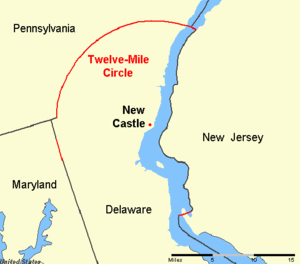
Apparently, future dredging projects deposited their loads on the New Jersey side of the river, expanding the landmass there and exceeding the original boundary that was set at the low tide line. The result was Artificial Island, whose tip now extends into Delaware. Similarly, Finns Point also extends beyond the original border line. Neither of these land borders seems to have a road you can use to cross, but it appears you could do so on foot.
This was originally posted on Hey World.
How many countries are there?
You’d imagine that this would be a simple question to answer. But for many people with a quest to visit them all, it’s a much more complicated answer.
The most commonly followed list is probably the UN member states list, which is 193. Unless you count the observer countries—Palestine and Vatican City—in which case it’s 195.
And because of some idiosyncrasies, some people follow the “UN+” list of 226, which includes some additional territories (Taiwan, for instance).
Others take the idea of counting territories as separate “countries” much further. For instance, the Travelers Century Club uses a list of 329. For their list, even smaller territories that are substantially disconnected from the main country by distance, governance, or dominant culture (such as American Samoa for the United States) are counted separately.
Still others follow an extended list of 949 locations published by Most Traveled People. NomadMania takes that idea even further with its own list, which divides the world into 1301 regions, based on cultural importance, economic significance, population, size, and tourist appeal.
But even if you're sticking with just countries—as opposed to the regions or territories—there are still other ways of counting. For instance, many travelers count the 206 countries with a National Olympic Committee, which includes nations that are not part of the UN. Others only count the 211 countries that are members of FIFA, even if they're not independent countries.
And of course, some people have their own list, perhaps making their own assessment of which partially-recognized countries or territories "count" and which ones don't.
Whew!
So which list is best? That depends on you, of course. Your quest, your rules. HYOH.
Me? Well, I think I'll use three main lists to keep track of my international quests: the UN list, the TCC list, and the NM 1301 list. They each offer a different flavor that I think is useful.
This was originally posted on Hey World.
Visiting America's most obscure National Monument
Yesterday I visited one of the most obscure national monuments in the nation: the Military Working Dog Teams National Monument, located on the grounds of Lackland Air Force Base in San Antonio, Texas.
The national monument—which is best described as a national memorial—is the only one managed by the Department of Defense (in conjunction with the Airmen Heritage Foundation) and one of only two Treasured Places that are located on an active military installation (the other is Port Chicago Naval Magazine National Memorial).
While the national monument was designated as a rider in the FY2008 Defense appropriations bill, it wasn't opened to the public until late 2013. Well, open to the members of the public that can pass a background check and obtain a visitor pass from the military base, at least. Luckily, there's a law that allows for reasonable public access for visitors—and their dogs—to the national monument. That said, you'll want to give yourself some extra time to wait for the required background check before you can gain access to the site.
A "daytrip" to San Antonio
As one of the most obscure national monuments in the country—and with my travel focused on completing my National Parks quest—I didn't have it on my radar until I decided to tackle the Treasured Places list. So I really kicked myself for not having included it the last three times we were recently in the San Antonio area.

As the second-from-last Treasured Place I needed to visit to finish, and with a deadline to finish approaching, I needed to get there soon. After weighing the options of driving versus flying, it become obvious that it would be a lot cheaper, and much quicker, to fly. So I booked the cheapest ticket I could find to fly from Phoenix to San Antonio, along with the cheapest return ticket I could find for later the same day. I would be taking a "daytrip" to San Antonio, just to finish this one weird little national monument.
Visiting the National Monument
This is definitely one of the more unusual national monuments you'll visit. While it's less than a mile to the memorial site from the Valley Hi entrance to Lackland AFB, you'll need to spend some time in the "Visitor Center" to receive your visitor pass. Make sure you bring your drivers license and don't have any warrants. Once through the front gate, it's a quick drive to the parking area and an equally short walk to the site itself. And, truth be told, it's also a relatively quick site to visit. You'll need just a few minutes to experience everything this national monument has to offer.
The main bronze sculptures are on a granite platform showcasing a soldier flanked by four different breeds of military dogs, which is shadowed by a large granite wall. On one side of the wall is some descriptive text, while the backside features photos of military dogs in combat action. But the highlight of the site is tucked into a corner of the 3000-square foot plaza. Named the Not Forgotten Fountain, it depicts a Vietnam soldier pouring water from his canteen into his helmet to create a water dish for his dog—a moving tribute.


While the Military Working Dog Teams National Monument isn't likely to top anyone's "Must Visit" list, it's still a simple but well done memorial to an interesting subject. I hadn't really considered the role that dogs had played in military actions. And if you love dogs, you'll have a hard time not spending a few contemplative moments at the fountain.
A quick video tour
A few final thoughts
First, it's a bit weird to fly to another city only to return a few hours later. I'm used to only having carry-ons for most of my trips, but it's weird when you bring the smallest backpack you own and it's still essentially empty. I could have literally just carried everything I brought with me in my hands.
Similarly, I was asked several times by random strangers what brought me to San Antonio. I can't imagine what went through their heads when I answered that I had flown in specifically to see the Military Working Dog Teams National Monument. I am 100% certain that no one besides the guards at Lackland had ever heard of it before, but I got absolutely zero follow up questions. Answering that question was a total conversation killer.
I would have been pretty disappointed had this been the last site I needed to visit to complete the Treasured Places list. No offense, but yeah...it's just a memorial. But luckily, I had saved one spot I had been wanting to visit for well over a decade—a place I'll visit next week!

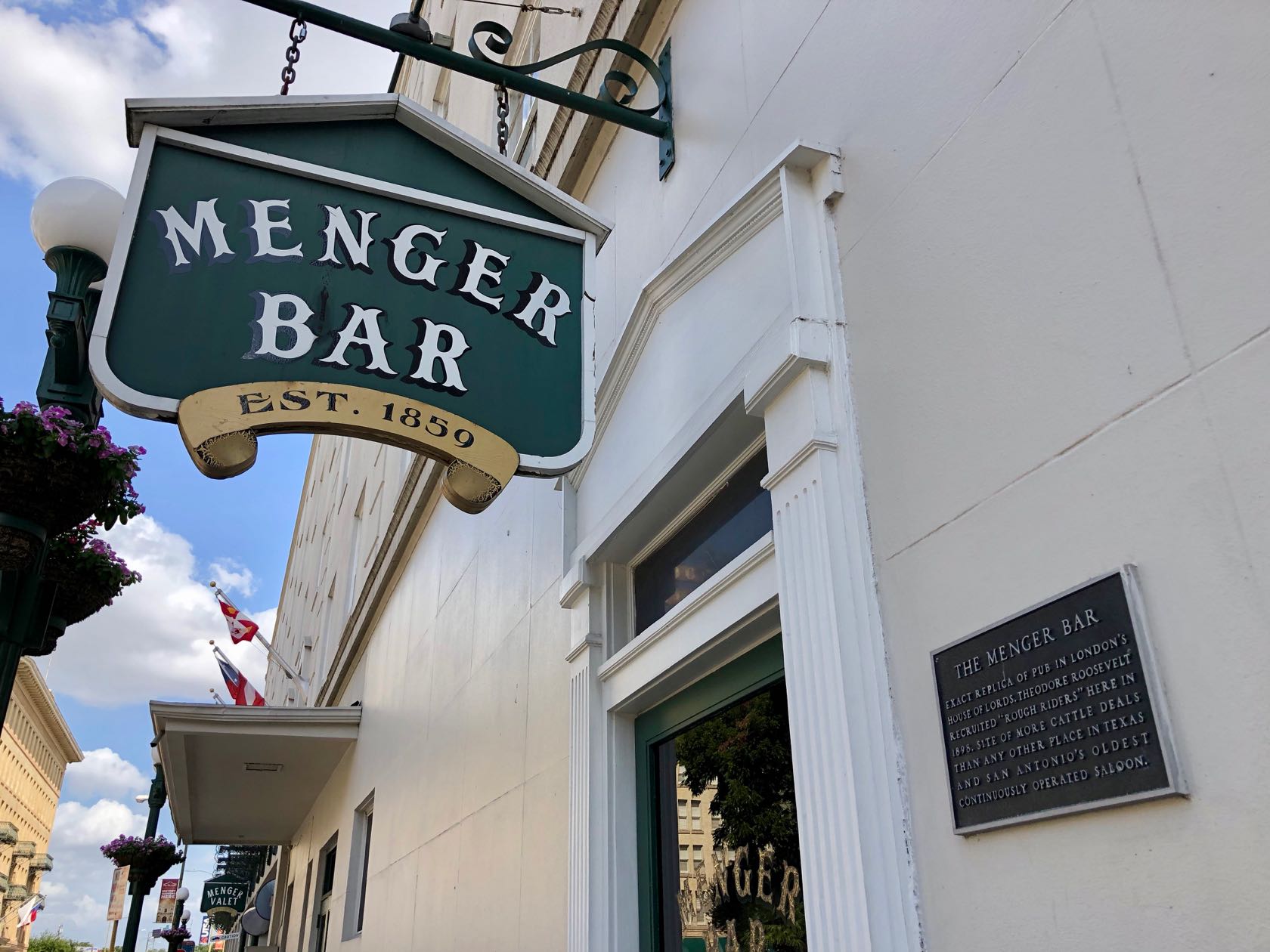
Having already visited San Antonio a number of times, and without much time to explore beyond the city, I made just a few stops. After lunch and beverages at Blue Star Brewing, I visited Menger Bar (one of the oldest bars in Texas—and where Teddy Roosevelt recruited Rough Riders). I then made a quick stop at San Pedro Springs Park, the second oldest park in the US and the origin site for the settlement that became San Antonio. From there it was back to the airport to fly home!
If you missed the short video of the National Monument above, scroll back up and check it out.
A Campfire Chat with Tom Thrash about Quests
This is a new thing I'm doing. Or at least something I'm testing out a bit.
My goal here is to have short, informal conversations with various interesting people I've met over social media. Not formal interviews with internet-famous influencers, just authentic conversations with the folks that comprise the online communities I value.
So many of us enjoy interacting with others online, but we rarely get to have an actual verbal conversation—even if it's just over skype. So I decided to change that.
For now, these will simply be occasional chats—maybe about a specific topic (like this one), or maybe recounting a funny travel story, or just talking about a recent trip—that might happen around a campfire. Generally speaking, it's safe to expect a heavy dose of conversation around travel and outdoor adventures.
I have vague ideas of turning this into an ongoing audio podcast, but we'll see how it goes.
The Conversation
A little background
I first met Tom Thrash via a weekly twitter chat called #ParkChat. We bonded over our love of travel quests, craft beer, and—as you'd expect—national parks.
Tom and I talked about our quests last year via videochat, but our paths haven't crossed just yet. Luckily, we expect that to finally happen later this summer during a #parkchat meetup we're both attending in Sequoia National Park.
I really like the quest he's doing to get to all the ski runs in Vermont, even the podunk ones. Those smaller quests can be a lot of fun, and as he mentioned, can be a perfect little excuse to get out of the house. I've done something similar here in Phoenix around the city's 'Points of Pride'.
Here's a recent update Tom posted on where he stands on a number of quests:

You can follow his travels on twitter or instagram, or over on his blog.
If you enjoyed this, please give this post a like or a thumbs up on youtube. If you have some feedback for me, shoot me a quick email. Oh, and sorry about the loud start there.
Oh, and a quick message for Tom...
Kudos on snagging a Heady Topper for the chat. It was hard to concentrate every time you raised your glass for a sip...

Some 2019 travel goals for #NatureWritingChallenge
This is a short post written for #NatureWritingChallenge, a weekly exercise to spend one hour writing about a specific topic about the outdoors, then participating in a twitter chat with the other participants.
This week's topic is: experiences you hope to have on public lands in 2019, though I focused more on two major travel goals this year.
I expect 2019 to be the year that I finally(!) complete some rather large travel quests that have brought me to countless public lands over the years.
This year, I hope to finish my National Parks quest, which has entailed visiting all 418 national park units. I’m starting the year having visited 406 and should finish the remainder by June 28. I’ve been working on this for well over a decade, so well...you may have heard about it at some point. :P
I also expect to complete two other quests related to our public lands this year. One of those is visiting all 125 national monuments, and the other is visiting all 43 of the “major” units of BLM’s National Conservation Lands. There’s some significant overlap in these three quests, but all together it encompasses 474 specially-protected public land areas across the country.
These quests have been at the center of my travels for most of my adult life, so it’ll be interesting to see how I feel when they’re officially done. They’ve played a huge role in my life—one that cannot be overstated.
One thing I’m curious about is how I’ll go about choosing future public lands adventures. For much of my life, the quests always pushed me to travel to new areas in order to mark off more national parks. Will I continue to prioritize new destinations, or will I be drawn back to some old favorites? Or will my trips to public lands slow in frequency, as I turn my focus towards the international destinations I’ve neglected over the years?
One thing is for certain: I’ll still love public lands.

Beyond destinations, one of my goals this year is to do a better job of documenting our trips—both in terms of posting photos, as well as writing. I’ve done a remarkably poor job of either the last several years.
That’s partly due to an annoying workflow for organizing and posting photos (I’m hoping a new computer will help alleviate that soon), as well as the time consuming nature of writing and editing photos. But it’s also because we tend to prioritize spending more time traveling than setting aside time once we're home for those tasks. When we get home from a trip, I’m usually trying to catch up on things I missed, before quickly on to the next thing. And a busy travel schedule throughout the year means less time available for post-trip tasks, while simultaneously increasing the number of post-trip tasks. It's no wonder I've done a poor job on it.
But I’ve recently come to see it as a more important part of the travel experience than I had previously given it credit. Writing about something always makes you consider it a bit more deeply, and I suspect that this endeavor will prove to be rewarding.
Since we prioritize travel so much in our lives, it also makes sense for us to do what we can to better preserve those memories.
Over the last few years, I’ve also slowly come to recognize that my travels have meaning for other people. Some find them personally inspiring, while others enjoy them as a momentary mental escape, and still others enjoy learning about the places I visit or the travel strategies I use. And that seems like a worthwhile reason to set aside the time to make it happen.
What I wish I knew before starting my national parks quest
Travel quests are among the most powerful ways to get yourself out more. My personal national parks quest—visiting all 417 national park units in the country—has been the driving force for the vast majority of my own travel. And it's been one of the most impactful endeavors in my life. I firmly believe that if you not already questing, you're missing out.
But there are a few lessons I wish I had known before I started. Here are six of them.
Be clear on what the quest entails
When I first started my national parks quest, my goal wasn't to visit every national park unit, as it is now. When the idea first occurred to me, I limited it to just the so-called "named" National Parks. That is, the ones that end in the iconic words "National Park." Well, I quickly realized that this is an arbitrary delineation. There are some astounding places that happen to be named "national monuments" or something else, often simply due to the happenstance of history. Indeed, many of the named national parks were first protected as national monuments. So the designation—especially after its been watered down with recent additions such as Gateway Arch—carries much less importance than commonly understood.
As a result, I ended up extending the quest to include national monuments. And then a year later, I extended it to all of the national park units. Well, all of them except national recreation areas, actually. I'm not a big fan of dammed rivers, so it seemed like national recreation areas shouldn't be part of my quest. And, as a result, I swifted bypassed those areas, failing to stop even when I was driving right by them.
I finally came to my senses and decided I might as well hit all of the National Park units, no matter what their designation. After all, by law, the National Park Service must treat them all equally, and they're all considered "national parks" even if their official names don't end in the words "National Parks." Unfortunately, that meant that I needed to do things like travel back to Montana to hit the lone park unit (a national recreation area) that I had skipped because I wasn't clear on what the places were included in the quest.
Don't make this same mistake—decide early on what the quest actually entails.
Think ahead and don't "orphan" any units
The park unit in Montana that I had bypassed was named Bighorn Canyon National Recreation Area. And it's a 17 hour and 48 minute drive from my home in Phoenix. That's a long drive for a park unit I should have marked off thirteen years earlier when I drove right past it. And so, of course, I eventually had to drive that entire way just to mark off this one lonely park.
My advice is to avoid ending up with a Bighorn Canyon of your own—an orphaned unit far away that you can't easily complete with other units as part of a larger trip.
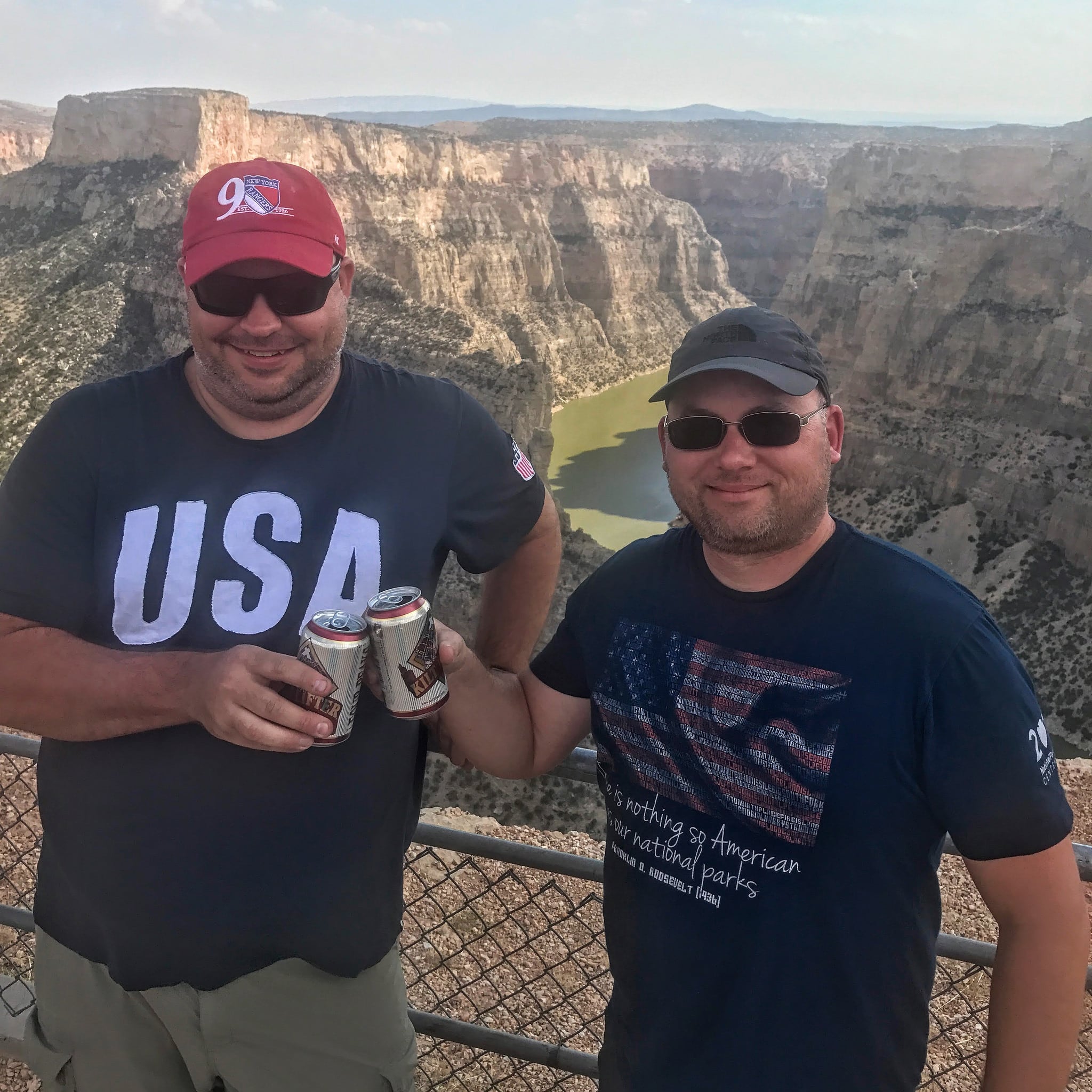
That means when you're planning your national park trips, you should strategize about how you'll mark off the other units in the area you're traveling to. Sometimes you'll realize that it makes sense to alter the trip to favor a further-flung park unit over a closer one, simply because it will be easier to get it done now than to orphan it later. Some of this is guesswork, and your plans may change in the future, but it's important to have a strategy nonetheless.
Leave enough time to be amazed
Sometimes, you won't expect much from a park unit, but after arriving, you just fall in love with it. Sometimes, it's the unit itself—an incredibly moving visitor center, for instance. Other times, it might be an unexpected wildlife encounter. Or maybe even some weather, like a low cloud that poured into the battlefield, totally changing the character of your experience.
If you're on a quest, you'll likely be traveling fast. But that doesn't mean you shouldn't plan some flexibility into the trip to allow you to enjoy these pleasant surprises. I tend to purposefully overestimate how long I'll need for smaller sites, which means that I'm routinely "ahead of schedule" during my trips. This helps offer a bit of a buffer for those times when I end up spending much more time at a place than I had anticipated.
Start a tradition—or several
One of the most fun aspects of a large quest is having a tradition. Or rather, several traditions. It's particularly gratifying when you're far into your quest and you have a consistent collection of photos or souvenirs from each of your destinations.
One of my favorite traditions is holding up a number indicating how many parks I've been to at each new park unit I visit. Unfortunately, I didn't consider doing this until I had already been to 267 of them. So while I'm nearly up to unit 400 by now, I'm still missing 2/3rds of the shots I would have had—had I simply considered what type of traditions I should create when I first started the quest. Now maybe the idea wouldn't have come to me at the time, but I really wish I had at least spent 10 minutes proactively thinking about it before I got started.
Here are some common national park traditions:
- Photo of the park entrance sign
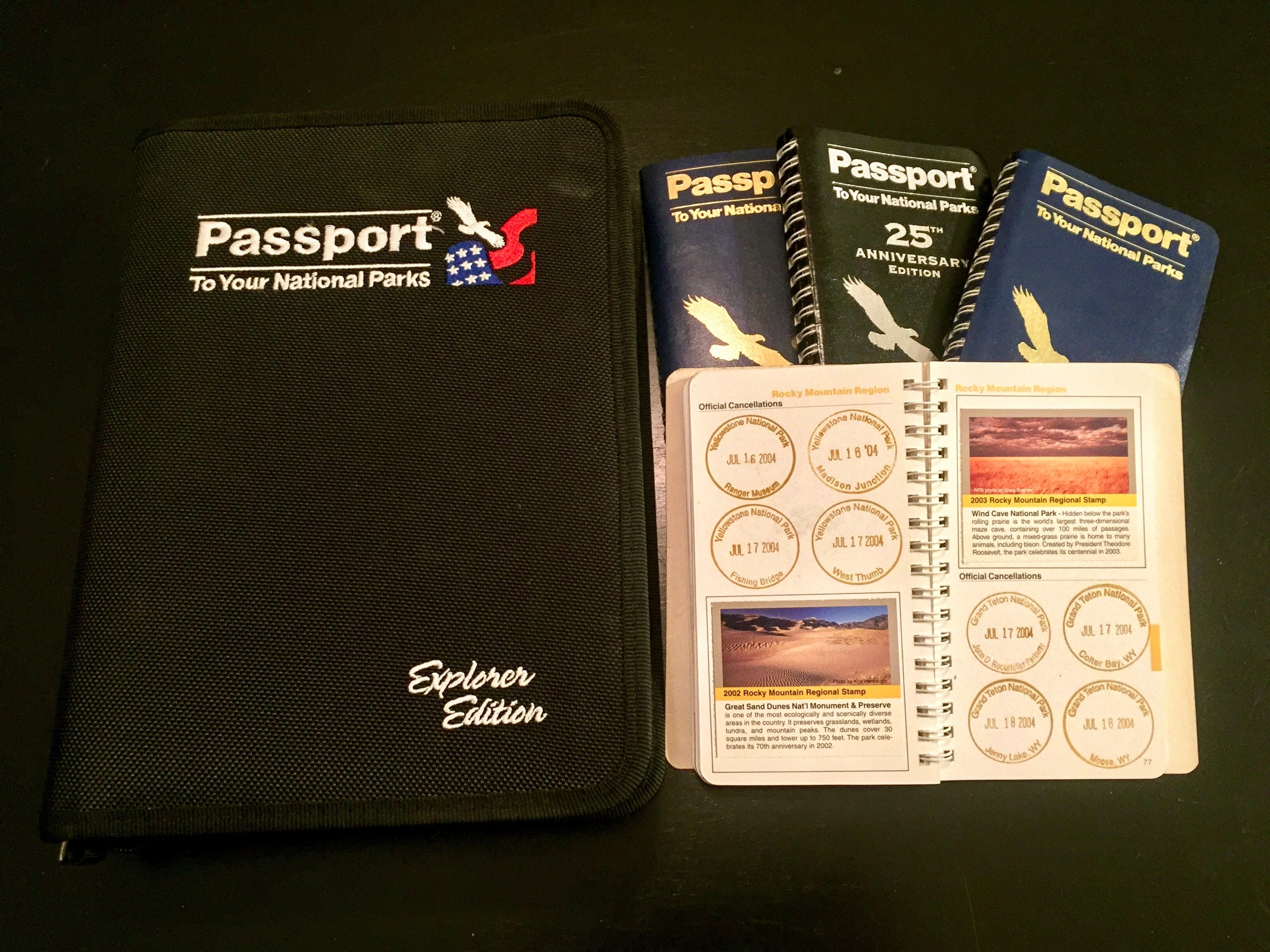
- Getting a park passport stamp
- Watching the park movie
- Completing a Junior Ranger program
- Photo of a park's Mather plaque
- Attending a ranger program
- Photo of a traveling "tchotchke"
- Taking a selfie with a park ranger
- Mailing themselves a postcard from the park
Collect something from each park
Similar to creating special park traditions, many park questers begin collecting certain items from each park. Maybe it's a magnet, or a pin, or a patch. Or maybe it's a postcard with a park passport stamp on the back. Others might pick out a book, or a little trinket. And just about everyone takes home an iconic "unigrid" park brochure.

These can make for great displays memorializing your adventures in the parks. But again, my advice is to think carefully about what you want to collect before you start off on your national parks quest. When I first started out, I thought it'd be great to collect patches. And so I collected scores upon scores of them. Until, that is, I realized that it was going to be hard to ever display them in a useful way. Was I going to spend $5 on a parks patch, and do so hundreds of times over, just to have them sit in a shoebox? Because I have more than hundred that have been just sitting there ever since. Had I thought it through a bit more, I likely would have opted for something else to collect. In the end, I switched over to pins, which I have in two large display cases on my hallway wall.
I shouldn't have to say this, but your collection shouldn't include any park resources—leave those at the park. Yes, that includes things like pine cones, small rocks, or any other items you didn't buy at the park bookstore or receive from a park ranger.
Keep track of the personal stories, not the park facts
Lastly, I'd recommend that if you do end up documenting your national park adventures—whether that's in a journal entry, a blog post, or even a video—that you don't just focus on park facts. A decade into your quest, you won't care about that stuff, which is just a quick google search away if you need it. You probably don't need to transcribe what type of sandstone that arch is made of. You don't need to remember how old John F. Kennedy was when he moved away from his childhood home. The number of Japanese Americans interned at Manzanar NHS isn't what you'll wish you recorded in your journal, or had committed to memory.
Instead, focus on how you felt while you were in the park. What had you been most excited about before arriving, and what surprised you about the place once you got there? Did something you learn change the way you think about something else? What was it like to emerge from that dense forest onto the shore of that backcountry lake? How did it feel to stare at John Muir's personal desk? What did you imagine when you read the stories of immigrants at Ellis Island? Who did you wish was with you to experience that sunrise on Cadillac Mountain? What memory did the smell of the creosote in Saguaro National Park immediately conjure up? How did you feel when you arrived home after the trip?
Those are the types of items to journal or blog about when you reflect on your latest national park visit. Trust me—those are the details that you'll most appreciate looking back on decades from now.
Don't have a travel quest yet?
You should. You'll love it. And I promise you that it'll be worthwhile. Read my guide to questing to get started.
If you love quests, or are thinking of getting started, check out #GoQuesting.
Why you should adopt a personal travel quest
I believe that travel quests are one of the best ways to inspire more travel. In fact, the original name of this blog was originally going to be VisitEveryPark.com—an ode to the quest that inspired so much of my own travel. That's how powerful I think quests can be to getting out and adventuring more.
Virtually everyone I know that travels frequently for pleasure is pursuing at least one personal travel quest. But that doesn't mean that their travel is always focused on those quests. Quests just tend to inspire you get out and adventure more.
So if you want to travel more, try adopting a travel quest of your own. Here's everything you need to know to get started.
The two types of quests
Personal quests are divided into two main types: ones that "count down" and ones that "count up." Some quests work better for counting down while others are better for counting up.
Quests that count down
Quests that count down usually take the form of "Visit all of the ________." As in, visit all 50 states, visit every National Park unit, or visit every craft brewery in the state. There are a finite number of stops baked into the goal, and you're usually trying to visit all of them. So you're counting down how many you have left. Now, that doesn't mean that the quest number stays static—it may not. For instance, when I started my National Parks quest, there were 379 units, whereas today, there are 417. But while the number may change, my personal goal really does stay the same: to visit all of the National Park units (however many that may be right now).
These types of quests are my favorite, but they're a bit harder, as you don't have any flexibility of which places are included. That's a big part of the challenge, and often requires a little strategy and foreplanning to pull off so that you don't "orphan" something off by itself that would require an additional trip.
Quests that count up
Quests that count up (e.g., "visit 100 countries before I turn 50") are still focused on a goal, but usually involve just a subset of the available destinations. For instance, visiting 100 countries is a big task, but it's quite a bit easier than visiting every country. These quests usually have a more specific deadline than "visit them all" style quests, often related to one's age. In addition, this type of quest is regularly expanded once the initial goal is reached. To continue the example, if you successfully visit 100 countries, you might extend the goal to 150 countries—or possibly even shift to a "counting down" quest and try for all the countries.
What about bucket lists?
I don't consider bucket lists, at least as they're traditionally defined, to be travel quests. Bucket lists are usually a rather random collection of destinations to visit, activities to complete, experiences to have, and accomplishments to achieve. They're a personal list of things to do before you die, where the items have no direct relationship to one another. Bungee-jumping, visiting the Taj Mahal, and earning a master's degree are too different of things to be considered a quest. Don't get me wrong, I think a bucket list is a worthwhile goal to pursue. It's just something different than a travel quest, so I won't cover them in this post.
Do challenges count?
Similarly, I usually don't consider personal challenges—like the popular 52 Hike Challenge—as quests, mostly because they tend not to be tied to specific destinations. Depending on the details of the challenge, however, they might be closely related and therefore share some of the traits I mention below. I'll address these personal challenges in a future post.
Travel quests help you travel more
Several qualities of travel quests help inspire travel. Here are some of the ways that quests have helped to inspire me to travel or adventure more often.
Quests ensure that you experience new places
It's easy to go back to the same ol' places when you travel. You know what to expect. You know how to get there. You know, generally, how the trip will go. It's comfortable and easy. It doesn't need as much planning, or require new gear purchases, or create any anxiety or angst. It's safe and familiar.
But it also doesn't expand your horizons, or teach you anything new, or provide you with an exciting new experience. In some ways, you lose out on quite a few of the inherent benefits of travel. Quests, on the other hand, help inspire you to visit different places, attempt new activities, adopt new perspectives, and expand both your skills and your comfort zone. That, in turn, helps expand your confidence to travel to even more places. The more you travel, the easier it gets.

Quests force you to go to places you might not otherwise go
A related benefit of quests is that they force you to go to places you might not otherwise visit. Not everyone would see that as a benefit, but you might be pleasantly surprised with places you had no intention of visiting. For instance, I had zero interest in visiting Topeka, Kansas—zero—but had to visit Brown vs Board of Education National Historic Site for my national parks quest. As a white male, I had never really understood what racism felt like, nor had I really sought out any experiences to learn. However, that visitor center had an amazing video display in a hallway that made you feel like you were one of the Little Rock Nine. It was one of the most enlightening experiences of my life. That's just one of several examples I could point to.
Quests impose some structure to your travels
Another benefit of quests is that you always have something on your "To Visit" list. It's easier to plan trips because you always have something on the agenda. Some people end up not traveling as often as they'd like simply because it's hard to narrow down the glut of available options—a sort of paradox of choice. Quests, however, can help impose some sidebars to your travels. You know that you want to make progress on your quest, so you've already limited available destination options to a more manageable number.
Quests serve as a goal
Quests provide an inherent incentive to travel more—a motivation to complete the quest by the deadline. As a result, you're more likely to pursue travel when opportunities arise. Let's face it, there are always plenty of barriers to travel; staying home is far easier than planning and completing a trip. Having a running goal helps ensure that there's a bit more impetus for making that trip idea come to fruition.
In a similar fashion, quests tend to inspire you to add more to your trip itinerary. "Hmm, what else could I mark off while I'm in the area?" is a common thought to someone with a quest. When you develop that attitude, you tend to bypass the barriers to travel that keep others at home.

Quests often contain some social pressure
Once you start to make some progress on your quest, especially if you do so publicly on a blog or on social media, you begin to generate a bit of public pressure to continue. This social reinforcement helps keep you on track and making progress. The more "public" your quest, the more reinforcement you get. Once friends and acquaintances learn of your quest, you'll likely get future inquiries on your recent progress—which helps to motivate you to keep marking off destinations.
Quests make unfun travel "worth it"
If you've done any amount of travel, you know that it's not all fun. Sometimes, it can be an absolute slog. The weather doesn't cooperate, you get stuck in traffic during your drive, you have to endure extended flight delays, and so forth. These delays and annoyances are a bit more tolerable if your trip involves making progress on a quest; after all, you're still completing something important to you.
Conversely, having a subpar experience while marking off a quest objective also makes you better appreciate the places that were great experiences.
Quests inspire more quests
Just as travel tends to inspire more travel, adopting travel quests tends to lead to even more quests. It's an interesting phenomenon—the more success you have completing your own personal quest, the more interested you get in adopting new quests or expanding your current quests. Travel inspires travel. The more places you check off your list, the more you add back onto it.
Quests make you feel accomplished
Completing one's goals usually leads to feelings of personal satisfaction. And finishing a big travel quest? Well, "feeling accomplished" might be an understatement. Now, it's a great feeling to finally complete a quest, even if it's not the most challenging one on your list. But it's absolutely true that the harder the quest, the greater the satisfaction. Either way, you'll routinely smile with pride whenever you recount the accomplishment in the future.
In addition, I tend to get regular praise from both friends and acquaintances, who often introduce me to others as "the guy I told you about that's trying to visit all the national parks." Sure, some people will occasionally be jealous, but most come away impressed and supportive. As an excellent side bonus, those that hear your goals will be encouraged to travel more. Truth be told, it's one of the main things that drives me to publish this site—I love the feeling of inspiring others to just get out more!
How to choose a travel quest
What's your hobby?
Do you love old cathedrals? Maybe you should go see a bunch of them. Maybe you feel most alive when you've conquered a tall mountain peak? Sounds like you need to do some peak bagging. Do you enjoy eating at windowless Chinese restaurants located in sketchy Phoenix neighborhoods? Ehh, on second thought, maybe you should skip that one—that would be a ridiculous quest, right? Anyway, the point here is to choose whatever sounds like it could be fun for you.
Or you can simply be open to the idea when you accidentally stumbled onto something interesting, as I often have. Sure, my early national park road trips quickly evolved into a broader quest to visit them all, and I've purposefully selected other quests for a specific reason. But my High Points of Otherwise Flat States quest arose from a friend's simple tongue-in-cheek comment that I should climb Mount Sunflower while I was driving through Kansas. I thought to myself, "Sure, why not?" and proceeded to have a good chuckle when I made it to the so-called summit. And a quest was born.
Similarly, I thought it'd be funny to visit the World's Largest Ball of Twine in Cawker City, Kansas on that same trip. I had a blast, and even ended up going to door-to-door in the town to find some twine so I could add to the ball. When I learned that two other twine balls also considered themselves to be the "World's Largest?" Well, I obviously had to go and judge for myself. Bam! Another quest.


Sharing a quest with someone
Sharing a travel quest with a close friend or significant other is an excellent bonding experience. It's fun to travel with people you enjoy spending time with, especially when you're chasing the same goal. Sharing expenses, driving duties, and trip planning often makes it all a bit easier, too. But, just like sharing a popular tv show like Game of Thrones with someone, it's also fraught with some potential downsides. Two people means that there can be twice as many barriers to travel, for instance—be it schedule conflicts, money woes, or a lack of motivation. It can be frustrating when you're excited to mark off the next items on your quest only to have your friend bail due to last minute work demands. Are you even allowed to mark off a destination without the other person? And if your quest was a "special thing" in your relationship that just ended in heartbreaking fashion, well...do you keep pursuing it? Spending a few minutes thinking these things over before you commit to a joint quest is probably a good idea.
Can you have more than one quest?
Of course! I have quite a few quests I'm currently working on. Some of them are long-term and difficult to complete, such as visiting 50 countries before I'm 50, or visiting all 419 National Parks units. Others, like visiting all of Arizona's State Parks, are far easier and can be accomplished on the weekends over the course of a year. I even have some "back burner" quests that I've adopted but aren't actively pursuing at the moment (primarily because of other, higher priority quests).
Micro-adventuring using mini quests
Not all quests need to be difficult or require substantial travel to complete. Some can be local and easy to accomplish, like picnicking in every public park in your town. These type of mini quests can help lead to small, everyday adventures that can be surprisingly fun.
For instance, my friend Wayne and I actually did complete that local quest to visit every sketchy Chinese restaurant in downtown Phoenix, complete with our own hybrid rating system. It wasn't hard to schedule several lunch visits over the course of a few months, but we had an absolute blast doing it. We even ran across a couple of legitimate gems...though the majority were definitely places to avoid. Our friends found the whole thing hilarious, so they'd often send us tips on possible restaurants to add to our quest list or check in to see when our next lunch was. The point here is that, no matter where you live, there are quests to be pursued.


Setting some rules
Exactly what is included in the list?
The first thing you'll need to decide is what exactly is on the list you're trying to complete. On the surface, this sounds rather elementary, but it can be more complicated than you might think. Let's use the example of a quest to visit every brewery in your state. First, which breweries count? Is it only locally-owned craft breweries, or are chain breweries included too? What about places that white label their brews, or ones that brew off-site? And keep in mind that these numbers might change as new breweries open and others close. Do you lose your "completed" status if another one opens the week after you finish them all? Or is your quest only focusing on the breweries that were in existence when you started the quest? A bit of thought will help sort this all out before you get started.
Exactly what counts as a visit?
Another important rule you'll need to decide on is "what counts as a visit." For instance, does a country visit count if you simply pass through its borders on a train and never deboard? Does it count if you drive across town to visit a craft brewery but they've inexplicably run out of their own beer? Are you allowed to count visits that occurred before you started the quest? These questions are best decided before you begin your quest—and trust me, they're bound to come up along the way.
Here's an important thing to remember: it's entirely up to you to decide what rules you follow. If you want to count airport layovers as visiting a particular state, then by all means go right ahead. Your quest = your rules. Quests are for you, after all, not for anyone else.
Starting a tradition
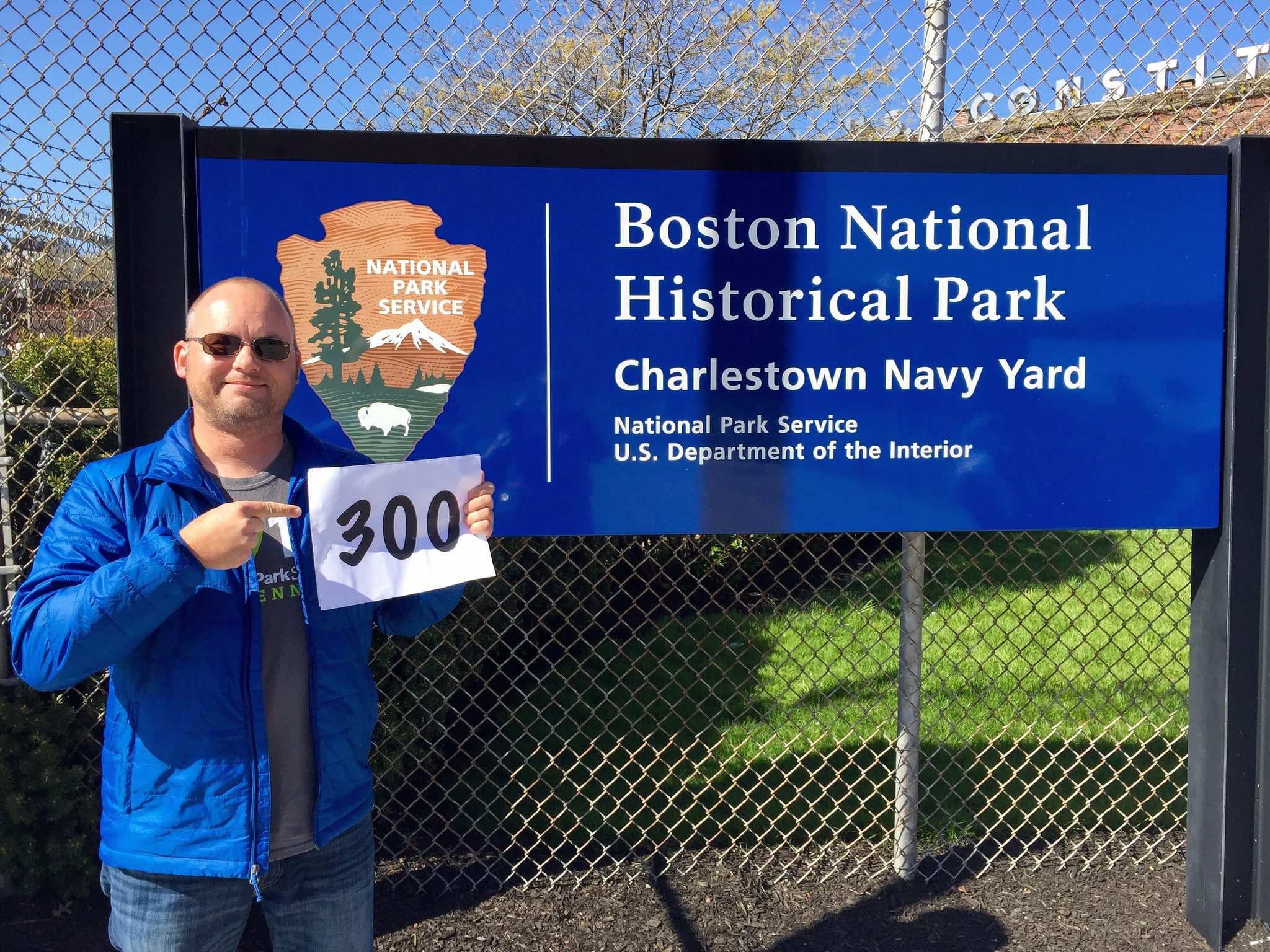
I think traditions are particularly important components of quests. Some people dance, while others collect passport stamps, or repeat the same selfie in front of an entrance sign. Some bring a trinket or figurine that they photograph at each destination. It doesn't matter exactly what you decide to do, but I'd recommend adopting at least one tradition for your quest. I tend to have several traditions for each quest I undertake. Some demonstrate my quest progress, such as holding up a sign of what park number I'm on. Others, like a selfie of me in front of the park sign, will be part of a fun slideshow when I'm finally done. Whatever you decide to do, the earlier you start these traditions the better.
Generating some evidence
Most travelers end up with some form of evidence of their various quest visits. For some, it's a photograph of themselves at a famous landmark, or it might be a passport cancellation, or a national park passport stamp. Whatever tradition(s) you adopt, make sure that at least one of them produces some tangible evidence of your visit. While quests are for your own benefit—not for others—you'll still appreciate this evidence by the time you approach your quest goal. Just trust me on this.
Keeping track of your progress
Bust out the spreadsheet
You'll definitely want to keep track of your quest progress, and spreadsheets tend to be the easiest way to do that. If you don't own a copy of Excel or Numbers, there are free online versions such as Google Sheets or Excel Online. Spreadsheets are great for keeping track of more than just which destinations you've visited and which ones you have remaining. You can also keep track of a wide variety of other useful information, such as the date of your visit, links to any photos or videos you posted from the visit, or other details that'll inform a future visit. Believe me, it's a whole lot easier to create and use a system to keep track of your progress than having to go back and researching it each time.
Note: if you're adopted a quest to visit all of the national parks, I've made a spreadsheet counting tool available at rscottjones.com/countparks. Download a copy or add it your Google Drive to edit it.
Know your number
You'll always want to know what your current "number" is, meaning how far along your quest you are. When someone asks you for an update, you should be able to easily answer ("I've been to 88 countries, just 12 more to complete my quest!"). And when you mention your quest to someone, expect their first question to be how close you are to finishing. Also, by keeping track of where you stand on your quest, you'll help stay motivated to continue increasing that number.
Establish and celebrate milestones
If you've adopted a long quest that'll take a number of years (or even decades) to complete, then it's worthwhile to add some intervening milestones to shoot for. I like attaching some deadline goals for some of these to help ensure that you remain on track for completing the larger quest. Be sure to celebrate completing each of these milestones, too—you deserve it.
Visualizing your progress
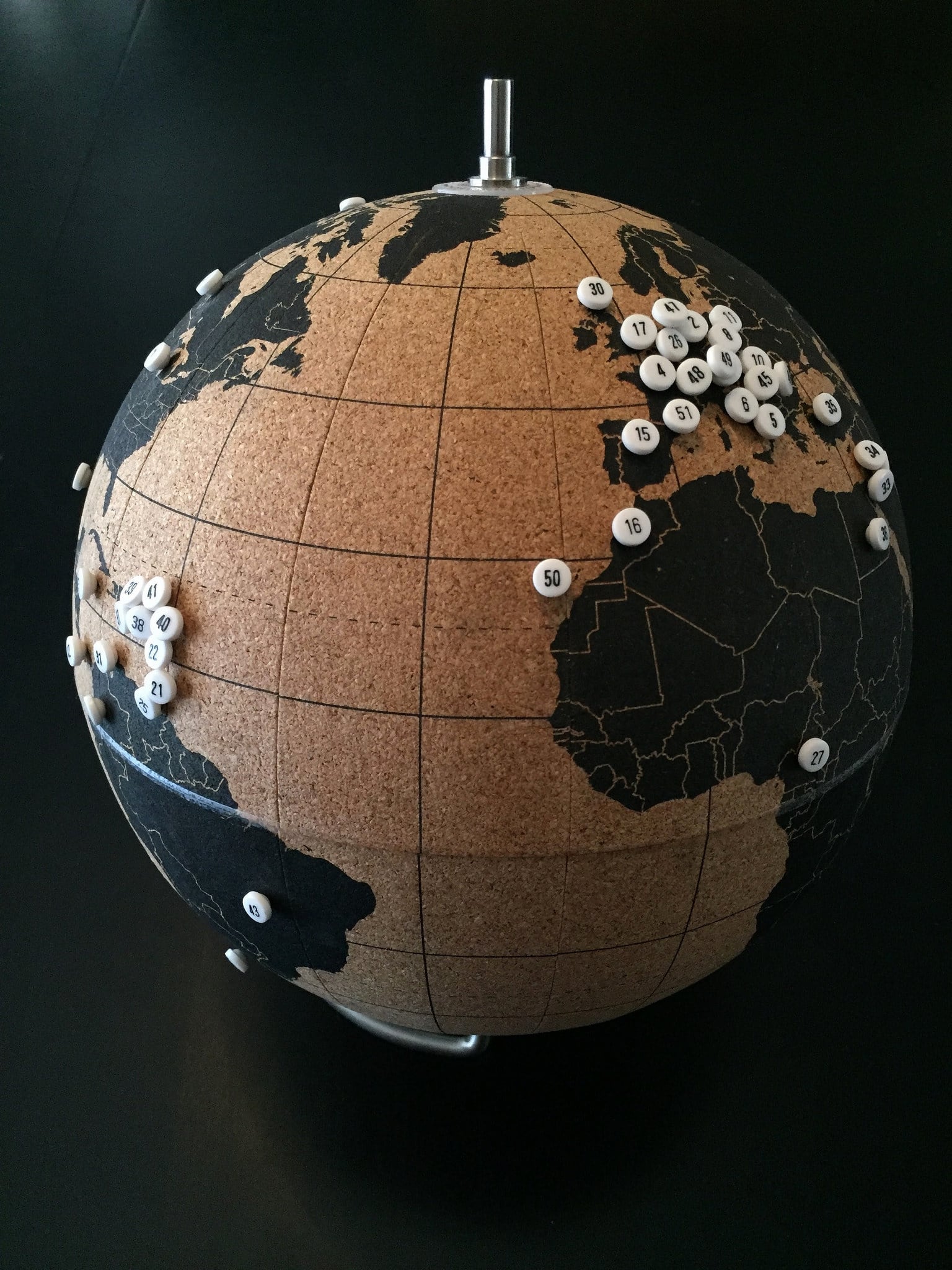
Visualizing your progress is an especially fun part of quests. If you've adopted a common quest, like visiting all of the national parks, visiting all 50 states, or marking off countries, you'll have quite a few options at your disposal. There are a variety of products, from cork-backed wall maps to scratch off wall maps, and cork globes to image-generating apps—and quite a few other options, too. You can personalize your own paper map by taking a highlighter to the places you've been, or photoshopping a digital map, or by simply hanging postcards on the wall.
No matter which approach you choose, I recommend doing something to show the progress you've made. Not only is it a great reminder and motivator to keep at it, but it's also a celebration of your efforts to date.
Documenting your journey
Depending on how you go about doing it, documenting your quest travels can seem nearly as time consuming as actually doing it. But that's a big part of the experience, too. Most everyone takes photos and/or videos of their travels, and you should too. However, don't rely solely on capturing everything via social media—and especially not in nondurable formats that disappear after 24 hours. These are memories you want to keep, after all.
I also strongly recommend blogging or journaling about your quest, too. Don't worry if you're not especially disciplined in doing it, or if you end up with big gaps. Something is better than nothing. Just the act of reflecting on your trip can make it more meaningful and tease out some unexpected insights. You may also come to appreciate the time you took to record a bit about your trips in subsequent years. Failing to do a better job of that and relying on memory recall alone is a common regret among longtime travelers.
Examples of popular quests
Probably the most popular quest of Americans is to visit all 50 states. Quite a few are also counting countries or national parks. Others are trying to catch a game in every MLB ballpark or NFL stadium. There really are a countless number of quests that you could adopt. I've included some sample ideas in the sections below to get your imagination primed.
[powerkit_tabs type=“tabs” nav=“horizontal”] [powerkit_tab title=“Local”]
Local quests are excellent ways to explore beyond your own neighborhood. Many of these amount to “mini quests” that are easily accomplished over the course of a few weeks or months. Obviously, these quests vary substantially depending on where you live. If you live on Maui, then a quest might be to snorkel off every beach on the island; whereas if you live in Kansas City, it might be to eat at every BBQ restaurant.
Here are some ideas to get you thinking:
- Picnic in every city park
- Hike every official trail
- See a movie in every theater
- Play every golf course
- Swim in every public pool
- Enjoy a staycation at every resort
- Eat at every sketchy Chinese or Mexican restaurant *
- Sip coffee at every coffeeshop
[/powerkit_tab] [powerkit_tab title=“State/Regional”]
Quests that cover your own state or province are probably the best ones to start with. They offer a bit more of a challenge than local quests, and there tend to be a sufficient number of destinations—such as counties or state parks—to make the quest both challenging yet accomplishable.
- visit every county
- enjoy a pint at every brewery or a glass at every winery
- tour each history or historical society museum
- hike in every designated Wilderness Area
- play a round at every golf course
- visit every state or provincial park
- cruise every scenic drive or backcountry byway
- explore every accessible National Natural Landmark
- summit every county high point
- stay in each historical hotel
- enjoy every zoo
- conquer all the Colorado 14ers
- climb each of the New England 4000 footers
- summit the closest 50 peaks to your house
Quests start to get quite a bit more challenging when they span the entire country. For many, this is the sweet spot for lifetime quests. You’ll end up doing a lot of domestic travel, but much of it can be done by car and you don’t have to worry about visas, currencies, or foreign languages.
- visit every state or province
- hell, visit every territory, too
- tour every National Park
- catch a game in each stadium or arena of your favorite sports league
- mark off every county
- drive every interstate highway segment
- tour every State Capitol building
- recreate in each National Forest
- visit all the sites associated with the Manhattan Project
- swim in all 5 Great Lakes
- take a selfie on every State High Point
- section hike a long distance trail
- marvel at all three World's Largest Balls of Twine
- summit 500 total peaks
- Presidential birthplaces, gravesites, or libraries
Obviously, these quests tend to be the most difficult, as they require the most travel to complete. But, wow, what adventures you’d have!
- stay overnight in 100 countries (or all of them)
- snap a selfie in each of the Seven Wonders of the World
- pay your respects at the holy site of every major religion
- step foot on all 7 continents
- stand in line at every Disney theme park
- visit 100 UNESCO world heritage sites
- complete the Seven Summits
- call your mom from every country in Europe
- sail on every ocean
- visit a town in every timezone
Have you adopted a quest?
If so, let me know what you quest is in the comments below—and be sure to tell me how far along you are.
#MyNationalParksMonth is my centennial celebration of the National Parks

UPDATE: jump to a listing of what I've seen thus far.
BIG NEWS: hear about the epic encore I'm currently!
EVEN BIGGER NEWS: I'm now visiting 100 Parks in 100 Days
Sorry—much of this post got shredded during some of the recent upgrades and conversions it's been through. It's on my list of things to fix. :(
One hundred years ago this year, the National Park System was established.
Sure, there were already quite a few national parks and monuments, but it was this moment in which they were brought together under a single management philosophy, a single land managing agency, and became a system of protected lands.
National Parks have played an incredibly important role in my life. I’ve only taken a handful of vacations to places other than national parks. And they contain my most favorite places and are home to some of my most cherished memories. I got engaged and married (even, one might argue, divorced) in national parks; needless to say, I care deeply about them.
Last week, the National Park Service concluded its National Park Week. I've decided to take that celebration one step further—and embark on what I'm calling #MyNationalParksMonth.
So #MyNationalParksMonth is an attempt to celebrate this anniversary, while visiting as many of the remaining national park units as possible in my quest to visit all 411.
Basecamping out of the Washington, DC area—and with weekend trips to Boston, New York City, and Philadelphia—I’m planning to visit more than two dozen thirty forty (!!) units of the National Parks System over the next few weeks. It’s a month-long personal celebration of the national parks, spent doing what I enjoy most: visiting new national park units.
Follow along on:
- twitter at @rscottjones (and #mynationalparksmonth)
- snapchat at rscottjones.com for a stream of snaps
- instagram at rscottjones for occasional photos
What I've seen so far
Here are the national parks I've visited thus far on #MyNationalParksMonth (updated May 23). Green pins are parks I've marked off; gray dots are national parks I'm visiting as part of my encore, and blue diamonds are the ones I will have left in the Northeast. As you'll see, I've already far exceeded my goal for the project.
[googlemaps www.google.com/maps/d/u/…
https://twitter.com/rscottjones/status/741934069185839104
https://twitter.com/rscottjones/status/741933856412958720
https://twitter.com/rscottjones/status/741933705233473537
https://twitter.com/rscottjones/status/741932796210380801
https://twitter.com/rscottjones/status/741932597802979328
https://twitter.com/rscottjones/status/741932135443898368
https://twitter.com/rscottjones/status/739445738841739265
https://twitter.com/rscottjones/status/739445153564364800
https://twitter.com/rscottjones/status/738543080232615937
https://twitter.com/rscottjones/status/739437715662442496
https://twitter.com/rscottjones/status/738120391495811072
https://twitter.com/rscottjones/status/738344323658469376
https://twitter.com/rscottjones/status/737809408734830592
https://twitter.com/rscottjones/status/737585249094275072
https://twitter.com/rscottjones/status/737800840405209088
https://twitter.com/rscottjones/status/737797851456102400
https://twitter.com/rscottjones/status/737797852550795264
https://twitter.com/rscottjones/status/737795224378998784
https://twitter.com/rscottjones/status/736360529531424768
https://twitter.com/rscottjones/status/736245244300296192
https://twitter.com/rscottjones/status/735870704936194049
https://twitter.com/rscottjones/status/734472743253598208
https://twitter.com/rscottjones/status/734206458666061824
https://twitter.com/rscottjones/status/733714414503927812
https://twitter.com/rscottjones/status/731952092345040897
https://twitter.com/rscottjones/status/731950625580179456
https://twitter.com/rscottjones/status/731658299171590144
https://twitter.com/rscottjones/status/731576310338846721
https://twitter.com/rscottjones/status/731464196102193152
https://twitter.com/rscottjones/status/731205604337954816
https://twitter.com/rscottjones/status/730913734118383620
https://twitter.com/rscottjones/status/730816226587480064
https://twitter.com/rscottjones/status/730533950880354305
https://twitter.com/rscottjones/status/730474119653888000
https://twitter.com/rscottjones/status/730215474366124033
https://twitter.com/rscottjones/status/730207579901693952
https://twitter.com/rscottjones/status/730122108588699649
https://twitter.com/rscottjones/status/729854781699858432
https://twitter.com/rscottjones/status/729852233081356288
https://twitter.com/rscottjones/status/729848074412142594
https://twitter.com/rscottjones/status/729444731491594240
https://twitter.com/rscottjones/status/729442054242193408
https://twitter.com/rscottjones/status/729439739389054977
https://twitter.com/rscottjones/status/729333558091845633
https://twitter.com/rscottjones/status/729326606334963712
https://twitter.com/rscottjones/status/728441404809089024
2012 was among my best trip years yet

While I've had some amazing travel years, 2012 surprisingly ranks near the top.
I made it to 39 national park units I had not yet visited, took my first big solo national park road trip, visited a few new states and two new parts of the country, made it to the first Graham family reunion in several decades, marked off a few straggling park units that had dogged me for years, rafted and backpacked in some amazing places, gained a nickname for visiting all three specimens competing for the title of the World's Largest Ball of Twine, started a new quest to hit all of the highest points of relatively flat states, and stopped by over one hundred roadside oddities and attractions. And, of course, created some fabulous memories.
And while I missed out on anticipated trips to finish up the South, attend ASU's bowl game, and hit San Francisco, it's hard not to consider the year a great success.
Here's the list of where I went this year:
October
- Glen Canyon National Recreation Area (Navajo Bridge)
- Arches National Park (Delicate Arch)
- Yucca House National Monument
- Curecanti National Recreation Area
Great Waters of the North – August (incomplete listing)
- Missouri National Recreational River
- Niobrara National Scenic River
- Voyageurs National Park
- Grand Portage National Monument
- Apostle Islands National Lakeshore
- Isle Royale National Park
- Keweenaw National Historical Park
- Pictured Rocks National Lakeshore
- Sleeping Bear Dunes National Lakeshore
- Indiana Dunes National Lakeshore
- Lincoln Home National Historic Site
- Herbert Hoover National Historic Site
- Effigy Mounds National Monument
- Mississippi River National River & Recreation Area
- Saint Croix National Scenic River
- Northwest Angle – Angle Inlet
- The remaining two Largest Balls of Twine
- Three highest points: Iowa, Michigan, and Wisconsin
- Roughly 60-70 other roadside oddities...
Hohokam Pima National Monument with Kim - July
Graham reunion & Roadside oddities of the Prairielands – July
- Tallgrass Prairie National Preserve
- Nicodemus National Historic Site
- Fort Larned National Historic Site
- Sand Creek Massacre National Historic Site
- Rocky Mountain National Park
- Chickasaw National Recreation Area
- President William Jefferson Clinton Birthplace Home National Historic Site
- Buffalo National River
- World’s Largest Ball of Twine and the Walk of Twine (Cawker City, KS)
- Mount Sunflower (highest point in Kansas)
- Panorama Point (highest point in Nebraska)
- Chase County Courthouse – longest continuously operated west of Mississippi River
- Council Grove and associated historical sites
- Rock City
- The hole where the guy who killed the guy who killed President Lincoln lived
- Geographic Center of the contiguous US (and chapel)
- Nazareth Convent and public gardens in Concordia
- Garden of Eden
- Bowl Plaza public bathrooms
- Jack Kilby Memorial
- World’s Largest Collection of the World’s Smallest Versions of the World’s Largest Things
- Pawnee Rock
- Santa Fe Trail ruts
- Rush Center, Home of the Largest St Patrick’s Day parade
- Barbed Wire Museum & Hall of Fame
- Monument Rocks National Natural Landmark
- World’s Largest Easel & Van Gogh’s Sunflowers
- Kit Carson Lookout
- Tri-state boundary marker (NE-CO-WY)
- Eiffel Tower of Texas
- Oklahoma Truck Supply sign
Chaco with Mom – May
- Chaco Canyon National Historical Park
Utah Canyons – May
- Cedar Mesa/Grand Gulch backpack
- San Juan River rafting (Sand Island/Bluff to Mexican Hat)
- Capitol Reef National Park
- Grand Staircase-Escalante National Monument
The Gila – April
- Gila Cliff Dwellings National Monument
- Trail of the Mountain Spirits National Scenic Byway
- Catwalk National Recreational Trail
- Mogollon (ghost town)
Grand Canyon – April
- Grand Canyon National Park
- Agua Fria National Monument
San Diego – January
- Cuyamaca Rancho State Park
- Anza Borrego State Park
- Pacific Beach
Forts and Seashores – December 2011/January 2012
- Charles Pinckney National Historic Site
- Fort Moultrie
- Fort Sumter National Monument
- Charleston, SC
- Fort Pulaski National Monument
- Savannah, SC
- Fort Frederica National Monument
- Cumberland Island National Seashore
- Timucuan Ecological and Historic Preserve
- Fort Caroline National Memorial
- Castillo de San Marcos National Monument
- Fort Matanzas National Monument
- Canaveral National Seashore
- De Soto National Memorial
- Gulf Islands National Seashore
It'll be tough to top this list, but I'm hoping 2013 will yield some amazing trips as well.
Pleasant surprises in the national parks
One of the things I've enjoyed most about my national park quest is that it pushes me to visit places I wouldn't otherwise visit. It encourages me to step outside of what I know and am interested in to at least dabble in something new. I may not come away with a deep appreciation of that topic, but at least I'll know a little bit more about it. Or, at the very least, know more about how I feel about it.

There have been a few of these places along the way. George Rogers Clark National Historic Park's huge granite memorial, which clearly deserved to be the central attraction of a major city but was instead plopped down seemingly nowhere. The visitor center at Brown vs Board of Education National Historic Site, which stands as the most emotionally moving I've seen. The incredibly high tree canopy of Congaree National Park, the largest remnant of an old growth floodplain forest on the continent, which seems tucked away in South Carolina. And so forth.
Add to that list Vicksburg National Military Park. Well, at least two components of it. I was greatly impressed with the Illinois Monument, which reminded me a bit of both the archives building and the George Rogers Clark memorial I mentioned above. And I was completely caught off guard by the USS Cairo (pronounced KAY-row). I remember seeing a picture of an armor-clad Civil War battleship back in school, but had no idea that we were going to see one until we turned the corner on the driving tour. Both unleashed those unexpected fleeting moments of excitement when you first realize that there's something much cooler to this place than you had anticipated. The thrill of discovery, you might call it.
Touring the national parks has focused our attention on learning more about the country in which we live; experiencing, at least within a narrow focus, some of what it's meant to be American or experience a bit of America.
There have been a few disappointing parks we've visited, but it's always because we wanted to learn more than the park has resources to provide. And even in those disappointments, we gain a new understanding of the natural or cultural heritage that we must continue to protect.
But most of the time, we walk away excited and awed by some magnificent fact or memorable experience of a place we may not ever had taken the trouble to see. It's these kinds of pleasant surprises that energize me through the year in protecting a new set of worthy places.
My new wilderness quest
Virtually everyone who knows me knows about my ongoing quest to visit every National Park Service site.
Well, I've decided to add a similar quest: visiting every designated wilderness area in Arizona. all 90(!) of them. Whew—that's a lot.
Check out an interactive map of each designated Wilderness Area in Arizona.
Despite hiking for more than a decade, I've hardly scratched the surface. That's not too surprising, since many of these places are very remote and rugged, and often only accessible by well-equipped high clearance 4WD vehicles.
Given the sheer number, the transportation challenges, and the fact that many are located in desert regions (and therefore can only be visited during the few cooler months we have), this could take quite some time.
But that's ok. This is a longer-term quest that I'm not racing to complete.
